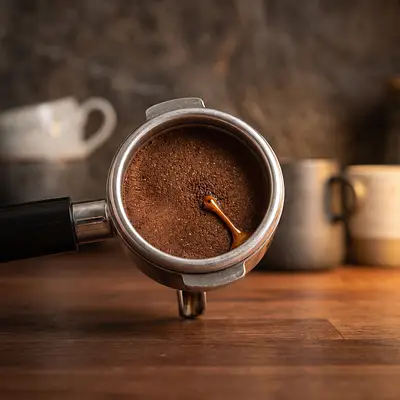
The spent coffee puck: what it really says about channeling
 4 min read
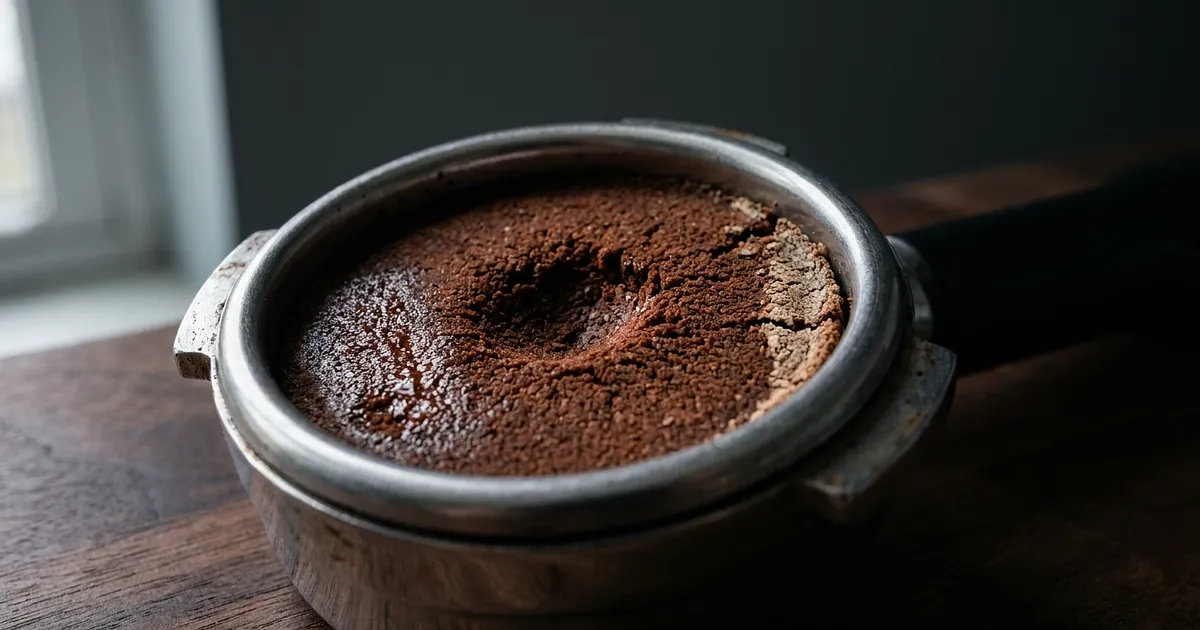
Your shot has finished, you knock the portafilter out over the bin, and the puck drops. Give it two seconds before you throw it away. A hole in the middle, a soaked surface, one edge paler than the other: that spent puck is a record of the channeling that just happened in your basket. This isn't the compost heap and it definitely isn't coffee-ground fortune telling. You're reading an extraction.
Cafelista puts the mechanism plainly: water always takes the path of least resistance. Where the coffee bed sits looser, water rushes through, over-extracts around that channel and leaves the rest under-extracted. Three spots on the puck give channeling away: the surface, the middle, the edges. You can catch it live too, mid-pour, before the puck even drops.
The after-shot ritual: spotting channeling in three looks
The surface: dry and crumbly, or soaked?
A puck that falls apart into dust (a dry coffee puck, in plain terms) usually points at a grind that's too coarse or a shot that ran too fast, according to Bariscope. The opposite case is different. Cafe Fabrique notes that a soaked puck most often means the dose was low, so there's headspace left under the shower screen and residual water pools on top. That one probably tasted fine.
The middle: the hole
Everybody cites this one. Green Plantation calls them revealing marks in the coffee disc: a crater, an off-centre tunnel, flow that suddenly speeds up. When the hole sits well off centre, your grind distribution is the likelier suspect, not the machine. A WDT tool breaks up clumps before you tamp.
Outil WDT (Weiss Distribution Technique) avec support, 7 aiguilles 0,3 mm
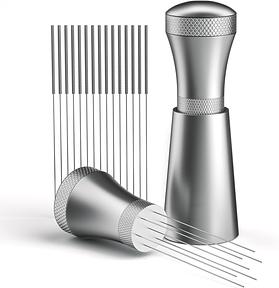
Outil WDT (Weiss Distribution Technique) avec support, 7 aiguilles 0,3 mm
View at AmazonAffiliate link. Buying through it earns us a commission; the price stays the same for you.
The edges: was the tamp level?
A sloped puck, thicker on one side and lighter on the other, means the tamper was leaning. A calibrated spring tamper takes that variable out, since pressure no longer depends on your wrist at 7am.
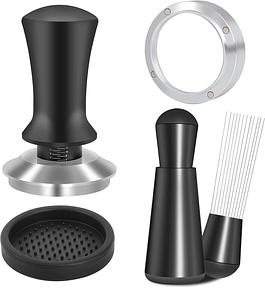
Not available in your region — closest match
View at Amazon (as of Aug 14)Affiliate link. Buying through it earns us a commission; the price stays the same for you.
Symptom, likely cause, what to change
| What you see | Likely cause | What you change |
|---|---|---|
| Dry, crumbling puck | Grind too coarse, shot ran fast | Go one step finer |
| Hole in the middle | Clumps, uneven distribution | WDT before tamping |
| Sloped puck | Leaning tamp | Calibrated tamper, machine sitting level |
| Soaked puck | Dose too low for the basket | Add a gram, check the basket size |
What the puck can't tell you about channeling
Here's the nuance most espresso channeling articles skip. Research from Barista Hustle suggests a hole in the spent puck mostly comes from the pressure drop when the machine stops, and not necessarily from a channel that formed during the pour. So the puck is a signal, never a verdict. Watching channeling live takes a bottomless portafilter.
Porte-filtre sans fond 58 mm à trois oreilles (nu, pour observer l'extraction)
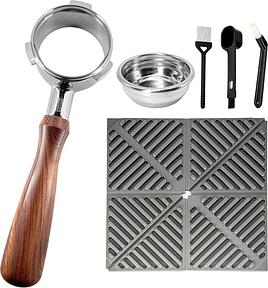
Porte-filtre sans fond 58 mm à trois oreilles (nu, pour observer l'extraction)
View at AmazonAffiliate link. Buying through it earns us a commission; the price stays the same for you.
All products from this post
The ones we named above are marked; the rest are alternatives in the same category.
Affiliate notice: As an Amazon Associate, we earn from qualifying purchases. Product prices and availability are subject to change.
Frequently Asked Questions
Why is there a hole in the middle of my spent coffee puck?
A crater points to a looser spot in the coffee bed where water moved too fast. Part of it also comes from the pressure drop when the machine shuts off. Your grind distribution is the first thing worth revisiting.
Is a soaked espresso puck a bad sign?
Usually not. A sloppy puck most often means the dose was too low, leaving headspace under the shower screen for water to sit in. Plenty of excellent shots leave a wet espresso puck behind. Taste first, adjust after.
Can I judge an espresso from the puck alone?
No. It's a fast, free signal you read alongside shot time, yield in the cup and taste. Coffee puck reading has a limit: a perfect-looking puck can sit under a bad espresso, and the reverse happens just as often.