What to Do With Used Coffee Grounds: Compost, Garden, Scrub
 4 min read
Updated 28 September 2026
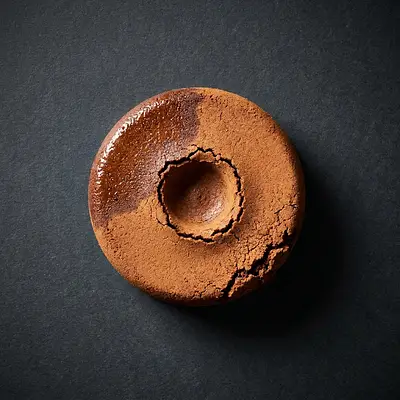
Your machine's grounds drawer fills up every day, and each time you empty it the same question comes back: what to do with used coffee grounds, apart from binning them? Short answer: compost first, everything else with limits. Here's how to recycle coffee grounds properly, with sources and dates. Before you tip the drawer out, glance at the puck too: what it says about your extraction is worth a look.
Can you put coffee grounds in the compost?
Yes, and it's probably the best place for them. France's environment agency ADEME lists grounds and paper filters as compostable waste (page in French, updated 26 May 2026).
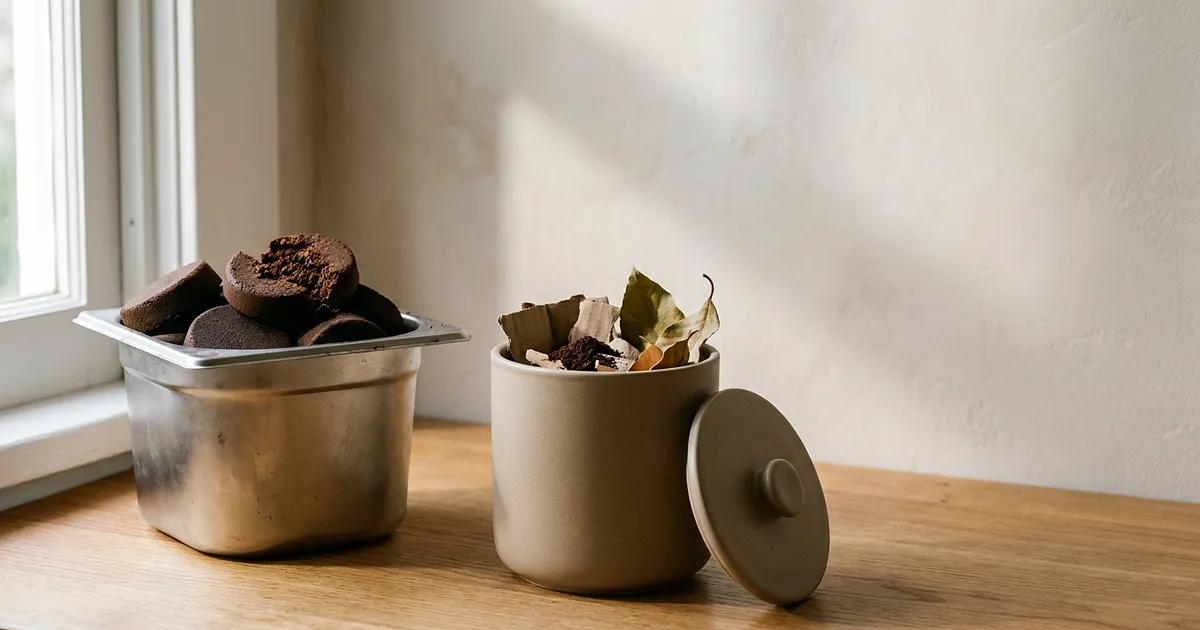
One catch: despite the brown colour, grounds count as a "green", nitrogen-rich material, according to Cornell University (SoilNOW project, May 2022). Oregon State University Extension (OSU, January 2025) caps them at 20% of the heap's volume, so mix them with dry leaves or cardboard. A bit of mould in the caddy? OSU says it's harmless in compost.
In the garden, are coffee grounds good for all plants?
No, and this is where the usual tip lists overreach most. The UK's Royal Horticultural Society (RHS, undated page) puts it plainly: all the reliable sources agree grounds are best off in the compost bin. Linda Chalker-Scott, a horticulturist at Washington State University Extension in the US (WSU, factsheet revised December 2021), calls fresh grounds "demonstrably phytotoxic" to several plants. Leftover caffeine can also slow germination, OSU notes, so keep them off seedlings.
They won't really acidify your soil either. Brewed grounds sit at around pH 6.5 to 6.8 (OSU, January 2025), close to neutral. The RHS only allows "a very sparing amount" around acid-loving plants such as azaleas and camellias.
Still want to use coffee grounds for plants? OSU (January 2025) suggests working half an inch into the top 4 inches of soil, roughly 1.3 cm into 10 cm by our own conversion. Never as a thick layer on top: it compacts and blocks water and air, the RHS and WSU warn.
Do coffee grounds really absorb bad smells?
Maybe, but none of the sources cited here tests it in a fridge. The bowl-of-dry-grounds trick is everywhere. If you try it, dry them first and bin them once they clump or smell.
The sink is off-limits, though. Grounds swell in water and end up clogging pipes, warns SyAGE, a French public water authority (page in French).
Is a coffee-ground scrub a good idea?
Possibly, with the same limits as any gritty scrub. French dermatologist Ludovic Rousseau (Dermatonet, page in French, updated 30 April 2026) caps facial scrubbing at once or twice a week for normal skin. For reactive skin he allows only PHA or enzymatic exfoliants, and he rules out grainy scrubs during inflamed acne or eczema flare-ups. His page doesn't mention coffee at all. That's simply the rule for any mechanical scrub.
What to do with used coffee grounds, starting tomorrow
Tip the grounds drawer into a small compost caddy instead of the bin. That's it. An old jar with a lid works fine. If you'd rather have something made for the job, there are kitchen compost caddies like Brabantia Sort & Go 3 L – poubelle à compost de cuisine or EDA seau à compost 6 L avec couvercle hermétique, though neither is essential. Everything else can wait, and in small doses.
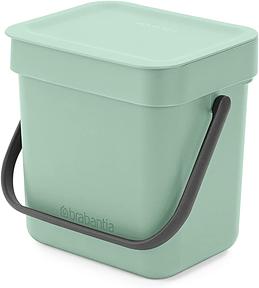
Brabantia Sort & Go 3 L – poubelle à compost de cuisine
View at Amazon (as of Oct 02)Affiliate link. Buying through it earns us a commission; the price stays the same for you.
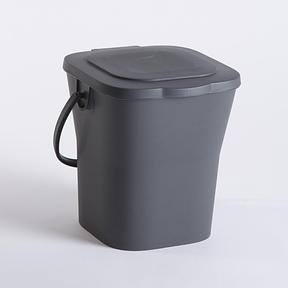
EDA seau à compost 6 L avec couvercle hermétique
View at Amazon (as of Oct 02)Affiliate link. Buying through it earns us a commission; the price stays the same for you.
All products from this post
The ones we named above are marked; the rest are alternatives in the same category.
Affiliate notice: As an Amazon Associate, we earn from qualifying purchases. Product prices and availability are subject to change.
Frequently Asked Questions
Can you add coffee grounds to compost every day?
Yes, as long as they stay a minority of the heap: Oregon State University Extension advises no more than 20% of its volume (January 2025). They're a green, nitrogen-rich material, so balance them with dry leaves or cardboard.
Can you pour coffee grounds down the sink?
No. SyAGE, a French public water authority, warns that grounds swell in water and end up clogging pipes. Compost or bin, never the sink.
Should you dry coffee grounds first?
Not for compost: OSU says a bit of mould is harmless there. For anything indoors, like a bowl in the fridge, spread them out to dry and throw them away as soon as they clump or smell.