Coffee machine energy class: what actually changes in 2026
 5 min read
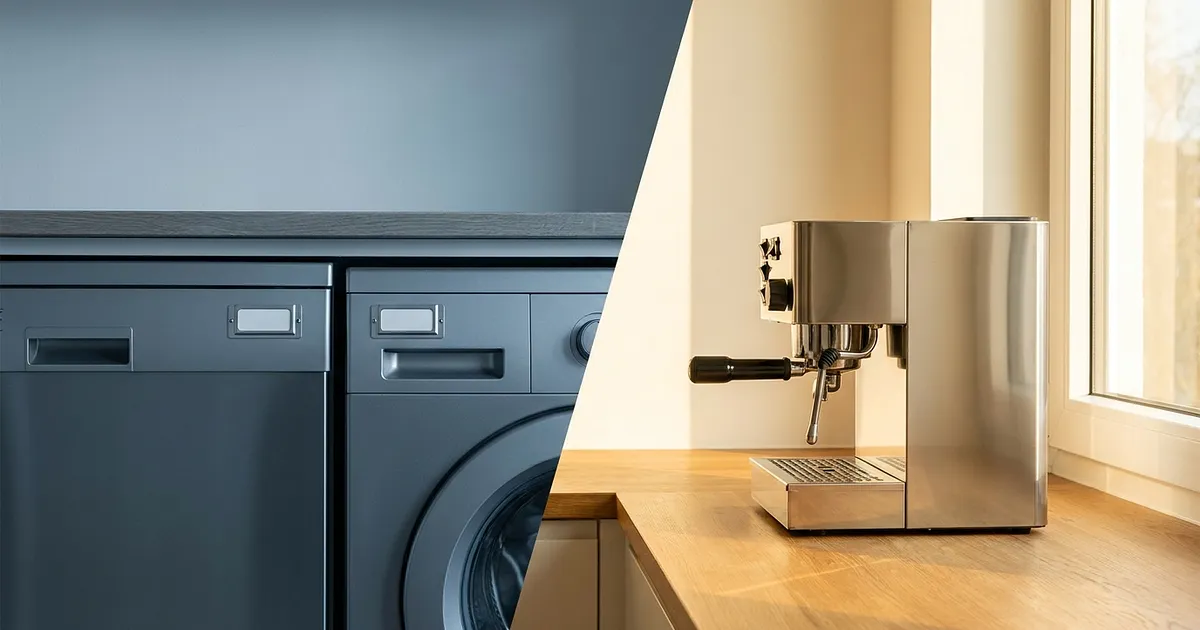
Look at the box of any coffee machine on a shop shelf. Wattage. Usually a pump pressure in bar. Sometimes an "eco" mode. No coloured arrow with a letter in it.
The gap is odd: your dishwasher has carried an A to G class for years, the espresso machine sitting next to it carries nothing.
Why coffee machines have no energy class
The EU energy label works product family by product family: a dedicated legal text sets the measurement method, scale and artwork for one category and says nothing about the rest. Fridges, washing machines, dishwashers, TVs, light bulbs: the list is closed, and coffee machines never made it in.
That's not an administrative oversight. A coffee machine draws very little per cup and quite a lot sitting hot in standby, and household use varies wildly. Putting a portafilter, a bean-to-cup machine and a capsule brewer on one comparable scale needs standardisation work nobody had commissioned.
ESPR is a framework, not a label
What moved is the legal foundation underneath: the EU's Ecodesign for Sustainable Products Regulation, ESPR, in force since 18 July 2024 per the European Commission, replaces the 2009 ecodesign directive and stretches the principle across almost every physical product sold in the Union, repairability and a digital product passport included (a digital record readable by QR code, due around 19 July 2026).
Watch the shortcut, though: "ESPR is in force" doesn't mean "coffee machines have new rules." Only a delegated act, adopted one product family at a time, actually applies anything.
The first working plan, published on 16 April 2025 by the European Commission, runs from 2025 to 2030. Steel and textiles go first, targeted for 2026, then aluminium and tyres in 2027, furniture in 2028, mattresses in 2029. Small kitchen appliances appear nowhere in that schedule, mapped out in detail by Complir.
So yes, a label will arrive eventually. No, not in 2026, and probably not for several years after that.
What a coffee machine's energy class would probably look like
The template already exists. Since 20 June 2025, smartphones and tablets sold in the EU have carried an A to G energy scale plus a repairability score, Touteleurope reports. France got there earlier on its own: the national indice de réparabilité, a score out of 10, has applied since 2021 to several product families, per economie.gouv.fr, and still no coffee machines five years on.
Two things follow: a future label would almost certainly combine an energy class with a repairability score, and it'll take a while.
Should you wait for a labelled machine? No
Waiting for a label with no date is waiting for nothing: ESPR governs what goes on the market, not what's already on your counter, so a machine bought today won't turn "non-compliant" the day the category finally gets covered. What genuinely moves your bill is the auto-off delay and the heating time, not the wattage on the box: a machine that switches off after fifteen minutes costs less over a year than one held hot all day. And the pump pressure printed there tells you nothing about either, or the cup: extraction happens at roughly 9 bar, not at 15 or 19, and no energy class is going to change that today.
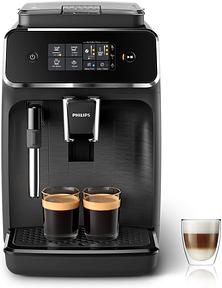
Bean-to-cup, the grinder built in
A bean-to-cup machine has the grinder built in: check the grind adjustment before you count the drink programmes. Price seen on Amazon.fr, 03/09/2026: about €299.99.
De'Longhi Magnifica S ECAM11.112.B - Perfetto Machine à Café Automatique avec Mousseur à Lait Manuel
Not available in your region — closest match
Philips Série 2200 EP2220/10 - Expresso Broyeur avec Mousseur à Lait, Écran Tactile
View at Amazon (as of Aug 10)Affiliate link. Buying through it earns us a commission; the price stays the same for you.
Compact portafilter, if you want control over extraction
A portafilter needs a separate grinder and some practice, but hands you the dose and the grind: budget the grinder alongside the machine from the start. Price seen on Amazon.fr, 03/09/2026: about €139.99.
De'Longhi Dedica Style EC685.BK
Other EU rules are changing your coffee this year without an energy class at all: tariffs on the beans, packaging rules on the pod. No coffee machine energy class in 2026, and nothing forces you to wait for one.
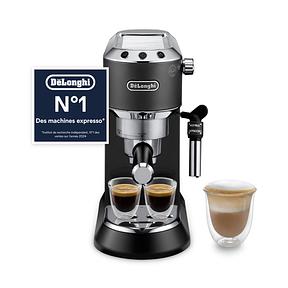
De'Longhi Dedica Style EC685.BK
View at Amazon (as of Aug 11)Affiliate link. Buying through it earns us a commission; the price stays the same for you.
All products from this post
The ones we named above are marked; the rest are alternatives in the same category.
Not available in your region — closest match
Philips Série 2200 EP2220/10 - Expresso Broyeur avec Mousseur à Lait, Écran Tactile
View at Amazon (as of Aug 10)
Affiliate notice: As an Amazon Associate, we earn from qualifying purchases. Product prices and availability are subject to change.
Frequently Asked Questions
Do coffee machines need a mandatory EU energy label in 2026?
No. No EU legal text requires an energy class on a coffee machine in 2026. The energy label applies product family by product family, and coffee machines have never had one of their own.
What is the ESPR regulation?
The EU's Ecodesign for Sustainable Products Regulation (2024/1781/EU), in force since 18 July 2024. No concrete obligation exists until a delegated act names the category.
How can you spot an efficient coffee machine without a label?
Look at the auto-off delay, how the machine heats water, and whether it has a real eco mode. Wattage alone tells you very little. The annual cost comes from the hours spent keeping water hot, not from the peak draw during a shot.