Refurbished Bean-to-Cup Coffee Machine: Bargain or Hidden Risk?
 8 min read
Updated 02/09/2026
A Jura listed at €690 when the same machine costs well over a thousand new. That's the moment a refurbished bean-to-cup coffee machine turns into either the best purchase of your year or a three-figure repair bill.
And the photo in the listing tells you nothing. What decides it is a legal definition, three internal parts nobody photographs, and the seller.
Refurbished bean-to-cup coffee machine or second-hand? French law drew the line in 2022
Those two words stopped being marketing copy four years ago.
Since décret n° 2022-190 of 17 February 2022, "reconditionné" is legally defined in France. The item has to be tested against legal safety obligations, repaired where needed, and stripped of all personal data. The same text bans sellers from describing it as "as new".
A second-hand machine from a private seller carries none of that. Nobody opened it, nobody tested it, and "excellent condition" in a classified ad commits the seller to precisely nothing.
The bargain: what you actually gain
Start with the discount. De'Longhi advertises up to 45% off through its own refurb programme, Boulanger quotes 20 to 40%, MaxiCoffee goes as high as 55% depending on model. Those are seller-published ranges, not an independently audited average.
The real gain sits elsewhere. It's access to a tier you'd never buy new. A €1,200 machine refurbished down to €700 gets you conical burrs, a metal brew unit and thermal stability that no new €700 machine offers.
And no, the "15 bar" printed on the box plays no part in that. Espresso extracts at around 9 bar at the puck. The pump figure is a marketing peak rather than working pressure, and it says nothing about a machine that has already run for two years.
The hidden risk on a refurbished bean-to-cup coffee machine: what wears out first
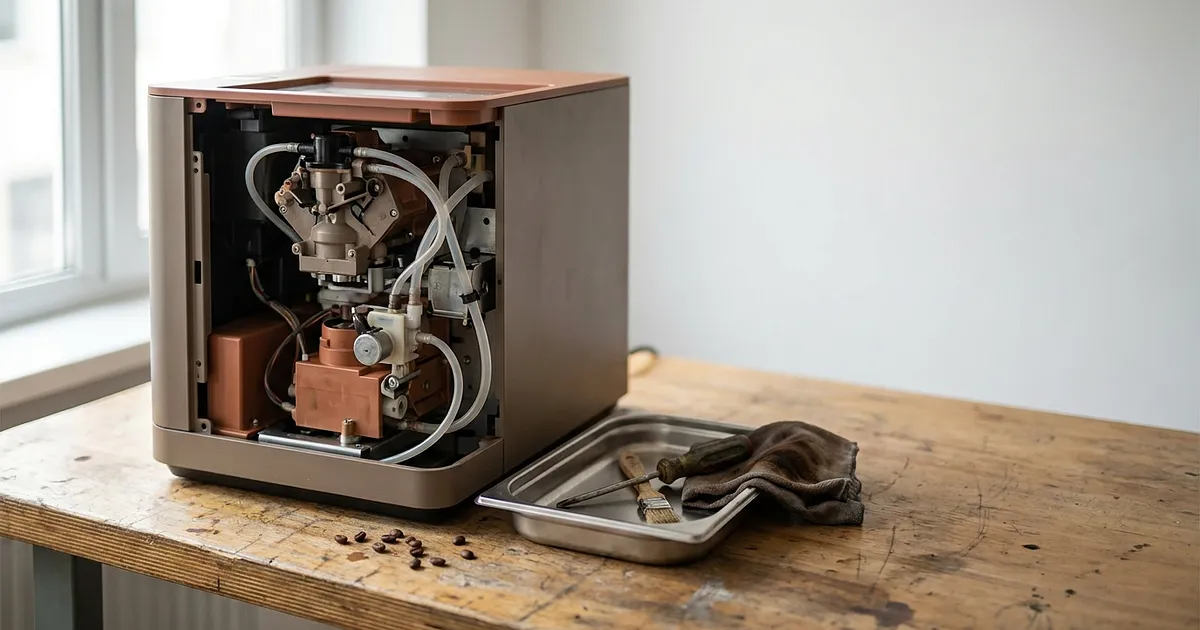
Here's the bit that "why buy refurbished" articles skip. Three wear components, and you can't see any of them from outside the casing.
Quick answer: brew unit, grinder, thermoblock. A machine can pull a flawless shot on handover day and hit the end of its service interval the following week.
The brew unit, the priciest part
This is the mechanical assembly that presses hot water through the coffee puck. Around fifty parts, deliberately sealed by the manufacturer.
French repair specialist Coffeediag reports that coffee oils and residue build up inside it, and that the unit needs servicing every 4,000 coffees or every 4 years. The same workshop notes that roughly one DIY teardown in three ends up posted back to them, because reassembly needs greasing, timing and precise adjustment. It's also the most expensive repair on the machine.
Which means the private seller swearing everything works has probably never opened that part.
The grinder
Burrs dull, and limescale plus bean oil gradually gums up the mechanism. A tired grinder doesn't fail cleanly. The grind just gets steadily more uneven. Hard to catch in a five-minute demo at a stranger's kitchen table.
The thermoblock and limescale
This is limescale's first victim and the failure repairers cite most often. Regular descaling extends a machine's life far more reliably than any feature on the spec sheet. De'Longhi's own descaler runs under €10 for five doses on Amazon.fr (checked 02/09/2026).
De'Longhi EcoDecalk Détartrant DLSC500, 5 doses de décalcification, 500 ml
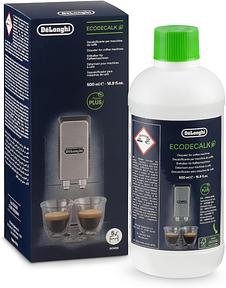
De'Longhi EcoDecalk Détartrant DLSC500, 5 doses de décalcification, 500 ml
View at Amazon (as of Sep 04)Affiliate link. Buying through it earns us a commission; the price stays the same for you.
Always ask for the maintenance history
How many descaling cycles, how often, and was there a water filter fitted? On Philips and Saeco machines the AquaClean filter gets swapped roughly every three months. A seller who answers precisely has looked after the machine. A seller who hesitates has just answered you anyway.
Philips Saeco Filtre Machine à Café à Grains - Filtre à Eau AquaClean
On lifespan, a Consumentenbond study from February 2021 puts the average automatic machine at 6 years and a Jura at 9. So a properly refurbished four-year-old machine has road left. The same machine bought with no history, much less.
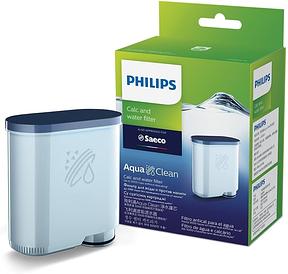
Philips Saeco Filtre Machine à Café à Grains - Filtre à Eau AquaClean
View at Amazon (as of Sep 04)Affiliate link. Buying through it earns us a commission; the price stays the same for you.
Where to buy with some confidence
| Channel | Warranty | Returns | Advertised discount | Risk level |
|---|---|---|---|---|
| De'Longhi official | not stated on product page | 30 days | up to 45% | low |
| Refurbed | 12 months minimum | 30-day trial | not stated | low |
| Boulanger | 24 months | 15 days | 20 to 40% | low |
| Back Market | 12 months | not stated | not stated | medium |
| Le Bon Coin, private sale | none | none | variable | high |
Figures taken from the sellers' own pages on 02/09/2026. On a refurbished Jura as much as on a De'Longhi, the discount depends entirely on the channel. Refurbed advertises a 40-step refurbishment process across its whole catalogue, with a 12-month minimum warranty and a 30-day free trial. De'Longhi publishes no warranty length at all, which is exactly the question to ask before ordering.
My honest take: above €500, Boulanger's 24 months is worth the small premium over a marketplace. It's the only row that still covers a brew unit failing at month eighteen.
Red-flag checklist
A French repair workshop has watched the same script play out for years and documented it listing by listing: a recurring scam on Le Bon Coin, aimed at used coffee machines and Juras in particular. The markers don't change:
a price 4 to 6 times below market, which is the main warning sign rather than a bargain;
a seller account under a year old with no transaction history;
the photos come from somewhere else, catalogue or resale, never the actual machine;
pressure to move the conversation to WhatsApp or a personal email address;
and payment, always by bank transfer or PayPal "friends and family", so outside buyer protection.
The same workshop shows faked ID selfies used to look legitimate, where the name on the card doesn't even match the account receiving the money.
Two more rules for everything else. Try the machine in person, with real beans, pulling two shots back to back. And walk away from any sale where you can't lift the lid over the puck bin.
If you'd rather buy new
At the entry and mid tiers the price gap gets too small to justify a machine with no history.
De'Longhi Magnifica S
The entry-level classic: integrated burr grinder, two drinks, around €299.99 on Amazon.fr, rated 4.1 from 7,661 reviews (checked 02/09/2026). At that price refurbished has very little left to argue.
De'Longhi Magnifica S ECAM11.112.B - Perfetto Machine à Café Automatique avec Mousseur à Lait Manuel
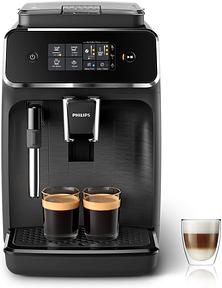
Not available in your region — closest match
Philips Série 2200 EP2220/10 - Expresso Broyeur avec Mousseur à Lait, Écran Tactile
View at Amazon (as of Aug 10)Affiliate link. Buying through it earns us a commission; the price stays the same for you.
Philips 5500 LatteGo
If milk is your thing, this is the one: twenty drinks, tube-free LatteGo, AquaClean filter. Around €559, rated 4.2 from 13,915 reviews (checked 02/09/2026).
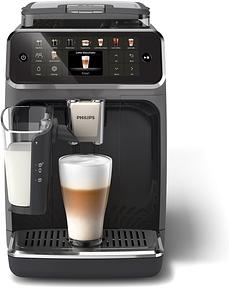
Affiliate link. Buying through it earns us a commission; the price stays the same for you.
Krups Essential
Under €300 the compact footprint does the job, with one caveat: the 15 bar the manufacturer quotes is a pump peak, not extraction pressure. Around €299.99, rated 4.2 from 5,730 reviews (checked 02/09/2026).
KRUPS Essential Compacte - Machine à Café à Grain Automatique 15 bars
Not available in your region — closest match
Philips Série 2200 EP2220/10 - Expresso Broyeur avec Mousseur à Lait, Écran Tactile
View at Amazon (as of Aug 10)Affiliate link. Buying through it earns us a commission; the price stays the same for you.
The verdict
A refurbished bean-to-cup coffee machine is a good deal at the top of the range and barely worth it at the bottom. Between €300 and €400, buy new. Above €700, a refurbished machine with 24 months of cover gets you hardware you wouldn't otherwise own.
And if a listing is four times cheaper than the market, that isn't a bargain. It's the pattern repairers have been documenting for years.
All products from this post
The ones we named above are marked; the rest are alternatives in the same category.
Not available in your region — closest match
Philips Série 2200 EP2220/10 - Expresso Broyeur avec Mousseur à Lait, Écran Tactile
View at Amazon (as of Aug 10)
Not available in your region — closest match
Philips Série 2200 EP2220/10 - Expresso Broyeur avec Mousseur à Lait, Écran Tactile
View at Amazon (as of Aug 10)
Affiliate notice: As an Amazon Associate, we earn from qualifying purchases. Product prices and availability are subject to change.
Frequently Asked Questions
Is a refurbished bean-to-cup coffee machine reliable?
From a professional seller, yes. The February 2022 decree requires functional testing and repair of any defects before anything is sold under that term in France. Reliability comes from the seller's process, not the machine's age. Buy privately and none of it applies.
What warranty comes with a refurbished coffee machine?
It depends on the channel, and no law sets it. Boulanger states 24 months, Refurbed and Back Market 12 months minimum, De'Longhi publishes no length. A private sale carries none at all. Get the term in writing before you pay.
Which parts wear out first on a bean-to-cup machine?
The brew unit, the grinder and the thermoblock, in that order. The brew unit needs servicing roughly every 4,000 coffees, burrs dull slowly and degrade the grind, and the thermoblock is limescale's first casualty. None of them can be checked by eye.
How long does a bean-to-cup coffee machine last?
A Dutch Consumentenbond study published in February 2021 puts the average at 6 years, and 9 years for Jura machines, assuming regular descaling. Without it, the thermoblock goes long before. Maintenance history predicts remaining life far better than the year of manufacture.