Espresso setup after one year: what is actually worth changing
 8 min read
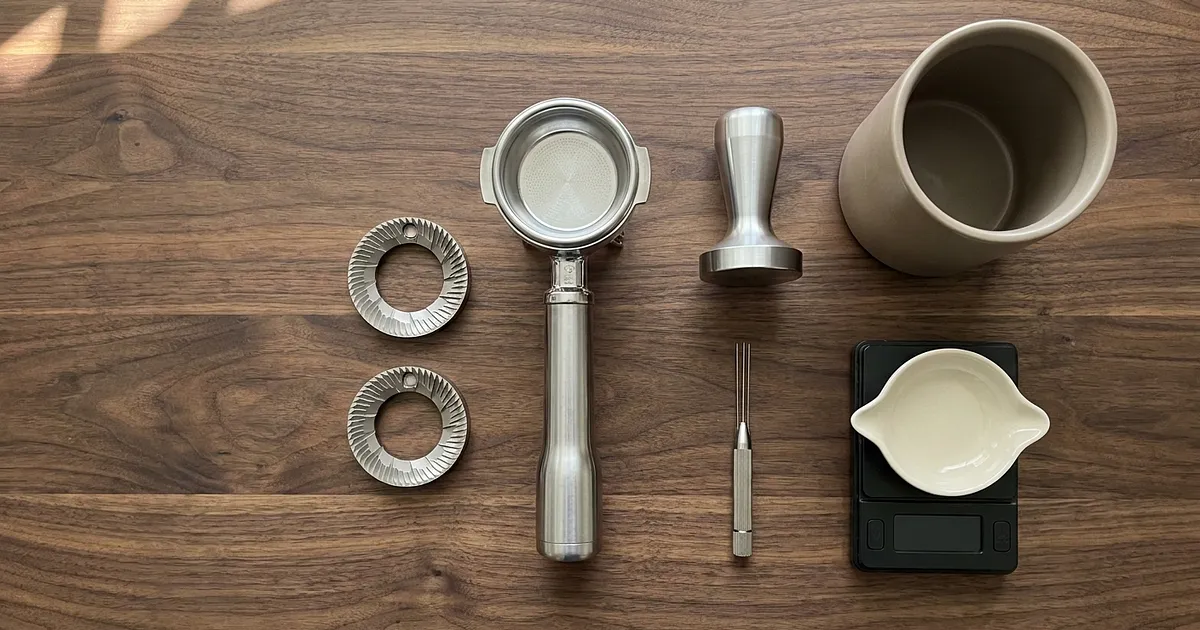
A bean-to-cup machine with a built-in grinder lasts somewhere between 5 and 10 years in a home kitchen, according to Javry, and how long it survives depends on real usage far more than on its age. Twelve months don't wear it out. What has aged by then is everything around it: the grinder burrs, the water running through the circuit, and the way beans get bought. Which is to say the essential home espresso accessories, plus the habits attached to them.
The opposite conclusion is still the common one. Coffee turns bitter, crema collapses, and the machine takes the blame.
Updated 3 September 2026.
What actually ages in twelve months
Four things shift over a year of daily use, and only one of them is a genuine consumable:
the grinder burrs, which dull with every kilo of coffee ground;
the water, which lays down scale at a rate set by local hardness;
puck prep, which becomes the limiting factor once the grind is dialled in;
the beans themselves, whose freshness window is measured in days.
The machine doesn't appear on that list until a specific mechanical fault shows up: a pump losing pressure, a blocked circuit, a leaking group gasket. Replacing the whole appliance before that diagnosis is roughly like buying a new car because the tyres are bald.
Burrs, the only real consumable
Manufacturer-rated burr lifespans vary by a factor of twenty. Around 660 lbs of coffee for a flat burr set in a home grinder, up to 14,300 lbs for a high-end commercial machine, according to EspressoParts. The bare number doesn't help much, since it depends entirely on the model. The advice next to it does: watch for wear from 50 to 75% of the rated life, not at the end of it.
The most reliable sign isn't visible. It gets felt instead.
Month by month, the grind has to go one step finer to hit the same shot time it did on day one. Add channeling that keeps coming back despite clean prep, a grinder that runs louder or hotter than it used to, and flat shots that no longer respond to dialling in. Any one of those proves nothing on its own. All four together at the twelve-month mark point at the burrs.
A fresh burr set costs noticeably less than a whole grinder, though no single figure means much given how much models vary, which is why the "replace the whole thing" question is usually premature. The full diagnosis, material by material, sits in the piece on worn grinder burrs.
Tamping, WDT and the scale: consistency beats force
This is where money goes to the wrong place most often. A heavy, expensive tamper won't rescue an unevenly distributed coffee bed. Barista Tools put it plainly in June 2026: a level, repeatable tamp on an even bed does more than maximum force, and figures like 10, 15, 20 or 30 kg work as workflow references rather than quality standards.
The WDT tool has a documented and fairly unglamorous origin. John Weiss, a biomedicine researcher, broke up coffee clumps with a dissecting needle back in 2005; the technique took his name and spread through forums before it reached cafés.
A needle tool under €20 breaks up the clumps a grinder produces. Probably the best effect-per-euro item on this entire list.
Outil WDT 7 Aiguilles pour Distribution du Café
The tamper comes next, and it has exactly one job: applying the same pressure, level, every single day. A stainless model in the right diameter is enough, and a spring-loaded one does nothing a steady hand doesn't already do.
Tamper espresso hicoosee 51 mm en acier inoxydable
A 0.1 g scale is the least exciting purchase here and honestly the one that changes the most. Without a weighed dose going in and a weighed drink coming out, any ratio is guesswork, and grind adjustments get judged blind.
BAGAIL Balance Numérique à Café avec Minuterie, Précision 0.1 g
How to choose those three tools is covered properly in the tamper, WDT and scale piece, and the exact-pressure question in the one on tamping.
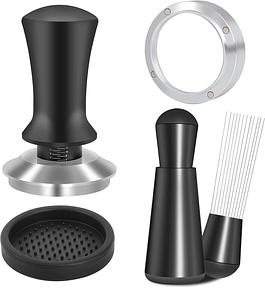
Not available in your region — closest match
View at Amazon (as of Aug 14)Affiliate link. Buying through it earns us a commission; the price stays the same for you.
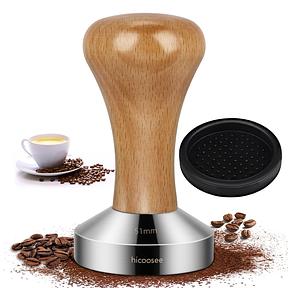
Tamper espresso hicoosee 51 mm en acier inoxydable
View at AmazonAffiliate link. Buying through it earns us a commission; the price stays the same for you.
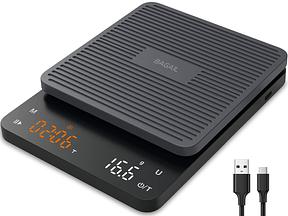
BAGAIL Balance Numérique à Café avec Minuterie, Précision 0.1 g
View at Amazon (as of Aug 10)Affiliate link. Buying through it earns us a commission; the price stays the same for you.
Water, the line item nobody sees
A shot that turns bitter around month eight, with nothing else in the recipe changed, usually traces back to scale building up quietly in a drink that's roughly 95% water. Urnex treats descaling every three months as a sensible baseline to adjust for local hardness.
The less obvious trap is overcorrecting. Water that's too soft, distilled or reverse-osmosis, attacks internal components instead of scaling them. The Specialty Coffee Association recommends calcium hardness between 50 and 175 ppm as CaCO₃, per Third Wave Water. Both extremes damage the machine, just differently.
Filters, tap-water hardness, descaling products: the detail lives in the water for espresso machines article.
Beans: a window of days, not months
After a year the palate has sharpened, and the 1 kg bag bought on offer becomes the weak link. For espresso, the freshness window runs roughly 7 to 21 days post-roast, according to Methodical Coffee. Too early and residual CO₂ destabilises the shot. Too late and the aromatics are gone.
At two coffees a day, a kilo doesn't fit inside that window. Buying smaller and more often costs a bit more per kilo and does more than any accessory.
An airtight, opaque container limits the damage between purchases. It won't undo it.
Boîte à café hermétique en verre 1700 ml
What genuinely ruins beans, and which common habits make it worse starting with the fridge, is covered in the coffee bean storage article.
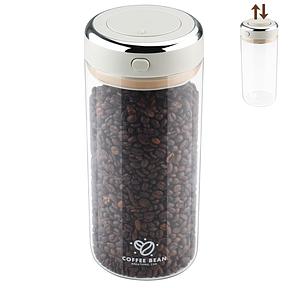
Boîte à café hermétique en verre 1700 ml
View at AmazonAffiliate link. Buying through it earns us a commission; the price stays the same for you.
Where to start on a tight budget
Prices checked on 3 September 2026: €16.98 for the WDT tool, €13.98 for the tamper, €39.99 for the precision scale, €14.99 for the airtight container.
| Budget | What changes first | Why that one |
|---|---|---|
| around €30 | WDT tool and airtight container | fixes distribution and freshness, the two most common causes of an inconsistent shot |
| around €80 | plus a 0.1 g scale and a tamper in the right diameter | makes the setup measurable instead of guessed |
| €150 and up | a new burr set, or water treatment matched to local hardness | goes after the real consumable and the invisible line item |
That order is arguable, and plenty of people would start with the burrs since burrs are the part that wears. The maths leans the other way though: distribution and freshness cost €30 and show up in the next cup, while a new burr set mostly earns its keep once grind drift is already established.
And if one line item had to jump ahead of everything else, it would be the water. It's the only one where neglect eventually costs the machine.
All products from this post
The ones we named above are marked; the rest are alternatives in the same category.
Affiliate notice: As an Amazon Associate, we earn from qualifying purchases. Product prices and availability are subject to change.
Frequently Asked Questions
Should an espresso machine be replaced after a year?
No, barring a diagnosed mechanical fault. A bean-to-cup machine with a grinder lasts 5 to 10 years at home according to Javry, and its lifespan depends on usage and maintenance rather than age. At twelve months, taste drift almost always comes from the grinder, the water or the coffee, not the appliance itself.
How do you know grinder burrs are worn?
The main sign is adjustment drift: the grind has to go finer, step by step, to keep the same shot time. Then come channeling that persists despite good prep, a louder or hotter grinder, and flat shots that stop responding to dialling in. EspressoParts suggests watching for these from 50 to 75% of the rated burr life.
Does an expensive tamper actually improve espresso?
Not on its own. Barista Tools reports that a level, repeatable tamp on an even coffee bed matters more than the force applied, and that values between 10 and 30 kg work as references rather than standards. Distribution in the basket, using a WDT tool under €20, carries more weight than the tamper does.
How often should an espresso machine be descaled?
Urnex treats every three months as a baseline, adjusted for local water hardness: more often with very hard water, less often with soft or filtered water. Watch the opposite extreme too, since distilled or reverse-osmosis water corrodes components instead of scaling them.
How long do coffee beans stay good after roasting?
For espresso the usable window runs about 7 to 21 days from the roast date, according to Methodical Coffee. Before that, residual CO₂ makes extraction unstable. After it, aromatics fade steadily. That's why buying smaller bags beats investing in a very expensive airtight container.