Built-in grinder or separate grinder: how to choose for espresso
 13 min read
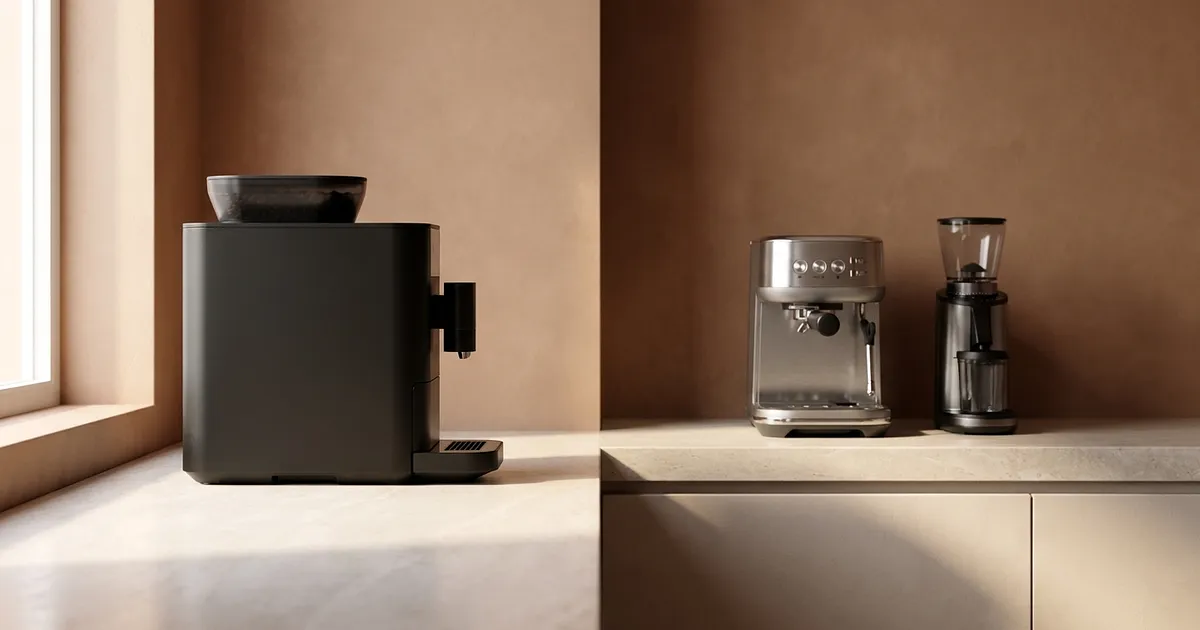
At the same budget, a bean-to-cup machine with a built-in grinder and a portafilter paired with a separate grinder don't put their money in the same place. The first sells you a complete automatic machine, pump, brew group, milk frother, screen. The second mostly sells you a set of burrs. And it's the burrs that decide what lands in your cup, not the number of programmes printed on the box.
Updated 08/08/2026
Two architectures: built-in grinder or separate coffee grinder
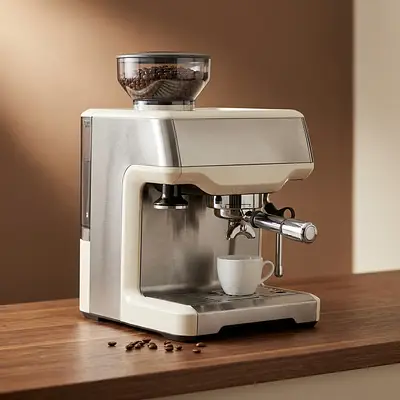
A bean-to-cup machine with a built-in grinder is a single block. Bean hopper, burrs, brew group, pump, all inside one shell. You fill the hopper, you press, and the machine grinds the dose and pulls it straight away. This is what the market calls interchangeably a bean-to-cup machine, an automatic espresso machine or a super-automatic.
The other architecture splits the two jobs. On one side a portafilter espresso machine, which only heats the water and pushes it. On the other a separate coffee grinder, sitting next to it, that you choose and replace independently.
The trap is believing the choice comes down to the machine's spec sheet. Most product pages lead with the pump's 15 or 19 bar. As Green Plantation points out, that figure describes the maximum pressure of the pump with no load, and any properly designed machine brings extraction back to around 9 bar. So the number on the box tells you nothing about the cup. What does tell you something is the grind, the dose, and how far the appliance lets you act on both.
Which is where the five criteria below come from. Each one ends with a straight verdict, because the real question isn't "which one is better" but "which one for you".
Axis 1: grind consistency
Burr size, and the real gap between the two camps
This is the most mechanical point in the whole file. According to Clive Coffee, a built-in grinder usually runs on burrs of 40 to 50mm, while a separate grinder at the same budget gives you 55mm and up.
In plain terms: inside a bean-to-cup machine with a built-in grinder, the grinder has to fit into whatever volume is left once the pump, the boiler and the group are in place. It's small because it has no choice. A separate grinder has nothing else to house, and its whole price goes into the burrs and the motor.
Wider burrs work the beans more slowly at the same output, run cooler, and produce a tighter particle distribution. For espresso, where a few microns change the flow time, that shows up in the cup.
What the data forces you to qualify
Don't reduce the subject to a diameter, though. An independent analysis of 300 particle size distributions across 24 grinders by Jonathan Gagné (Coffee Ad Astra, 21 September 2023) concludes that burr geometry, conical or flat, potentially weighs more than diameter alone.
Put another way, a big badly designed grinder isn't automatically better than a small well designed one. Diameter is a sign of seriousness, not a guarantee. It's also why moving to a separate grinder is only worth it if you pick the right model. Our guide to electric grinders goes through the models range by range.
In the category we're dealing with here, the archetype of a dedicated espresso grinder under €200 is still this one.
Baratza Encore ESP Moulin à Café à Meules Coniques
Logged at €179.90 on Amazon.fr on 08/08/2026, it costs more than some complete espresso machines. That's surprising, and it's exactly the reversal to understand: in this architecture, the grinder is the main appliance.
Axis 1 verdict. Go for the separate grinder if you pull tight espressos and want to fine-tune the grind click by click. Go for the built-in if you mostly drink long coffees, lungo or milk drinks, where the grind gap literally gets diluted.
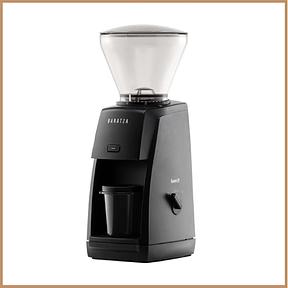
Baratza Encore ESP Moulin à Café à Meules Coniques
View at Amazon (as of Aug 11)Affiliate link. Buying through it earns us a commission; the price stays the same for you.
Axis 2: grinder retention, the number nobody quotes in French
Here's the criterion that decides this choice and that French comparisons keep quiet about.
Retention is the amount of ground coffee left stuck in the grinder after the cycle. In the grinding chamber, in the chute, under the burrs. It doesn't go into your cup. It waits for the next day, oxidises, then comes back out mixed into the following dose.
According to the Clive Coffee comparison on retention, the amount of coffee left stuck in the grinder runs from under 1g on a Baratza Sette 270 to 12g on a high-end Eureka KRE. Twelve grams is almost two espresso doses asleep inside the appliance.
Why the built-in grinder does worse
Three mechanical reasons, and not one of them is a question of price bracket.
The chute first. On a bean-to-cup machine, the ground coffee has to travel from the burrs to the brewing chamber, often over several bent centimetres. Every bend holds some back.
Access next. On a separate grinder you can tap the body, blow into the chamber, run a brush through. On a built-in, the area is closed and only opens if you take it apart.
The hopper last. The beans stay stored inside the machine permanently, sometimes above a block that heats up. Green Plantation points to this structural flaw on a lever machine: heat from the group can affect the beans stored right next to it.
On a separate grinder, two moves cut retention to almost nothing. RDT, a drop of water on the beans before grinding, which kills the static. And a blower, or just a bulb puffer, to chase out whatever sits under the burrs. Neither one works on a built-in grinder.
Axis 2 verdict. If you switch coffees often, if you go from a decaf to an Ethiopian in the same week, the separate grinder is the only architecture that lets you purge. If you always buy the same bag and pull four coffees a day, retention turns over so fast that it becomes a non-problem.
Axis 3: workflow, and the fresh dose
Both architectures grind on demand, so both serve a fresh dose. The gap isn't there. It's in the number of moves.
With a built-in, you press. Ten to twenty seconds later the cup is full, and the puck has dropped into the bin. Nobody else in the house has to learn anything.
De'Longhi Magnifica S ECAM22.110.B
At €329.99 logged on Amazon.fr on 08/08/2026, the Magnifica S is the most ordinary representative of that logic. One grind dial, one button, and the same result on a Monday as on a Saturday.
With a portafilter and a separate grinder, the cycle looks like this. You weigh the beans, you grind, you break the clumps with WDT, you tamp, you lock in, you pull, you purge, you clean the basket. Reckon on a good minute once you've got it down, a lot more in the first few weeks.
That time isn't wasted for everyone. It's the whole point for the people who buy a portafilter. But let's be blunt about it: at seven in the morning on a Monday, with two people waiting, the ritual becomes a chore. That's the only serious argument in favour of the built-in, and it's stronger than every technical argument put together if your use looks like that.
Axis 3 verdict. Several people helping themselves, tight schedules, the wish for coffee without thinking about it: that's built-in territory. The separate setup takes over as soon as the gesture interests you as much as the drink.
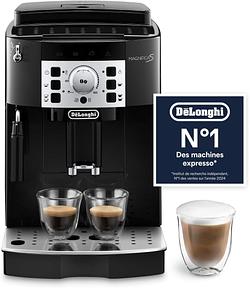
De'Longhi Magnifica S ECAM22.110.B
View at Amazon (as of Aug 11)Affiliate link. Buying through it earns us a commission; the price stays the same for you.
Axis 4: how much counter space it eats
One appliance against two, the conclusion looks obvious. It's less obvious than it looks.
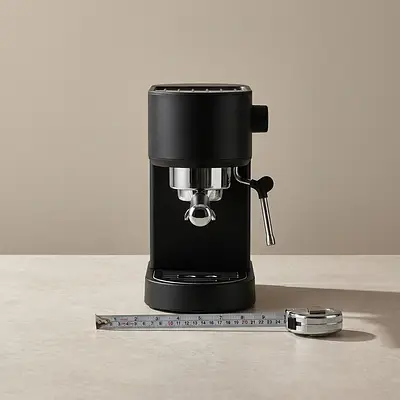
A bean-to-cup machine is a deep, tall block, because it stacks the hopper, the burrs and the group. A compact portafilter plus a narrow grinder occupy two separate footprints, often shallower, and you can spread them out. Grinder in a corner, machine near the socket.
The Philips Series 5400 LatteGo, logged at €493.99 on Amazon.fr on 08/08/2026, illustrates the all-in-one compromise nicely: one object to put down, but an object you need to be able to pull forward to reach the tank and the drip tray.
| Setup | On the counter | Price logged on Amazon.fr on 08/08/2026 | Manufacturer dimensions |
|---|---|---|---|
| De'Longhi Magnifica S ECAM22.110.B | 1 appliance | €329.99 | not stated |
| Philips Series 5400 LatteGo EP5447/90 | 1 appliance | €493.99 | not stated |
| Dedica Style EC685.M + Baratza Encore ESP | 2 appliances | €319.89 in total (€139.99 + €179.90) | not stated |
| Dedica Style EC685.M + Krups Expert GVX231 | 2 appliances | €212.67 in total (€139.99 + €72.68) | not stated |
Manufacturer dimensions don't appear here until they've been taken from an official spec sheet. Measure your counter before you buy, width and depth, height under the wall units included. That's the constraint that rules out the most models in practice.
Axis 4 verdict. Go for the built-in if you have only one free zone and it's a deep one. Go for the separate setup if you have two small spaces rather than one big one, which is the case in most kitchens under 8 m².
Not available in your region — closest match
De'Longhi Magnifica S ECAM22.110.B
View at Amazon (as of Aug 11)Affiliate link. Buying through it earns us a commission; the price stays the same for you.
Axis 5: cost and the upgrade path
What the two camps really cost
On the built-in side, Que Choisir tested 52 bean-to-cup machines with built-in grinders (updated 13/01/2026), from €398.64 to €1,999. A test bench's verdict belongs to whoever ran it, not to us: that range is their reading, not a measurement made here.
MaxiCoffee / Coffee Spirit (page dated 1 April 2026) cuts the French market into five tiers: entry level under €400, upgradeable €400–700, experiential €700–1,000, premium €1,000–1,500, luxury above €1,500.
On the separate side, the bill fits in two lines. Nothing more.
De'Longhi Dedica Style EC685.M
The De'Longhi Dedica Style EC685.M portafilter is logged at €139.99 on Amazon.fr on 08/08/2026. Add the Baratza Encore ESP at €179.90 and you get €319.89, which is less than the Magnifica S and clearly under the €398.64 floor logged by Que Choisir. The demonstration fits into one sum: at an entry-level budget, the separate architecture isn't more expensive, it just spreads the money differently.
If the budget really is tight, there's a rung below that.
The Krups Expert GVX231, at €72.68 logged on Amazon.fr on 08/08/2026, brings the whole thing down to €212.67. Be clear-eyed about what that means. At that price you're not buying the 55mm burrs Clive Coffee talks about. It's a compact starting point, not the final answer to axis 1.
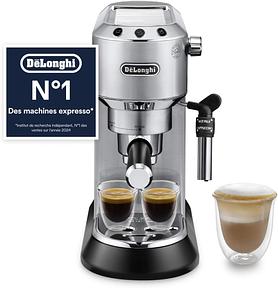
De'Longhi Dedica Style EC685.M
View at Amazon (as of Aug 11)Affiliate link. Buying through it earns us a commission; the price stays the same for you.
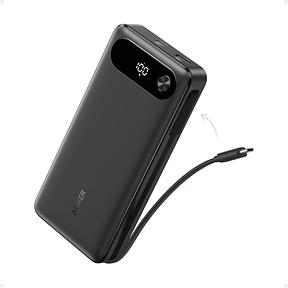
Not available in your region — closest match
View at Amazon (as of Aug 15)Affiliate link. Buying through it earns us a commission; the price stays the same for you.
The upgrade path, the argument comparisons forget
Here's the real long-term advantage of the separate grinder: it outlives the machine.
On the French market, the Eureka Mignon range runs from €279 (Mignon Zero 55S, 55mm burrs) to €766 (Mignon Libra 65, 65mm burrs) according to MaxiCoffee (prices logged on 2026-08-08). You can come in at the bottom and climb that ladder without ever touching your machine.
On a bean-to-cup machine with a built-in grinder, there is no ladder. The grinder is born and dies with the appliance. The day the brew group gives up, you throw the burrs out too, even if they were still good.
That doesn't condemn the built-in. It just shifts the question. Are you buying an appliance for five years, or building a coffee station you'll grow piece by piece? If it's the first one, our bean-to-cup machine comparison sweeps the models tier by tier.
Axis 5 verdict. Closed budget with nothing to follow? The built-in answers. Want to grow your coffee station piece by piece, grinder first? The separate setup keeps every euro you put in.
The verdict, profile by profile: built-in grinder or separate grinder
Choose a bean-to-cup machine with a built-in grinder if:
you mostly drink milk drinks or long coffees
several people help themselves
you only have one spot available
you'd rather close the budget in one go
It's the majority choice, and for good reasons. The bean-to-cup machine comparison is the right place to start.
Choose a separate coffee grinder if:
you pull tight espressos
you change coffees regularly
retention bothers you
you have two small spaces rather than one big one
you want to move up a grade without replacing the machine
And if you're still torn: the order you buy in matters more than the model. A decent grinder on a modest machine gives you a better espresso than the other way round. It's the one rule in this guide that doesn't depend on your profile.
All products from this post
The ones we named above are marked; the rest are alternatives in the same category.
Not available in your region — closest match
De'Longhi Magnifica S ECAM22.110.B
View at Amazon (as of Aug 11)
Not available in your region — closest match
Anker Powerbank, 20.000mAh tragbares Ladegerät mit integriertem USB-C-Kabel, 87W Max Schnellladung, kompatibel mit MacBook, iPhone, Samsung und mehr
View at Amazon (as of Aug 15)Affiliate notice: As an Amazon Associate, we earn from qualifying purchases. Product prices and availability are subject to change.
Frequently Asked Questions
Is a built-in grinder enough for real espresso?
Yes for a decent, consistent espresso, with a reservation about fineness. According to Clive Coffee, a built-in grinder usually runs on burrs of 40 to 50mm, against 55mm and up for a separate grinder at a comparable budget. The gap shows up mostly on tight espressos, much less on long coffees and milk drinks.
What is grinder retention?
It's the ground coffee left stuck in the appliance after the cycle, under the burrs and in the chute, instead of going into your cup. It comes back out the next day, oxidised, mixed into the following dose. The Clive Coffee comparison on retention gives a range running from under 1g to 12g depending on the model, so almost two espresso doses in the worst case.
Do you need a separate grinder when you're starting out?
Not necessarily, but the sum often surprises people. An entry-level portafilter at €139.99 and a dedicated grinder at €179.90, prices logged on Amazon.fr on 08/08/2026, come to €319.89 in total, less than plenty of machines with a built-in grinder. The real brake isn't the price, it's the time. Reckon on a minute of handling per cup.
Does a separate grinder really take up more room?
Two appliances take up more total surface, but each one is smaller and you can spread them across the counter. A bean-to-cup machine is a single block, deep and tall, that needs a spot left clear at the front. In a small kitchen, two modest footprints often fit better than one big one.
Do the 15 or 19 bar on the box change the grind?
No, neither figure is about grind at all. Green Plantation points out that they describe the maximum pressure of the pump with no load, and that any properly designed machine brings extraction back to around 9 bar. What decides the cup is the grind, the dose and the grinder's consistency, never the number printed on the box.
Sources
- Green Plantation greenplantation.fr
- Clive Coffee clivecoffee.com
- Jonathan Gagné (Coffee Ad Astra, 21 September 2023) coffeeadastra.com
- Clive Coffee comparison on retention clivecoffee.com
- Green Plantation greenplantation.fr
- Que Choisir quechoisir.org
- MaxiCoffee / Coffee Spirit coffee-spirit.maxicoffee.com
- MaxiCoffee maxicoffee.com