Organic Coffee Beans or Conventional? What the Label Changes
 12 min read
Updated 28 September 2026
Two one-kilo bags, side by side on the shelf. One has the little green EU leaf on it, the other has nothing. Are organic coffee beans better? Fairer to the farmer? Kinder to the planet? The honest answer is that the organic logo answers exactly one question, and it isn't the one most people are asking in that aisle.
Organic vs conventional coffee comes down to what the organic coffee label actually covers: a farming method and an inspection system. On taste, on what the farmer was paid, on whether the coffee grew in shade, it stays silent. Trouble starts when people credit it with things it never claimed.
What the EU organic label actually guarantees
The current framework is Regulation (EU) 2018/848, in application since 1 January 2022 (EUR-Lex summary). It replaced the old Regulation EC 834/2007, which a few brand pages still quote.
For the practical detail, the clearest source I've found is the French Ministry of Agriculture. Three things come out of it.
A regulated way of farming
Organic farming, according to the ministry, "excludes in particular the use of GMOs" and "strictly restricts the use of synthetic chemical products" (translated from French). The word doing the work is restricts, which isn't the same as bans outright. So organic coffee isn't "untreated" coffee, and it pays to be wary of any bag that hints otherwise.
Inspections at every link
This is the strongest part of the label. Operators at every stage (production, processing, storage and distribution) are inspected "at least once a year" by certification bodies approved by the French public authorities, which have to meet "criteria of independence and impartiality" (agriculture.gouv.fr, 28/09/2026).
For coffee, that matters: beans pass through a lot of hands between the farm and your cup, and the inspections cover that whole chain, field included.
The logos on the bag
To spot the organic label on coffee sold in the EU, look for the EU organic logo (a leaf drawn in stars on a green background, often called the Euro-leaf), sometimes next to a national mark such as France's AB logo. Both point to the same organic certification logic. Neither one says anything about fairness, flavour or freshness.
What the organic label doesn't guarantee
Here's what the logo doesn't cover, one item at a time.
Taste
I couldn't find a single independent source showing that organic coffee beans taste better than conventional ones. French consumer magazine Que Choisir had 22 whole-bean coffees, organic and conventional, blind-tasted (protocol published 22/09/2022) and drew no "organic vs conventional" conclusion. That makes sense: the organic label sets no criteria for variety, washing method or roast level.
What the farmer gets paid
Organic doesn't mean fair trade, and the fair-trade certifier says so itself: Max Havelaar France, the French arm of Fairtrade, writes that "fair trade doesn't mean organic" (translated). It works the other way round too. The organic logo on its own sets no price floor.
Shade and biodiversity
People picture organic coffee growing under a canopy full of birds. The label doesn't require it. According to the certification guide from Coffee & Conservation, organic standards have no shade requirement. The Bird Friendly label, on the other hand, demands at least 40% shade cover. Forests fall under a different EU text, the EU deforestation regulation (EUDR).
Zero residues
Strict restrictions, yes. A promise of zero molecules in your cup, no: the ministry talks about restriction, not total absence. On health, I'm stopping there. None of the sources I read settles it cleanly.
Freshness and farm-level traceability
The label says nothing about roast date, so an organic bag may well have been roasted a long time ago. Supply-chain inspections also don't replace a precise origin on the pack. "100% arabica, Latin America" is still a continent, organic or not.
Organic vs fair trade coffee: the difference between organic, fair trade and Bird Friendly
On a bag, each logo answers a different question. This table sums up what the sources above say.
| On the bag | The question it answers | What it doesn't tell you | Source |
|---|---|---|---|
| Organic (EU leaf, national marks) | How the coffee was farmed and checked: no GMOs, synthetic chemicals strictly restricted, inspected at least yearly | Farmer pay, shade, taste, freshness | agriculture.gouv.fr |
| Fairtrade / Max Havelaar | The minimum the farmer is paid: USD 1.80 per pound for washed arabica, USD 2.20 if it's organic too (September 2026) | How it was farmed, which isn't necessarily organic | Max Havelaar France |
| Bird Friendly | How much shade it grew under: at least 40% cover | Farmer pay | Coffee & Conservation |
| Rainforest Alliance | Its own sustainability criteria, which the sources cited here don't detail | Shade: according to Coffee & Conservation, certified coffee may not be shade grown | Coffee & Conservation |
| Roast date (not a label) | How long the beans have been waiting | Nothing about farming | Roaster's own marking |
Two notes on the fair-trade figures. The minimum price for washed arabica rises to USD 2.00 per pound from 1 December 2026, with the organic differential staying at USD 0.40, according to Daily Coffee News (article dated 04/08/2026). If you're reading this next year, the numbers in the table will have moved.
And the two logos overlap a lot. More than 70% of Fairtrade/Max Havelaar products sold in France are also organic, around 4,060 products, according to Max Havelaar France (undated page, accessed 28/09/2026). A bag carrying only the fair-trade logo still isn't organic: you need both logos to get both guarantees.
Why organic coffee beans cost more
"Because it's better" isn't an explanation. The real reasons are more down to earth, and most of them happen on the farm.
Yield. In a study of 738 smallholders in Ethiopia, India and Nicaragua (Jena and Grote, Frontiers in Sustainable Food Systems, 2022), Nicaraguan farms certified organic only produced 1,165 kg/ha, against 1,206 kg/ha for conventional. Not a huge gap in that case, but it points the expected way: fewer inputs, a bit less coffee.
Certification itself. The yearly inspection by an approved body costs money, and it weighs on the supply chain. French roaster Café Chulo (post dated 13/01/2026) describes certification as "a constraint and a financial pressure" for small producers (translated), and prefers working with farms that grow cleanly without being certified. That's one roaster's view with no claim to consensus, but it deserves a hearing.
Conversion. Coffee & Conservation describes a transition period: under the US rules its guide presents, no prohibited substances may have been used on the land for at least three years. I couldn't confirm the exact EU length, so treat that figure as a rough guide. During that period, the farmer generally follows the organic rules without yet selling at organic prices.
The differential. On the fair-trade side, organic adds USD 0.40 per pound to the minimum price (Max Havelaar France and Daily Coffee News, above). That extra cost ends up, at least in part, in the coffee bean prices you see on the shelf.
The premium you pay doesn't necessarily reach the farmer intact. Jena and Grote conclude that the outcome of certification "is very context-specific and depends largely on the organization of supply chains". Across the pooled data, they observed no positive impact on household income.
The most striking example involves fair-trade-certified farmers, not organic-only ones. In Nicaragua they reported USD 1,290 net revenue per hectare against 849 for non-certified farmers. In Ethiopia it flipped: USD 351.60 against 428.70, with a price received of USD 0.83 per pound while the floor stood at 1.40. Same logo, opposite outcomes. The cooperative makes the difference, not the sticker.
What actually decides the taste in your cup
If the label doesn't drive flavour, what does? Here's the order to read a bag in:
- Roast date. Beans roasted three weeks ago and beans roasted a year ago won't pull the same espresso, organic or not. Check that the bag shows a real roast date, not just a best-before date.
- Roast level. Match it to your taste and your machine. Our article on roast level, light, medium or dark goes through the three.
- Origin and variety, when they're given, including the choice between single-origin or blend. "Arabica" is a species, not an origin.
- Processing (washed, natural, honey), when it's stated.
- And your grinder. A bean-to-cup machine is only as good as its burrs, and a great bean ground badly makes bad coffee.
Notice the organic label isn't anywhere on that list. Its criteria are about the field, while flavour gets decided a long way downstream, at the roaster and the grinder.
To settle organic vs conventional coffee for yourself, grab one of each from the same origin and a similar roast, and taste them blind at home, same grind, same dose. It's the only test that means anything for your own palate.
Checklist for buying organic coffee beans (or not)
Here's how to read a bag, in this order.
What matters to you. If it's farming method, the organic logo answers that. If it's what the farmer earns, look for the fair-trade logo too. If it's biodiversity, Bird Friendly is the only one of these that talks about shade.
Roast date, ahead of everything else for taste. No date on the bag? Skip it if you have the choice.
Roast level, matched to your taste and your machine.
Origin. A country or a region beats a continent.
Bag size. An opened one-kilo bag lasts a long time for one person, and the beans lose aroma along the way, label or no label.
Three Amazon.fr listings, described from their titles. The Carte Noire Café Grain Bio 100% Arabica Amérique Latine 1 kg is a 100% Latin American arabica sold by the kilo and listed as organic. The NATURELA - Café Grains Bio - Café Grains Pur Arabica Intense - Fabriqué en France - 1 kg, also listed as organic, is pitched as an intense arabica. On the conventional side, the Lavazza Qualità Oro Café Grain 100% Arabica 1 kg (lot de 4) comes as a pack of four one-kilo bags, with no organic claim.
None of these three listings gives a roast date in its title. Check it when the bag arrives. An organic claim in a listing is the seller's statement: the logo on the actual bag is what counts.
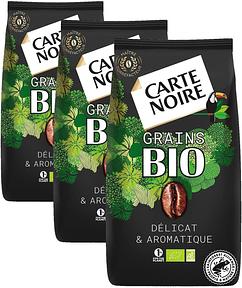
Carte Noire Café Grain Bio 100% Arabica Amérique Latine 1 kg
View at AmazonAffiliate link. Buying through it earns us a commission; the price stays the same for you.
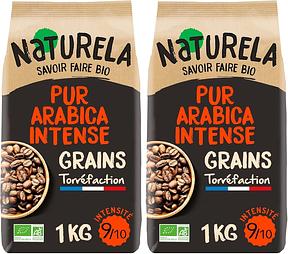
NATURELA - Café Grains Bio - Café Grains Pur Arabica Intense - Fabriqué en France - 1 kg
View at AmazonAffiliate link. Buying through it earns us a commission; the price stays the same for you.
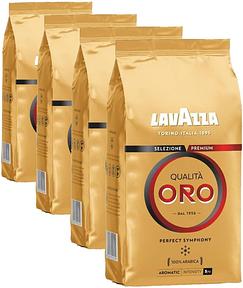
Lavazza Qualità Oro Café Grain 100% Arabica 1 kg (lot de 4)
View at AmazonAffiliate link. Buying through it earns us a commission; the price stays the same for you.
Verdict: are organic coffee beans worth choosing?
Choosing organic coffee beans means choosing a controlled farming method, not better taste or a better deal for the farmer. The label says nothing about the cup: to pick between an organic and a conventional bag, look at the roast date and the origin. If the farmer's pay matters to you, add the fair-trade logo to the organic one.
All products from this post
The ones we named above are marked; the rest are alternatives in the same category.
Affiliate notice: As an Amazon Associate, we earn from qualifying purchases. Product prices and availability are subject to change.
Frequently Asked Questions
Organic vs conventional coffee: which tastes better?
I found no independent source showing a flavour advantage for organic, and the organic label sets no criteria for variety, washing method or roast level. Taste mostly comes down to origin, roast level, roast date and grind. The most reliable test is still a blind tasting at home with the same dose.
Organic vs fair trade coffee: what's the difference?
Organic covers farming methods and supply-chain inspections. Fair trade (Fairtrade/Max Havelaar) sets a minimum price paid to the farmer. Max Havelaar France says it plainly: fair trade doesn't mean organic. Many products carry both logos, but a bag with just one of them only gives you one of the two guarantees.
Why is organic coffee more expensive?
Mostly for farm-level reasons: yields that are sometimes a little lower (in Nicaragua, 1,165 against 1,206 kg/ha in the Jena and Grote study), the cost of yearly inspections, and a conversion period in which the farmer generally doesn't yet sell at organic prices. On the fair-trade side, organic adds USD 0.40 per pound to the minimum price. How much reaches the farmer depends heavily on the cooperative.
What does the EU organic label guarantee on coffee beans?
Organic coffee beans come from GMO-free farming with strictly restricted synthetic chemicals, inspected at least once a year at every stage of the supply chain by an approved certification body. Taste, freshness, the price paid to the farmer and shade all sit outside what the label covers.
Is organic coffee free of pesticides and residues?
The label strictly restricts synthetic chemicals; it doesn't promise zero residues. Be wary of bags claiming completely untreated coffee: that isn't what the rules say, since they talk about restriction rather than a total ban.
Is organic coffee healthier?
None of the reliable sources consulted for this guide supports that claim. The organic label is about how coffee is farmed and checked, not about a health benefit for the person drinking it.