Iced Espresso: Why Yours Tastes Watery, and How to Fix It
 4 min read
Updated 3 September 2026
A normal espresso is already diluted. That isn't an accident. It's pulled to be drunk hot, at exactly that strength. Pour it over ice and you're adding water to a drink that already has plenty. So your iced espresso ends up thin instead of tasting like the shakerato from an Italian bar. The recipe isn't the problem. The extraction is.
Where it goes wrong
This is arithmetic, not bad luck. Ratio Coffee suggests a tighter brew ratio, roughly 1:14 instead of the usual 1:16, to offset what the ice will melt into the glass.
You either decide on the dilution up front or you inherit it. Good iced coffee at home is above all a coffee brewed twice as concentrated, a point Le Coin du Barista makes well.
First move: pull shorter, not longer
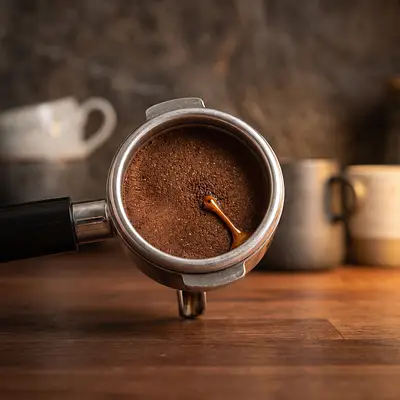
Around 18 to 20 g of ground coffee, stopped at 30 to 40 ml, the range the CompleteHomeBarista guide gives. Same water at 90-96 °C. Same working pressure of about 9 bar at the puck, whatever number is printed on the box. The only thing that changes is what lands in the cup, and that's exactly what turns a normal shot into proper iced espresso.
A slightly finer grind helps if the flow runs away too fast. That's the one machine setting worth touching here, and our grind size guide explains how to read the markings.
You do need a portafilter machine where the dose is yours to set. Something compact like the Dedica handles that fine.
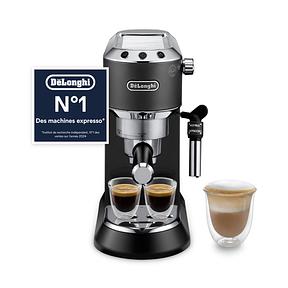
De'Longhi Dedica Style EC685.BK
View at Amazon (as of Aug 11)Affiliate link. Buying through it earns us a commission; the price stays the same for you.
Second move: pour immediately
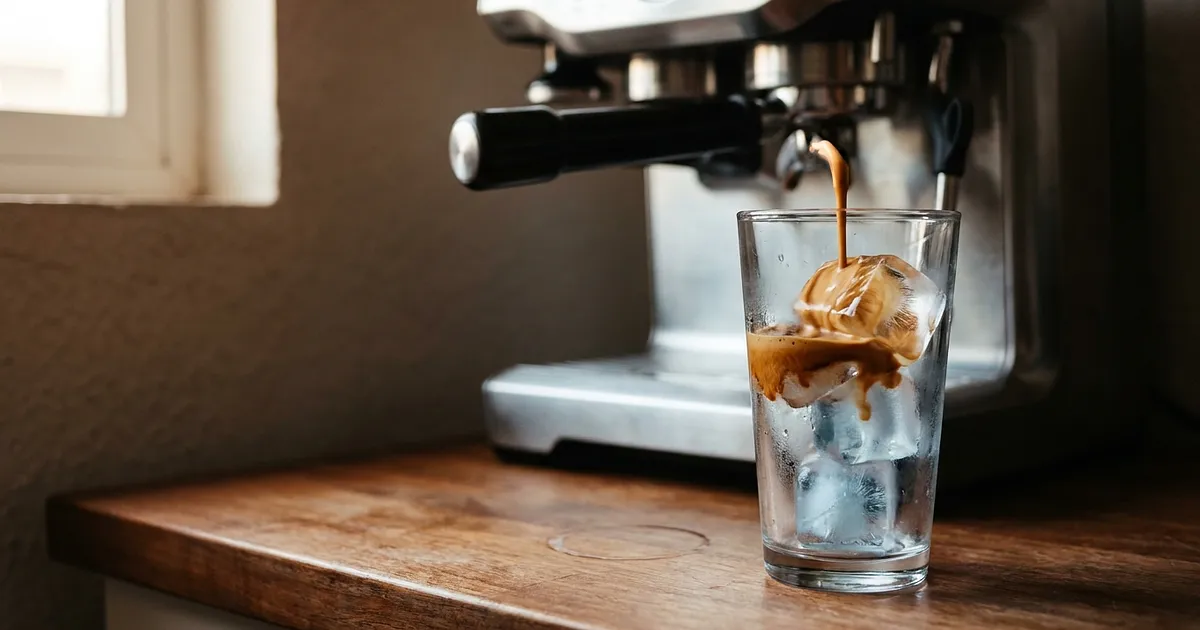
Ice goes in the glass first, and the hot shot lands on it within a second or two. That thermal shock locks in the volatile aromatics rather than letting them drift off as steam over three minutes of waiting.
Some guides say the opposite, letting the shot cool before it hits the ice. Honestly, most technical sources go the other way, and that's the version worth following.
Third move: fewer cubes, bigger ones
Ice probably shouldn't exceed 30 to 40% of your final volume (dilution maths). Three big cubes expose less surface than eight small ones, so they melt slower. A glass straight out of the freezer helps too.
Shakerato without a shaker
What the Italian shakerato technique really shows is that the foam has nothing to do with bar equipment. It comes from thermal shock and hard agitation. A jam jar with a decent seal, shaken for 15 to 20 seconds, produces the same caramel-coloured head.
Crema itself forms earlier: CO2 released during roasting emulsifies with the coffee oils under brewing pressure (Coffee Spirit by MaxiCoffee breaks down the mechanism). No crema at extraction, no foam in the jar. A portafilter machine with a steam wand, like the Linea Classic, gives you that base.
De'Longhi Linea Classic EM450.M - Machine à Expresso Manuelle avec Buse Vapeur
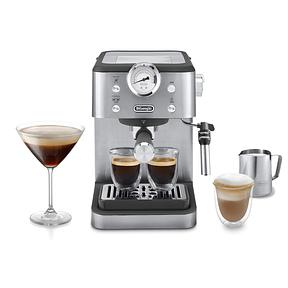
De'Longhi Linea Classic EM450.M - Machine à Expresso Manuelle avec Buse Vapeur
View at AmazonAffiliate link. Buying through it earns us a commission; the price stays the same for you.
All products from this post
The ones we named above are marked; the rest are alternatives in the same category.
Affiliate notice: As an Amazon Associate, we earn from qualifying purchases. Product prices and availability are subject to change.
Frequently Asked Questions
Why is my iced espresso bitter and thin at the same time?
Two faults stacking up. Under-extraction leaves the shot sour and hollow, then the ice waters down whatever was left. For more on this, see how to diagnose your espresso by taste. A finer grind, a dose of 18-20 g and a yield stopped at 30-40 ml usually clears both.
Do I need a cocktail shaker for a homemade shakerato?
No. The foam comes from agitation and a sudden temperature drop, not from the tool. Any sealed container shaken hard for 15 to 20 seconds gives you roughly what a bar shaker does.
What is the difference between iced coffee and iced espresso?
"Iced coffee" covers anything served cold, including filter, instant or cold brew. "Iced espresso" specifically means a machine-pulled shot, chilled. Italians call it a shakerato once it has been shaken.
Can a capsule machine make a decent iced espresso?
Partly. You control dose and yield far less than with a portafilter, so concentration stays capped. Picking the ristretto setting over lungo and cutting back on ice gets you closer.