Moka pot vs espresso machine: what's actually different?
 15 min read
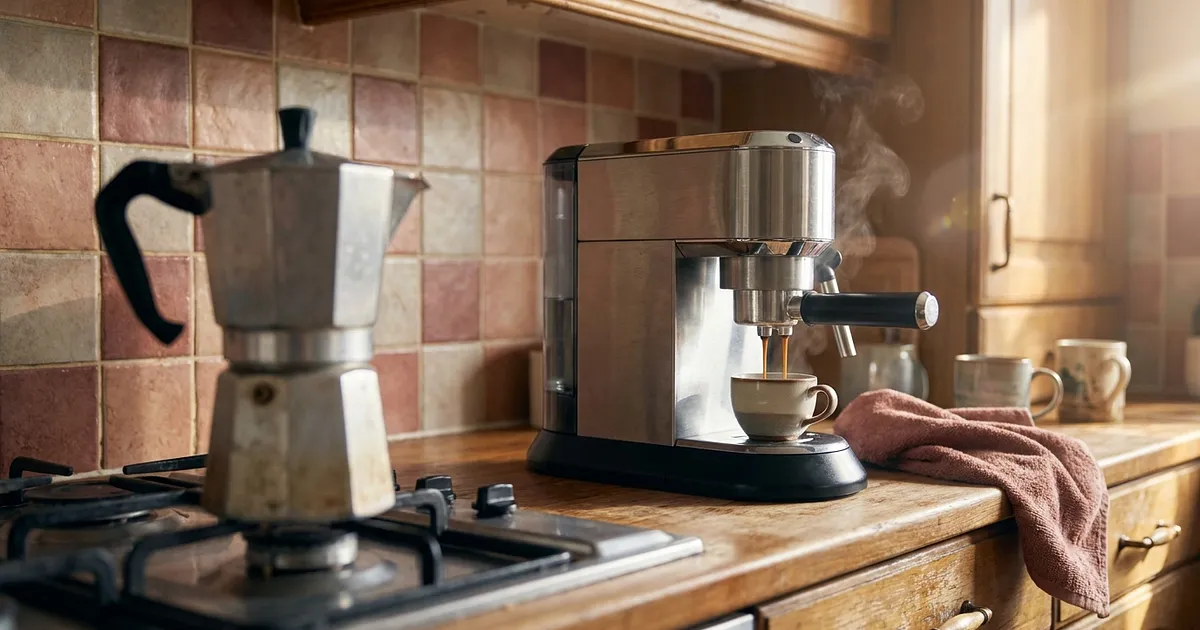
A Bialetti Moka Express 6 cups sells for under €30 on Amazon.fr (price checked 8 August 2026). An entry-level pump espresso machine with a portafilter starts around €70 and clears €150 without much effort. With a gap that wide, the reflex is to file the first one as the broke version of the second. But price explains nothing here. Moka pot vs espresso machine is a comparison of two different extraction systems, and they hand you two different drinks.
It comes down to one number. That number isn't the one printed on the box.
What each device actually does
Before picking a side, look at how each one gets coffee out of coffee.
The moka pot: steam doing the pushing
If you've never had one apart, it's three chambers that screw together. Water sits in the bottom boiler, ground coffee sits in a funnel-shaped basket above it, and the brew collects in the top. No pump, no electricity, nothing to plug in.
The sequence goes like this. You fill the bottom boiler, drop the grounds into the funnel without tamping them, screw the thing shut and put it on the heat. Steam trapped above the water drives the pressure up, and the moment that pressure beats the resistance of the coffee bed, water climbs through the grounds and into the top chamber. That's how a moka pot works, and knowing the sequence is most of what stops you ruining a pot.
Nobody regulates anything. The pressure builds itself and limits itself. As soon as coffee starts flowing, the boiler loses mass and heat, which caps the climb. A study published in Applied Thermal Engineering (Navarini et al., 2009) measured the phenomenon and shows that the onset of extraction depends on the heating temperature and on the starting conditions inside the boiler. Two hobs, two pot sizes, two results.
Which is exactly why there's no single pressure figure for a moka pot.
Now, the name. In English these things get sold as stovetop espresso makers, and that phrase is doing work it never earned. It plants the idea that you're buying a cheap espresso machine that happens to sit on a hob instead of a countertop. You aren't. Everything below is the long version of why that label misleads.
The pump machine: a pump that dictates
A portafilter machine asks steam for nothing. A pump drives hot water through a tamped bed of coffee at a regulated pressure, for 25 to 30 seconds. Far finer grind, compressed dose, very short contact time.
Regulation is the real story. On the box you'll read 15, 19, sometimes 20 bar. That's the pump's peak capability, a manufacturer figure, not the pressure your coffee brews at. Any serious machine steps back down to around 9 bar at the puck through an over-pressure valve. A bigger printed number does not buy you a better espresso.
Pressure: 1-2 bar against 9 bar
Under the widely reproduced Specialty Coffee Association definition, an espresso is a 25 to 35 ml drink brewed from 7 to 9 g of coffee, with water at 90.5-96.1 °C forced through the puck at 9-10 atmospheres, in 20 to 30 seconds. That's a technical specification, not a barista's opinion.
On the moka side, sources vary, and saying so is the honest move. According to Wikipedia's moka pot entry, a moka typically works between 1 and 2 bar (100-200 kPa), while other industry write-ups describe a lower ceiling in normal use. Pot size, hob power and grind fineness all shift the result.
Take the range, not a single figure. Something on the order of five to nine times separates the two methods.
This isn't a spec-sheet quibble. A moka pot doesn't make espresso and never will, no matter how long you leave it over the flame, because the system throttles itself. The 9 bar figure deserves an article of its own; for a comparison, the size of the gap settles it.
Taste: strength, body, and that foam that isn't crema
Coffee from a moka pot is strong. It isn't concentrated the way an espresso is, and those two things aren't the same thing.
The measurement that matters is TDS, the quantity of dissolved solids in the cup. A moka lands roughly between 3 and 5 % TDS, an espresso between 8 and 12 %. Those are usual orders of magnitude, not single measurements. Extraction yield can be similar on both sides. What changes is the water-to-coffee ratio.
In the cup: round, chocolatey, a bit earthy, with body but without the syrupy texture of a ristretto. A moka cappuccino holds up beautifully behind milk. An espresso served on its own in 30 ml, though, has no substitute.
The fake crema, on both sides
That golden foam that sometimes shows up on a moka pot isn't crema. Real crema is an emulsion of oils and CO2 held together by pressure, and without 9 bar it doesn't form. What you're looking at is degassing foam, and it collapses inside a minute. Bialetti sells a weighted-valve model, the Brikka, whose own marketing promises "more visible crema" rather than crema.
The reverse is true too, and almost no comparison mentions it. As Coffee Semantics explains, the pressurised baskets fitted to cheap machines manufacture a thick foam even from stale coffee, by whipping air into the shot. It tells you nothing about the extraction underneath.
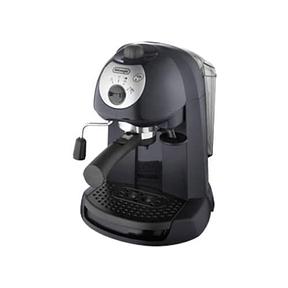
The De'Longhi EC191.CD is the category in one product: portafilter, thermoblock, pressurised basket as standard, around €70 on Amazon.fr (price checked 8 August 2026). It gets you into the portafilter world for the price of two moka pots, provided you know where the handsome foam of the first few weeks is coming from.
Affiliate link. Buying through it earns us a commission; the price stays the same for you.
Grind: two worlds that can't share coffee
This is the most common mistake, and it costs more than people expect.
Moka grind sits at roughly 360 to 660 microns based on the reference points at Honest Coffee Guide: finer than filter, clearly coarser than espresso, and often described as fine table salt. Espresso runs nearer 200 to 300 microns.
Put espresso-ground coffee in a moka pot and you choke the bed, push pressure past what the pot is built to hold, and pour a bitter cup. Pre-ground coffee sold for moka is calibrated for the job. An entry-level burr grinder is plenty for a moka, whereas a decent espresso needs a grinder that adjusts finely around the 200 micron mark, which usually means a budget bigger than the machine's.
That's the real hidden cost on the machine side. It isn't the machine. It's the grinder.
Comparison table
| Criterion | Moka pot | Pump espresso machine |
|---|---|---|
| Brew pressure | approx. 1-2 bar (range, sources vary) | approx. 9 bar (SCA definition) |
| Pressure printed on the box | none | 15 to 20 bar (pump peak, manufacturer figure) |
| Cup concentration (TDS) | approx. 3 to 5 % | approx. 8 to 12 % |
| Grind | approx. 360 to 660 µm | approx. 200 to 300 µm |
| Crema | no (degassing foam) | yes, if grind and dose are right |
| Time to brew | 4 to 6 min including heat-up | 25 to 30 s per shot, after warm-up |
| Indicative purchase price | approx. €20 to €45 | approx. €70 to €330 and well beyond |
| Grinder needed | optional, entry-level is fine | close to mandatory, and expensive |
| Maintenance | rinse with clean water, replace the gasket | descaling, group cleaning, gaskets |
| Power | none, works on gas or a camping stove | mains only |
| Lifespan | decades with fresh gaskets | not stated, varies by model |
Indicative prices checked on Amazon.fr on 8 August 2026. Verify before buying.
What it really costs to run
The purchase price is only the first line of the bill.
On the moka side, the bill more or less stops there: a rubber gasket every six to twelve months, a filter plate now and then. Bialetti recommends replacing the gasket regularly in its own documentation, which costs a few euros. No descaling, no boiler, no control board.
On the machine side, maintenance has a documented consequence. A test by Stiftung Warentest, Germany's consumer-testing body, published on 17 November 2021, put seven entry-level portafilter machines priced from €156 to €455 on the bench: four rated "good", two rated "deficient". The finding that matters here is excessive lead release into the cup after descaling, on two of the seven models. That's a failure mode specific to appliances with an internal boiler and a descaling cycle, and a moka pot simply can't produce it.
The French consumer body UFC-Que Choisir confirms on a different axis that the quality spread between machines stays wide, entry level included. The sticker price doesn't guarantee the cup.
Maintenance: a rinse against a routine
Cleaning a moka pot takes thirty seconds. Take it apart, tip out the puck, rinse with clean water, dry. No soap, and absolutely no dishwasher on an aluminium body.
An espresso machine wants a routine: flushing the group, cleaning the baskets, descaling on a schedule set by your water hardness, replacing the group gasket.
If you hate maintenance, that paragraph is half your decision.
Four myths still doing the rounds
"A moka pot makes espresso"
No, and not out of snobbery. By definition. The Specialty Coffee Association puts the threshold around 9-10 atmospheres. A moka pot makes something else, and makes it well.
"Any moka pot works on induction"
Wrong, and it's the most frequent return in the category. Aluminium isn't ferromagnetic, so a classic Moka Express won't heat on an induction hob. You need a stainless steel body, a bonded ferromagnetic base, or an adaptor disc.
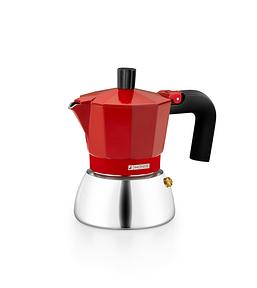
So the stainless steel versus aluminium argument is settled by your hob, not by taste. A steel model like the Monix Induction, around €21 on Amazon.fr (price checked 8 August 2026), also goes in the dishwasher, at the cost of heating a little more slowly.
Affiliate link. Buying through it earns us a commission; the price stays the same for you.
"Aluminium is dangerous"
The best source in the file answers this one. A study published in Environmental Sciences Europe in 2017 (full text on PMC) measured aluminium migration into the drink, dishwasher use included. The result: a contribution that stays at a maximum of around 4 % of the tolerable weekly intake set by EFSA. Choose steel for induction, yes. For your health, the data doesn't back it.
"19 bar beats 9 bar"
This is the sentence this site exists to correct. The number printed on the box is the pump's peak pressure, a manufacturer characteristic. Extraction happens around 9 bar after regulation. A pump rated at 20 bar is not pushing your coffee at 20 bar.
Which moka pot size to buy
The "cups" in the size are Italian demitasse cups of 40 to 50 ml, not mugs. That's disappointment number one on first use. A moka pot also has to be filled to its nominal capacity or it extracts badly, which is the foundation of using one properly.
3 cups, for one person
Around 130 ml, so one generous cup or two small ones. This size comes up to temperature fastest and is the hardest to get wrong. Around €22 on Amazon.fr (price checked 8 August 2026).
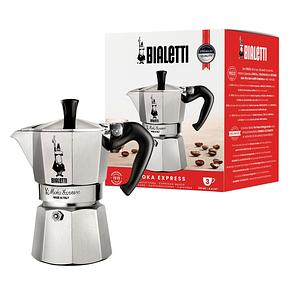
Bialetti Moka Express 3 tasses
View at Amazon (as of Aug 11)Affiliate link. Buying through it earns us a commission; the price stays the same for you.
6 cups, the default
Around 270 ml, enough for two people or two cappuccinos. When in doubt, take this one. Around €28 on Amazon.fr (price checked 8 August 2026).
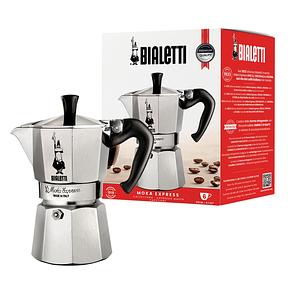
Bialetti Moka Express 6 tasses
View at Amazon (as of Aug 11)Affiliate link. Buying through it earns us a commission; the price stays the same for you.
9 cups, when there's a crowd
Around 400 ml, useful for a family or an office, though the format wants a properly sized hob and a bit more attention to the heat. Around €43 on Amazon.fr (price checked 8 August 2026).
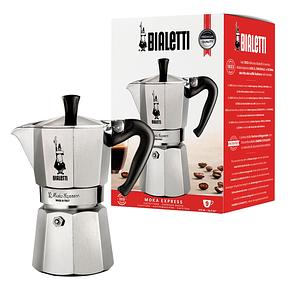
Bialetti Moka Express 9 tasses
View at Amazon (as of Aug 11)Affiliate link. Buying through it earns us a commission; the price stays the same for you.
Italy and Spain: what the ownership figures actually say
The moka pot isn't a folklore object. Depending on the source, somewhere between 70 % (Euronews, 2018, quoting Filicori Zecchini) and 90 % (a study commissioned by Bialetti in 2010, so a manufacturer figure) of Italian households are said to own one. Neither is an independent census, and the Euronews piece is specifically about the moka losing ground to capsules.
Losing ground isn't the same as being abandoned. In April 2023, updated in February 2025, Altroconsumo, Italy's leading consumer organisation, tested fifteen ground coffees made for moka brewing with a 195-person panel. Nobody spends that on a nostalgia product.
In Spain, the cafetera italiana has been ordinary kitchen kit for decades. The ownership percentages circulating on retail blogs contradict each other and cite no primary source, so they don't appear here.
Moka pot or espresso machine: which one to buy
The honest answer won't please the pages selling machines: for a lot of people, the moka pot is the better buy.
Get a moka pot if:
you drink one or two cups a day
crema doesn't interest you
you don't want to buy a grinder, since pre-ground moka coffee does the job perfectly well
you want something that works on a camping stove and lasts twenty years
Total budget stays under €40, and the learning curve is about three coffees long.
Move to a machine if:
you genuinely want espresso, short and concentrated
the texture and crema of a real extraction matter to you
a daily milk drink is your main use
adjusting an extraction (grind, dose, time) sounds like fun rather than a chore
Put the grinder in the budget from day one.
If you want to learn extraction
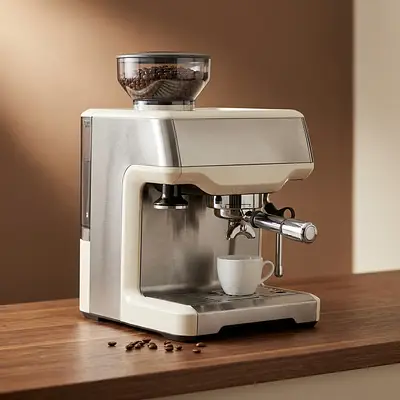
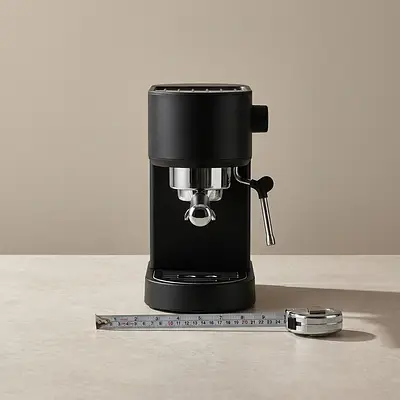
The De'Longhi Dedica Style EC685.BK is the usual reference for a first compact portafilter: around €140 on Amazon.fr (price checked 8 August 2026), 15 cm wide, non-pressurised baskets available separately. A machine you can improve on, as long as you add a decent grinder.
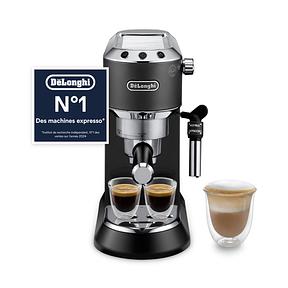
De'Longhi Dedica Style EC685.BK
View at Amazon (as of Aug 11)Affiliate link. Buying through it earns us a commission; the price stays the same for you.
If you just want to press a button
A bean-to-cup machine settles the grinder question by building one in. The De'Longhi Magnifica S ECAM22.110.B, around €330 on Amazon.fr (price checked 8 August 2026), is still the most cited entry point in the category. To compare models, our bean-to-cup machine comparison breaks down the grinders and the real spec differences.
De'Longhi Magnifica S ECAM22.110.B
Nothing forces you to choose, by the way. A €28 moka pot sitting next to a machine costs almost nothing, and it earns its place on the mornings when preheating anything sounds like too much. Moka pot vs espresso machine isn't a hierarchy. It's two different uses.
Prices checked on Amazon.fr on 8 August 2026 and subject to change. The pressure, TDS and grind figures are ranges taken from the sources cited above, not measurements made by Novebar.
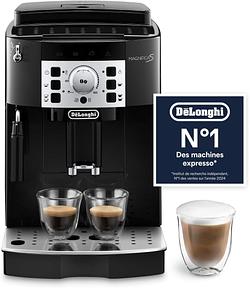
De'Longhi Magnifica S ECAM22.110.B
View at Amazon (as of Aug 11)Affiliate link. Buying through it earns us a commission; the price stays the same for you.
All products from this post
The ones we named above are marked; the rest are alternatives in the same category.
Affiliate notice: As an Amazon Associate, we earn from qualifying purchases. Product prices and availability are subject to change.
Frequently Asked Questions
Does a moka pot make real espresso?
No. The widely reproduced Specialty Coffee Association definition puts espresso at 9 to 10 atmospheres. A moka pot works at roughly 1-2 bar depending on the source, which isn't enough to emulsify the oils or form true crema. What it makes is a strong, full-bodied coffee in its own right, not a downgraded espresso.
What pressure does a moka pot brew at?
Sources vary and none of them gives a single figure. The most commonly cited band is 1-2 bar, or 100 to 200 kPa, with some sources describing a lower ceiling in normal use. Pot size, how hard the hob is turned up and how fine the grind is all move the result. Espresso, by contrast, extracts at around 9 bar.
What grind size does a moka pot need?
Roughly 360 to 660 microns, about the texture of fine table salt: finer than filter coffee, clearly coarser than espresso, which sits nearer 200 to 300 microns. Too fine and the coffee bed chokes, pressure climbs past what the pot is built to hold, and the cup comes out bitter. Pre-ground coffee sold for moka is calibrated for this.
Are aluminium moka pots dangerous?
The available data says no. A study published in Environmental Sciences Europe in 2017 measured aluminium migration into the drink, dishwasher use included, and found a maximum contribution of around 4 % of the tolerable weekly intake set by EFSA. Stainless steel makes sense for induction hobs or for easier cleaning, not for safety.
How do you clean a moka pot?
Take the three parts apart, tip out the puck, rinse with hot clean water and dry before reassembling. No soap, no abrasive sponge, and definitely no dishwasher on an aluminium body, which oxidises and pits. Replace the rubber gasket every six to twelve months, and the filter plate whenever it warps.
Moka pot or French press, which should you pick?
Two opposite methods. A French press is full immersion with no pressure and a coarse grind: lighter, more textured, aromatic, made in volume. A moka pot pushes water under pressure through a packed bed and gives you something short, dense and strong. French press for a big morning mug, moka pot for something closer to espresso.
Sources
- Navarini et al., 2009 sciencedirect.com
- Specialty Coffee Association sca.coffee
- Wikipedia's moka pot entry en.wikipedia.org
- Coffee Semantics coffeesemantics.com
- Honest Coffee Guide honestcoffeeguide.com
- Bialetti bialetti.com
- Stiftung Warentest test.de
- UFC-Que Choisir quechoisir.org
- full text on PMC ncbi.nlm.nih.gov
- Euronews, 2018 euronews.com
- Altroconsumo altroconsumo.it