Tamper, WDT and scale: what do they actually do?
 12 min read
Figures and prices checked on 08/08/2026
Your shot ran in twelve seconds, it tastes sharp and thin, even though you were tamping espresso as hard as you possibly could. The next instinct is to tamp harder. That won't work, and the reason has a name that most beginner guides skip right past.
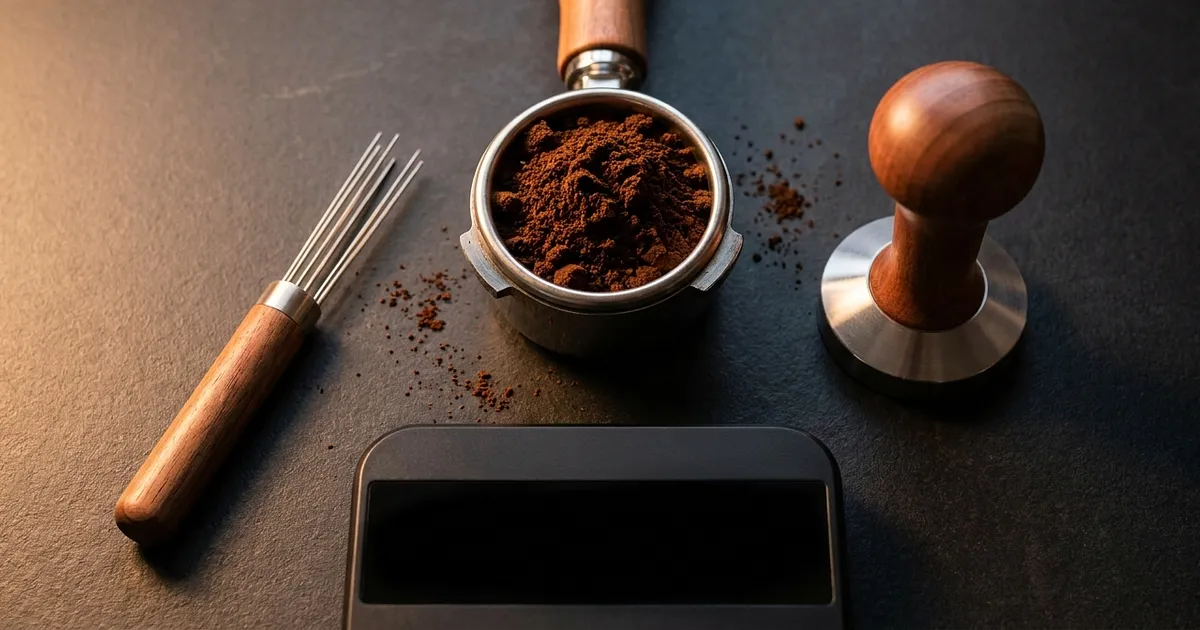
A tamper, a WDT tool and a scale usually get sold as one barista starter bundle. They don't do the same job. Each one fixes a different cause of a single failure, and until you know which cause is yours, you're buying gear at random.
The real culprit: channeling
Channeling is what happens when water finds the weak spot in your coffee puck and rushes through it, rather than flowing evenly through the whole bed (Clive Coffee). Water is lazy. It takes the path that resists least, the way a river keeps cutting the same bank.
What lands in the cup is easy to recognise. Part of the grounds gets over-extracted, because water ran through that channel the whole time. The rest stays under-extracted, because water barely touched it. Bitter and sour arrive in the same mouthful, and no grinder adjustment rescues that.
One number deserves correcting here, because marketing keeps muddying it. Consumer machines advertise pumps at 15 or 19 bar, but an espresso extracts at around 9 bar at the portafilter (the handled basket holder you lock into the group head). That pump figure is a peak, a sales number, not the working pressure. So a 19 bar machine compensates for nothing: at 9 bar, water is already hunting for a way through, and the puck alone decides whether it finds one.
Three separate faults open that route. A puck tamped off-level or at uneven density, which is the tamper's territory. Clumped grounds coming straight off the grinder, which is the WDT tool's territory. A dose that drifts shot to shot without you noticing, which is the scale's territory. That's why all three exist side by side. None of them covers for the others.
The tamper: level beats force when tamping espresso
Start with the myth, because it's everywhere and it doesn't survive contact with a measurement.
The instruction to "press with about fifteen kilograms" runs through most coffee content in several languages, including MaxiCoffee's own Coffee Spirit blog, which prints it with no study and no manufacturer spec attached. Nobody seems able to trace where the figure came from. That isn't an accusation. It's just what the trail shows.
And when someone does measure, the measurement disagrees. A test of 40 shots on a La Marzocco GS/3 across four tamping forces (5, 10, 15 and 20 kg) found no statistically significant difference in extraction from tamping pressure at all (Socratic Coffee, 2015), with p=0.40 for the pressure factor. The only significant predictor of refractometer-measured TDS was the final beverage weight, at p=0.00.
| What gets repeated | What the sources say |
|---|---|
| "Tamp at around 15 kg" | Printed without a source by MaxiCoffee; no study or manufacturer spec supports it |
| "The real number is 30 lb (about 13.6 kg)" | Unic Espresso gives it as a traditional guideline while noting consistency matters more than the exact figure |
| "Harder is better" | Past roughly 30 lb the puck fractures instead of compressing further, which makes channeling more likely (Clive Coffee) |
| "Force decides extraction" | Across 40 shots at 5, 10, 15 and 20 kg: p=0.40, no significant effect (Socratic Coffee, 2015) |
Two widely quoted numbers, neither traceable, and one measurement that finds nothing. Barista tool maker Hauck Barista Tools puts it bluntly: "there is no ideal stamping pressure as a number. There is only the moment when the puck is stable." Which means hunting for the right weight in kilos is the wrong question in the first place. Don't swap 15 kg for some other figure. Drop the figure.
Level is what actually matters. A puck tamped two degrees off is thicker on one side than the other, so it resists more on one side than the other, and water works out which side to take almost instantly. A self-levelling tamper handles that mechanically. A spring stop releases at a set force, and the body of the tool rests on the rim of the basket so it can't tilt. Your wrist stops being the variable.
NEOUZA Tampeur Expresso Auto-Nivelant 58 mm is a good example of the type: its Amazon.co.uk listing states a 58 mm diameter and a self-levelling mechanism, checked on 08/08/2026.
Here's the detail almost nobody mentions. On a precision basket (IMS, VST, La Marzocco), where the internal diameter often reaches 58.4 to 58.6 mm, a 58 mm tamper leaves a 0.2 to 0.5 mm gap all the way round the edge (1988coffee.com). That uncompressed ring of grounds sitting against the wall is exactly where channeling starts. It's also why 58.5 mm tampers exist, and they wouldn't if the problem were imaginary. Measure your basket before you pick a diameter, because your machine's nominal 58 mm says very little about the basket you dropped into it.
Not available in your region — closest match
View at Amazon (as of Aug 15)Affiliate link. Buying through it earns us a commission; the price stays the same for you.
The WDT tool: break the clumps before water does
Grounds leaving a grinder don't fall as an even dust. They come out carrying static and stuck together in small clumps, which gets worse with lighter roasts and home-grade burrs. Those clumps are denser than the bed around them. When water arrives, it goes around the hard part and straight through the loose part.
WDT stands for Weiss Distribution Technique, and it means stirring the dry grounds in the basket with fine needles before tamping. It didn't come out of a lab or a barista competition. John Weiss, who invented it, says he worked it out after concluding that "good grinds distribution in the basket was a critical factor in pretty extractions," and describes starting with a dissecting needle and a cut-down yogurt cup as a funnel (Daily Coffee News, 2022). A hobbyist, at home, around 2004. Some baristas simply call it wdt coffee prep, same motion, different name.
How deep you go matters more than how long you stir. A study comparing surface WDT against full-depth WDT measured roughly 40% shot-to-shot variation in peak puck resistance from surface stirring alone, with that scatter clearly reduced when the needles reached the bottom of the basket (Coffee ad Astra, 2021). Reduced, not erased. The same work, run over 24 shots with pressure and flow sensing, records that the variation persists. WDT makes your next shot resemble your last one. It doesn't make the machine infallible.
So raking only the top does close to nothing useful. The zone that decides where water travels runs through the full thickness of the bed, and a clump sitting three millimetres off the bottom will steer water down there just as reliably as one on the surface.
Needle gauge is a secondary question, honestly. Thick needles push grounds into heaps instead of separating them. Around 0.3 mm they pass through without displacing much. None of the sources gathered here measures the effect of gauge, so treat it as a comfort preference rather than a decisive spec.
Normcore WDT Outil de Distribution V2 (9 aiguilles) fits that description: nine needles at 0.3 mm according to its Amazon.co.uk listing, checked on 08/08/2026.
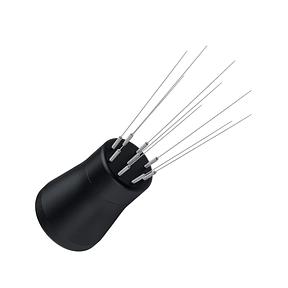
Normcore WDT Outil de Distribution V2 (9 aiguilles)
View at Amazon (as of Aug 10)Affiliate link. Buying through it earns us a commission; the price stays the same for you.
The scale: weigh it, don't guess it
A shot of espresso isn't a uniform liquid. It's liquid topped with crema, a foam whose volume shifts with bean freshness, roast level and pressure. Two shots filling the cup to the same line can hold noticeably different masses of liquid. That's why the marks on a shot glass are close to useless, and why specialty coffee counts in grams.
The brew ratio is just the relationship between the mass of dry coffee going in and the mass of drink coming out. The espresso ratio convention sits around 1:2, so 18 g of grounds for 36 g in the cup (Wikipedia, Coffee extraction), the same reference that reports the Specialty Coffee Association's target window: 18 to 22% extraction yield at 1.15 to 1.35% strength. Under 18% the cup reads sour and hollow. Over 22%, bitter and drying.
| Dose (dry grounds) | Yield (in the cup) | Ratio |
|---|---|---|
| 18 g | 36 g | 1:2 |
| 18 g | 27 g | 1:1.5 |
| 18 g | 45 g | 1:2.5 |
| 20 g | 40 g | 1:2 |
The point of a scale isn't copying a recipe. It's making your problem diagnosable. If 18 g goes in and 36 g comes out in fourteen seconds, you know bed resistance collapsed somewhere, and you look at puck prep. If those same 36 g take fifty seconds, you look at the grind. Without both numbers you only have an impression, and an impression can't be corrected.
The physics backs that logic into slightly counter-intuitive territory. A study published in the journal Matter (Cell Press) showed that grinding too fine can actually clog the coffee bed and hurt extraction consistency rather than improving it (ScienceDaily, 2020). The team even recommended dropping the espresso dose and grinding coarser, using 15 g instead of around 20 g in their worked example, to gain consistency. Note carefully what that paper covers: grind and dose, not tamping and not WDT. It shouldn't be dragged into a tamper argument.
Two specs matter on the hardware and the rest is comfort. Resolution to 0.1 g, because a whole-gram kitchen scale hides up to a 3% dose error. And a built-in timer, so weight and time get read off the same device at the same instant.
BAGAIL Balance Numérique à Café avec Minuterie, Précision 0.1 g covers both: its Amazon.co.uk listing states 0.1 g resolution and an integrated timer, checked on 08/08/2026.
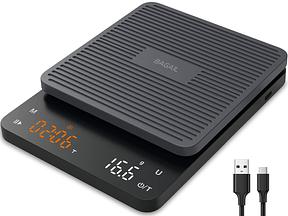
BAGAIL Balance Numérique à Café avec Minuterie, Précision 0.1 g
View at Amazon (as of Aug 10)Affiliate link. Buying through it earns us a commission; the price stays the same for you.
What order to tackle it in
The order below follows the causes, not a shopping list.
Measuring comes first. Until your dose in and yield out are numbers written down somewhere, you can't evaluate any other change, because you'll never know whether the improvement came from your technique or from half a gram of extra coffee.
Distribution comes next. WDT works on the bed before it gets compacted, so it sits upstream of the tamper. A flawless tamp on clumpy grounds gives you a perfectly flat puck that's perfectly irregular inside.
Tamping lands last, and it asks for two things: the same force every time, and a tool that won't tilt. Everything else, grind fineness, temperature, pre-infusion time, belongs to dialing in, the phase where you tune the machine to one specific coffee. There's a dedicated guide covering the seven settings that make up that process, and the "which one should I buy, in what order" question has its own barista accessory comparison. This piece answered something narrower: what each tool fixes, and why.
Where to go from here
None of these three tools makes coffee better by magic. They correct three different ways tamping espresso can go wrong, and they don't substitute for one another. A scale won't straighten a crooked puck, and a self-levelling tamper won't untangle clumped grounds.
If you're still weighing a portafilter machine against an automatic one, the tamping question changes shape entirely, since the machine handles it internally. The bean-to-cup machine comparison covers that decision properly, with the grinder and the grind as the lead criteria rather than the pressure figure printed on the box.
All products from this post
The ones we named above are marked; the rest are alternatives in the same category.
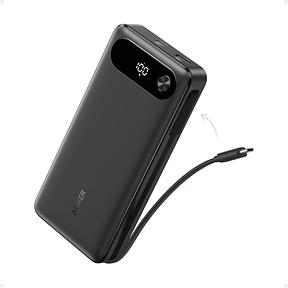
Not available in your region — closest match
Anker Powerbank, 20.000mAh tragbares Ladegerät mit integriertem USB-C-Kabel, 87W Max Schnellladung, kompatibel mit MacBook, iPhone, Samsung und mehr
View at Amazon (as of Aug 15)
Affiliate notice: As an Amazon Associate, we earn from qualifying purchases. Product prices and availability are subject to change.
Frequently Asked Questions
Why do you have to tamp coffee before extraction?
To make the density of the coffee bed uniform. Untamped grounds stay loose and uneven, so pressurised water immediately carves a preferred path instead of moving through the whole bed. Tamping isn't there to block the water or to raise pressure. It's there so no zone of the basket offers less resistance than the ones next to it.
How hard should you tamp espresso?
No traceable number exists. The "15 kg" repeated everywhere and the "30 lb" of Anglo tradition trace back to no study and no manufacturer spec. A measured test of 40 shots comparing 5, 10, 15 and 20 kg found no significant extraction difference from force. Aim for a force you can repeat and a tamp that sits genuinely level, and stop hunting for the right number of kilos.
Is a WDT tool worth it on a home machine?
Yes, and arguably it counts most there, since home grinders throw more clumps and more static than commercial ones. An instrumented study measured roughly 40% variation in puck resistance from surface-only stirring, with that scatter clearly reduced once the needles reached the bottom of the basket. The whole thing takes about ten seconds.
Does a 58 mm tamper fit every portafilter?
No. Standard baskets run about 58.0 to 58.2 mm internal diameter, but precision baskets often reach 58.4 or 58.6 mm. A 58 mm tamper leaves a 0.2 to 0.5 mm gap around the rim there, meaning a ring of grounds that never gets compressed, at exactly the spot where water likes to escape. Check the basket rather than the machine.
What coffee-to-water ratio should you aim for?
Roughly 1:2 is the convention, so 18 g of dry coffee for 36 g of drink weighed in the cup. The Specialty Coffee Association puts the target window at 18 to 22% extraction yield. A tighter ratio concentrates and sharpens the cup, a longer one stretches and softens it. The figure itself matters less than knowing it from one shot to the next.
Will an ordinary kitchen scale do?
Rarely. Most read to the whole gram, which hides up to a 3% error on an 18 g dose, and they have no timer. You need weight and time on the same device at the same moment to tell whether a fault sits in the flow or in the dose. Resolution of 0.1 g is the real entry threshold, well ahead of any brand question.
Sources
- Clive Coffee clivecoffee.com
- Coffee Spirit blog coffee-spirit.maxicoffee.com
- Socratic Coffee, 2015 socraticcoffee.com
- Unic Espresso unic-espresso.com
- Hauck Barista Tools barista.tools
- 1988coffee.com 1988coffee.com
- Daily Coffee News, 2022 dailycoffeenews.com
- Coffee ad Astra, 2021 coffeeadastra.com
- Wikipedia, Coffee extraction en.wikipedia.org
- ScienceDaily, 2020 sciencedaily.com