Single dose grinder or full hopper: which routine works?
 10 min read
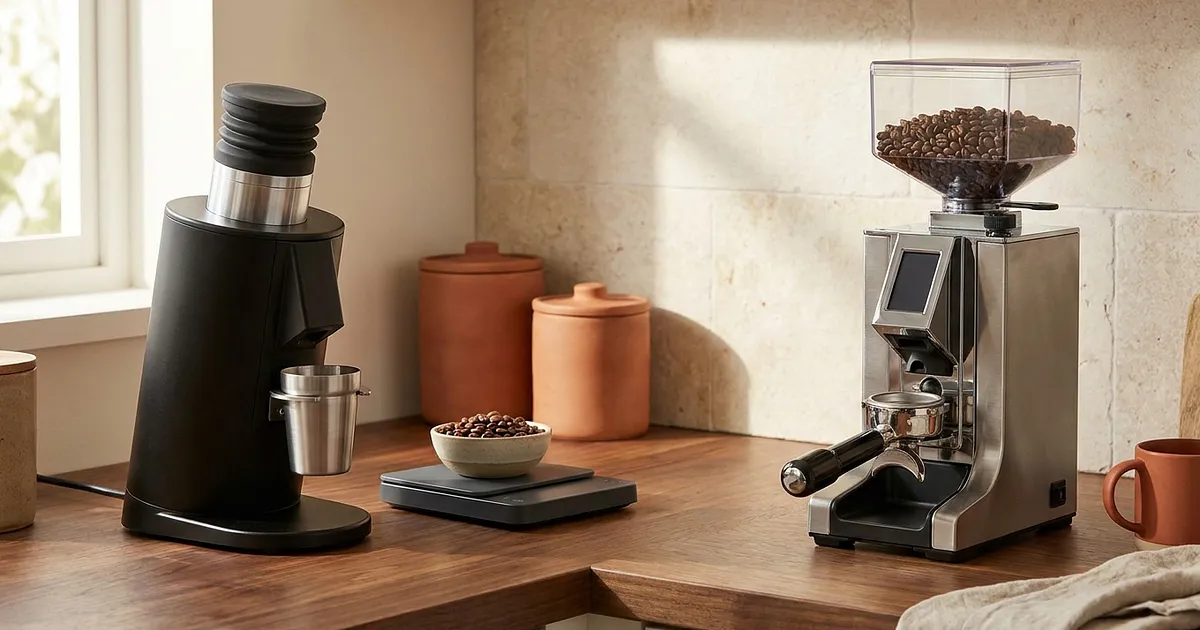
A single dose grinder and a hopper-fed grinder can both fit a consistent espresso routine. What changes is the work before the shot: weighing and loading every dose, or setting a timer and keeping beans above the burrs. The useful choice depends less on online camps than on how often you switch coffee and how many drinks you make in a row.
Quick answer: single dosing suits people who change beans often, usually make one or two drinks, and don't mind weighing each dose. A full hopper with timed dosing suits consecutive drinks made from the same coffee. Neither method makes output mass automatic. Input weight isn't always output weight, while a timer repeats running time rather than measuring grams.
The two workflows put effort in different places
Single dosing means weighing the beans for one preparation and loading only those beans into the grinder. Depending on the machine, a dosing cup and bellows become part of the sequence. You can see every step, but every drink brings the scale, grinding, possible bellows use, and transfers at both ends.
A full hopper reverses that arrangement. Beans remain available above the grinding mechanism. You select a programmed duration, place the portafilter under the chute, and start the dose. The official Eureka Mignon Specialità page describes two programmable doses and time adjustment. That saves hand movements when the same coffee feeds several drinks.
This isn't a comparison between grind-by-weight and timed grinding. None of the example machines here weighs grounds during dispensing. It is a comparison between preweighing individual inputs and feeding a timer from a hopper.
If you're still deciding whether the grinder should be inside the machine at all, the guide to a built-in or separate grinder answers that earlier question. This article starts with a separate grinder.
Input, output, and retention are different things
Input is the bean mass poured into the grinder. Output is the ground coffee collected. Retention is coffee left inside the grinding path, though one cycle's retained material and the exchange of old grounds for new grounds aren't exactly the same issue.
That distinction matters. Weighing beans establishes the input, not necessarily the exact amount that reaches the basket. Checking output while dialing in a new coffee, after cleaning, or when something changes can reveal a grinder-side variation before you blame the espresso recipe.
The timer has a similar limit. The official Mignon user manual describes a countdown and time adjustment for programmed doses. It controls seconds. Coffee, grind setting, hopper feed and cleanliness can all affect how much passes during those seconds.
A practical single dosing routine
A purpose-built single dose grinder makes the sequence easy to see. According to Eureka, its Mignon Zero combines a small single-dose hopper, bellows and dosing cup. It is an architectural example here, not a tested pick or buying recommendation.
A sensible routine looks like this:
- Tare a container and weigh the beans for the current recipe.
- Load only that dose, keeping the grind setting recorded during dial-in.
- Run the grinder until the beans have passed through.
- Follow the model's instructions for its gate and bellows, if fitted.
- Collect the grounds in the cup and transfer them to the portafilter.
- Check output when changing coffee, after maintenance, or whenever delivery looks unusual.
A dosing cup isn't compulsory for every grinder. It can make transfer cleaner and gives the scale a stable container for an output check. The guide to the tamper, WDT tool and scale explains where a scale helps across the rest of puck preparation.
Bellows aren't proof of zero retention
Bellows push air through the grinding path to help move coffee towards the outlet. Eureka markets the Zero's system as a way to eliminate retention. That is a manufacturer claim, not an independent measurement established by the research behind this guide.
Model-specific instructions matter more than a generic ritual. The Mignon Zero manual, checked on 23 October 2026, says to close the tab after grinding and press the bellows four or five times. Don't transplant that count to another grinder. Designs and operating sequences differ.
Bellows also don't replace cleaning. Internal maintenance should happen with the grinder switched off and unplugged, following its own manual. Blowing air while parts are open isn't a substitute for safe access to the chute or chamber.
Where single dosing gets tedious
The cost is attention. One drink is easy. Several milk drinks in quick succession mean repeating weighing, pouring, grinding and transfer while other jobs compete for your hands.
There's another trap. A user may carefully weigh every input yet never inspect output. The workflow looks exact, although the basket may receive a different amount after a cleaning or grind adjustment. When extraction changes, the guide to espresso grind size adjustments helps isolate that variable rather than changing everything at once.
Single dosing works best when its extra actions buy something you actually use, usually frequent coffee changes or deliberate per-dose control. If the same beans stay in service all week, the ritual may become work without much return.
A full-hopper timed routine
The hopper workflow values continuity. Beans for the current period remain in the grinder, a time is programmed, and grounds dispense directly into the portafilter. Its main gain is fewer repeated actions, not guaranteed mass accuracy.
A scale is useful while setting the timer. Choose the grind setting, set a time, weigh the output and adjust. Several checks under similar conditions reveal whether the output stays close enough for your recipe. There is no honest universal tolerance to promise, so the decision stays with the recipe you actually use.
Once the timer is set, checks can be occasional rather than automatic for every drink. A new bag, finer setting, cleaning session, or visibly odd dose is a fair reason to weigh again. The espresso brew ratio guide connects grounds in the basket with espresso in the cup without confusing brew ratio with the grinder's dosing system.
A timer repeats time, not weight
A digital display can make a programmed dose feel more certain than it is. The grinder runs for the stored interval; it doesn't directly observe the ground coffee mass.
The professional Mahlkönig E65S manual provides a useful model-specific example. It asks the operator to maintain a minimum bean level to avoid dispensing fluctuations. That threshold doesn't transfer to domestic grinders, but it demonstrates why hopper conditions can affect timed output.
Keep the hopper supplied as its manual requires and verify output occasionally. A stable home routine doesn't need a scale under every dose, but the scale should come back when the delivered amount starts to look different.
Bean changes take more work
With single dosing, the next weighed input can follow once the path has been cleared according to the grinder's procedure. A full hopper first leaves you with beans that haven't reached the burrs.
The E65S manual documents closing the hopper gate, grinding material left in the mechanism, removing remaining beans and cleaning the intake when changing coffee. That is not a universal domestic procedure. It is solid evidence that a fed hopper makes switching more involved than loading one small dose.
A monthly coffee change barely affects the decision. Switching every morning and evening can erase the hopper's convenience. For the coffee choice itself, rather than the workflow, see single origin or blend for espresso.
Side-by-side workflow comparison
| Situation | Single dose grinder | Full hopper with timer |
|---|---|---|
| One or two drinks | A natural fit if beans are already weighed | Fast, though stored beans add little workflow value |
| Consecutive drinks | Every dose repeats the handwork | Direct, efficient dispensing into the portafilter |
| Frequent coffee changes | No large reserve to empty | Requires the model's emptying and purging procedure |
| Dose control | Input is visible; output still needs checks | Time is programmed; output needs periodic checks |
| Bellows | Possible, using the maker's sequence | Usually outside the timed workflow |
| Maintenance | Small loading doesn't remove cleaning | Hopper, outlet and mechanism still need care |
| Common mistake | Treating low-retention marketing as measured proof | Treating stored time as guaranteed mass |
Read the row that looks like your week. Single dosing asks for work at every drink. A hopper shifts more of it to initial setup, occasional checks, cleaning, and coffee changes.
What the table looks like at breakfast
Suppose four drinks use one bag of coffee. A timed hopper removes repeated weighing and transfer, while an output check at the start keeps the convenience tied to a real measurement. Change coffee between the first and second drink, though, and the small single-dose load becomes easier to manage than a reserve waiting above the burrs.
There is also the quieter case: one cup at a time, almost always the same coffee. Either method can fit. Ask which job bothers you less, weighing every input or maintaining a hopper and checking timed delivery. A grinder that already handles that job well doesn't need replacing for the sake of a workflow fashion.
Repeatability and safe cleaning
Neither architecture owns easy maintenance. Eureka's manuals warn that neglected cleaning can affect grinding and dose accuracy. Residue in the outlet can disturb single doses and timed doses alike.
Keep accessible containers and surfaces dry as the manufacturer directs. Unplug the grinder before internal cleaning. Never put water into the grinding mechanism. After reassembly or a deeper clean, weigh the next output because the grinder may not behave exactly as it did beforehand.
A short note is often enough to preserve the setup. Record the coffee, grind setting, target dose and, for hopper use, programmed time. If output shifts, the note gives you a starting point. It doesn't need invented sensory scores or lab-like decimal precision.
The deciding question is blunt: how many times will you really perform each action this week? Marketing copy likes zero retention and perfect programmability. Your drink count and bean-switching habit are better guides.
Choose the friction you can live with
Single dosing earns its extra steps when frequent bean changes and visible per-dose control matter more than speed. A timed hopper suits repeated drinks from the same coffee with fewer hand movements. If your present grinder already delivers a checked dose without making mornings miserable, there is no need to replace it just to adopt a different routine.
Frequently Asked Questions
What is a single dose grinder?
It is a grinder loaded with only the beans intended for the current preparation. The routine usually includes weighing before grinding and collecting grounds in a portafilter or dosing cup. A small hopper and bellows may help the workflow, but they don't prove zero retention.
Should I weigh coffee before or after grinding?
Before grinding sets input mass. After grinding shows what the grinder actually delivered. Both checks are useful when dialing in, after cleaning, or when behaviour changes; a stable workflow doesn't necessarily require two weighings for every drink.
What do grinder bellows do?
They push air through the grinding path to help grounds reach the outlet. Use them exactly as the grinder manual describes because timing and repetitions vary by design. Bellows don't replace output checks or periodic cleaning.
Does a grinder timer always dispense the same weight?
No. It repeats motor running time. Bean characteristics, grind setting, hopper feed and cleanliness can alter flow. A scale calibrates the timer and checks the real output from time to time.
Which routine is better for several drinks in a row?
A fed hopper with timed dosing usually requires fewer actions when every drink uses the same coffee. Single dosing remains useful when beans change between drinks, but weighing, loading and transferring must be repeated.