Dual bean hopper coffee machine: useful for decaf?
 14 min read
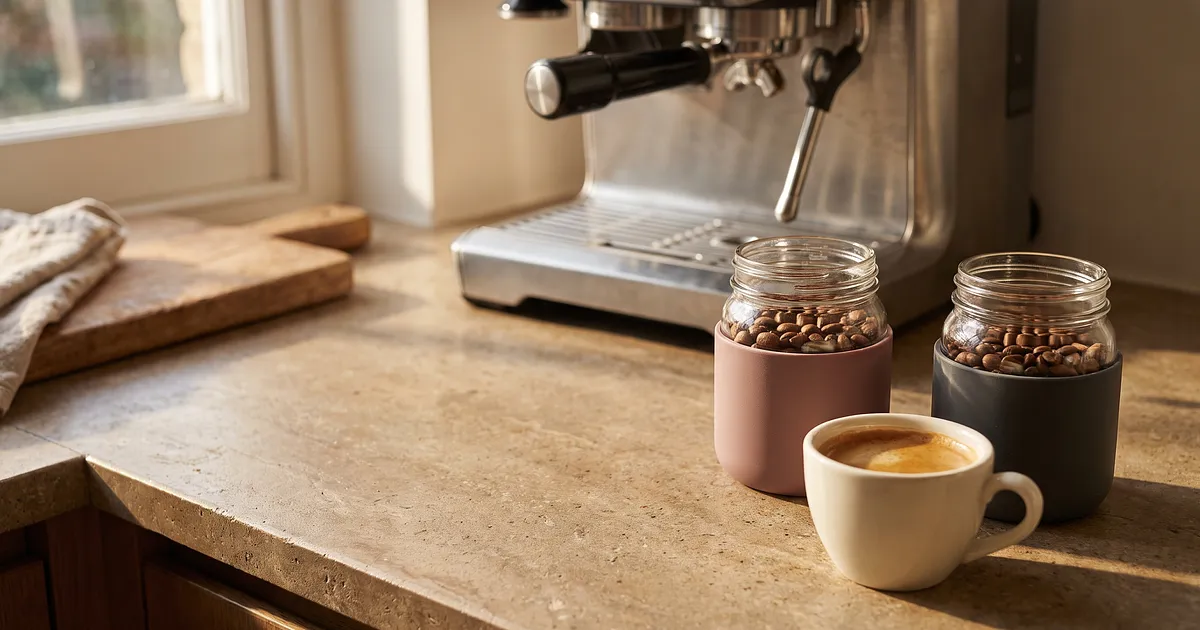
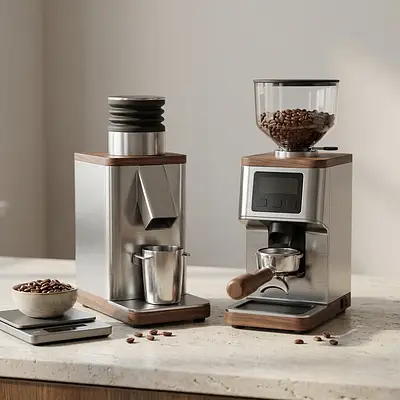
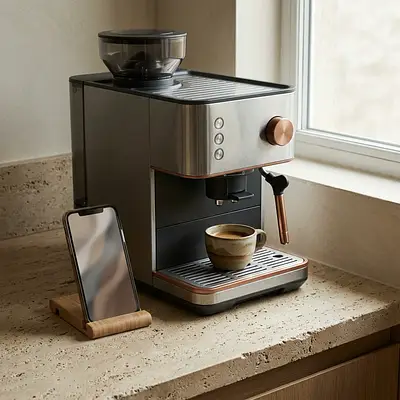
A dual bean hopper coffee machine can make switching between regular and decaf much easier. But two lids on top don't tell you what happens after you select the beans. A divided hopper feeding one grinder solves a different problem from two separate grinders, and that difference matters more than the feature name.
The common mistake is easy to make. A product page says “two bean containers”, so the buyer pictures two independent routes. The machine arrives and there is one selector over one grinder. That setup may still be useful. It just needs to be judged by the job it really does rather than the shortcut suggested by its name.
This isn't another hopper-capacity guide. If you're deciding how much coffee and water the machine should hold, the bean hopper and water tank sizing guide owns that question. Here, the issue is narrower: how do regular and decaf travel from storage to the next cup, and which route suits the way you switch?
What “dual bean hopper” can actually mean
Two stores of beans can feed a coffee machine in several ways. Screens, drink menus and milk recipes are secondary until you've identified that mechanical route. The switching frequencies in the table are practical decision guides, not universal thresholds; adjust them to your tolerance for carryover and extra steps.
| Architecture | Bean path | Regular to decaf switch | Limitation | Best fit |
|---|---|---|---|---|
| Two compartments, one grinder | A selector sends one side into a shared grinder | Easy, without emptying the whole hopper | Previous coffee can remain in the path | One or two daily switches when slight carryover is acceptable |
| Two hoppers, two grinders | Each coffee keeps its own grinder and setting | Most convenient for frequent changes | Components after grinding may still be shared | Several changes per day or beans needing different settings |
| Removable or interchangeable hopper | One container is removed and another fitted | Neat if the swap routine is well designed | Grinder and chute are usually shared | A predictable daily change |
| Pre-ground bypass chute | Ground decaf enters without using the bean hopper | Simple for an occasional cup | The manual must confirm its intended use | Rare decaf, no second bean stock in the machine |
| Single dosing with a separate grinder | One weighed dose is ground at a time | Maximum freedom over bean choice | More work and grinder-specific retention | Manual espresso or users happy with a routine |
Two compartments don't equal two grinders
The Melitta Barista T Smart is a clear example of the first design. Its manual bean container has two compartments, while both coffees use the same grinder. Melitta says on the official product page that the grinder is run empty for each preparation. The manufacturer immediately adds a caveat: minimal mixing between bean varieties may still occur after switching.
That caveat tells you more than a broad claim about instant choice. The system saves you from scooping out a full hopper whenever you want another coffee, but it doesn't create absolute separation. Whether transitional carryover bothers you between two roasts is a matter of taste. It matters much more if you need to limit caffeine closely.
There is a human factor too. A manual selector has to point to the intended compartment before the drink starts. In a shared kitchen, that plain mechanical detail can outweigh a long feature list. A simple selector everybody understands is more useful than a clever menu nobody remembers to use correctly.
A single shared grinder also means a shared grind adjustment. Regular beans and decaf don't necessarily extract well at the same setting. You may find a workable compromise, or you may need to alter the grinder when the coffee changes. The planned Novebar guide about dialing in decaf owns that calibration topic, so it isn't linked while still scheduled. The relevant buying point is simpler: one grinder stores one current setting.
Two grinders preserve two calibrations
The JURA J8 twin takes another route. JURA specifies two conical grinders and explicitly frames them as a choice between regular and decaf, or between different roasts. Each bean stays with its grinder. That lets the machine retain two calibrations rather than moving one grinder back and forth.
This is the persuasive reason to pay for the architecture. You aren't merely storing two coffees. You're keeping each coffee ready on its own grind path. In a home where one person drinks regular espresso and another chooses decaf, that removes a repetitive adjustment and reduces the chance that somebody forgets to put the setting back.
Model names can mislead, though. Siemens states that selected EQ900 and EQ900 plus variants have two separate bean containers and two ceramic grinders. The range name by itself isn't proof. Check the precise reference on the manufacturer's page and in its manual before treating an online listing as a twin-grinder machine.
Two grinders don't prove that the brewing chamber, final chute and coffee outlet are duplicated. The JURA and Siemens pages reviewed for this guide establish separate bean stores and grinders. They don't support a blanket promise that every downstream component is physically isolated. Claims such as “no cross-contamination” need a model-specific diagram or manual, not an assumption.
An interchangeable hopper changes the stock, not necessarily the path
A removable hopper feels different in everyday use. You store one container of regular beans, fit the decaf container and keep both ready away from the grinder. The swap may be clean and quick. It still doesn't establish that the grinder and chute empty completely.
The Philips HD7900/01 gives a useful mechanical example through its removable dual-compartment hopper. It is a filter Grind & Brew machine, not an automatic espresso machine. That label matters. The design helps explain what removable storage looks like, but its instructions and results cannot be transferred blindly to espresso bean-to-cup machines.
On any interchangeable-hopper machine, read what the manual says about removal. Can you lift the hopper while it still contains beans? Does a shutter close its base? Is there a change routine in the menu? Must the grinder finish what is already in its throat? A glossy clip showing a fast swap answers none of those questions.
Where can the previous coffee remain?
Beans don't jump from the hopper into the cup. They pass through a throat, enter the grinder, travel along a grounds chute, reach the brewing unit and finally leave through the coffee outlet. Some of those areas may be shared even when the storage and grinders are separate.
Retention is the coffee left in a grinder or path after a dose. Its amount depends on geometry, static, roast style and the machine's own operating routine. The sources reviewed here don't support one fixed purge dose for every machine. Advice such as “always discard a set number of grams” sounds convenient, but it invents a universal figure.
The sensible route is model-specific. Read the switching instructions, look for an explicit manufacturer statement and follow the intended emptying or cleaning cycle. If the manual calls for a transition drink, use that method. If it gives no quantity, a blog shouldn't manufacture one to make the workflow look tidier.
Single dosing deserves the same restraint. For its Encore ESP Pro, Baratza says its technology reduces grind retention. “Reduces” is honest. “Eliminates” would be a different and unsupported claim. This is also a separate grinder built for dose-by-dose use, not a hidden ability shared by every automatic machine.
Decaf isn't the same as caffeine-free
Perfect mechanical separation would not change the coffee itself. The US Food and Drug Administration explains that decaffeinated coffee still contains some caffeine. Twin grinders may reduce the chance that regular grounds enter the decaf grinder. They cannot turn decaf beans into a guaranteed caffeine-free drink.
The distinction changes the advice. If you choose decaf for flavour or for an evening cup, slight transitional carryover may be tolerable. If you need to restrict caffeine for a health reason, a coffee-machine feature page isn't a medical guarantee. The coffee's composition and appropriate professional advice matter more than the number of hoppers.
Choose by how often you switch
The right system isn't the machine with the longest parts list. It removes enough friction for your routine without creating a second stale stock of beans or an elaborate ritual you will soon abandon.
Decaf is an occasional drink
A pre-ground bypass chute is often enough, provided the manual confirms it accepts coffee for brewing rather than only a cleaning tablet. Keep regular beans in the main hopper and add ground decaf when you want that one cup. There is no second bean compartment sitting half full for weeks.
The compromise is model-specific. The manual should say which drinks accept pre-ground coffee and how that inlet is used. For a rare cup, those limits may matter less than the price of twin grinders. Buying a twin-grinder machine solely for occasional decaf is usually paying a lot to avoid a small, infrequent task.
Don't assume any opening beside the grinder is suitable. Manuals distinguish between a coffee chute and a cleaning-tablet opening, and a mistake can damage the machine. The exact reference wins over a retailer's generic feature filter.
You switch once a day
A divided hopper with a selector, or an interchangeable container, starts to earn its place. Both beans remain ready and the physical change is small. You still have to accept the model's routine and whatever carryover the shared path allows.
Freshness becomes the quiet problem. If decaf moves slowly, don't fill its side just because the capacity exists. The guide to storing coffee beans properly covers suitable containers and storage habits. A small, frequently renewed stock beats a convenient compartment full of tired beans.
This use case is where careful product language pays off. “Dual hopper” may describe precisely what you need even with one grinder, because the aim is easy daily access rather than strict isolation. Paying for two grinders only makes sense if the shared setting or carryover is causing a real problem.
You switch several times per day
Separate grinders have a much clearer purpose here. Each user can keep the relevant grind setting, but the interface may still require a separate bean or grinder selection. Check whether recipes store that choice. The benefit is strongest when regular and decaf need different calibrations.
Two checks remain. The interface should associate drinks clearly with the intended grinder, and the manufacturer should document what happens after grinding. The higher price buys convenience and two preserved settings. It doesn't automatically buy a certified zero-trace route.
For a household with two regular coffees rather than regular and decaf, the same logic applies. One hopper might hold a lighter bean for longer drinks and the other a darker espresso roast. Again, the win is repeatability. Calling it purity would oversell it.
You change beans almost every cup
A large-hopper automatic machine may simply be the wrong tool. A suitable low-retention grinder used for single dosing, paired with a portafilter espresso machine, gives you more control. The trade-off is obvious: every dose has to be weighed, ground and prepared.
That decision is broader than decaf. Novebar's guide to a built-in versus separate grinder for espresso covers counter space, workflow and future upgrades. In this article, the separate grinder matters only as the route for somebody who values bean freedom more than one-touch automation.
A practical switching routine
A good routine starts before the first cup and doesn't rely on a magic purge number.
- Identify the architecture: divided hopper, interchangeable hopper, twin grinders or a pre-ground bypass. A top-down product photo isn't enough.
- Label regular and decaf clearly in a shared kitchen. A discreet marker prevents more errors than another menu setting.
- With a manual selector, choose the compartment before starting the drink and follow the order in the manufacturer's instructions.
- After switching, use only the documented routine. If no purge quantity is published, don't invent one.
- Treat taste as taste, not a caffeine assay. You cannot certify the absence of regular coffee by tasting the cup.
- If the new bean runs poorly or extraction changes sharply, its grind may need adjustment. Twin grinders make this easier because each retains its own setting.
- Clean accessible hoppers, throats and removable brewing parts as directed. Never put water into a grinder unless the maker explicitly instructs you to do so.
This routine is deliberately modest. A transition drink may be required on one machine and pointless on another. The manual beats a universal rule every time.
It also helps to decide who owns the switch in a shared home. If one person changes the selector but another starts the next drink, labels and a visible lever position matter. Automation removes some errors, not all of them.
Buying checklist
Start with the technical sheet, then open the manual. If a seller says only “dual bean hopper”, you still don't have enough information.
How many grinders are actually fitted? A selector isn't a second grinder.
Are grind settings independent and remembered for each bean?
Which components are shared after selection: throat, grinder, grounds chute or brew unit?
Does the manufacturer acknowledge possible mixing after a switch? An honest caveat is better than marketing silence.
Does the exact reference have the feature? A range may contain both single and twin versions.
Is there a documented change or emptying routine?
Can a hopper be removed while full, and does its base close?
Does the bypass genuinely accept ground coffee for a drink? Confirm that it isn't reserved for cleaning.
Will both coffees stay fresh at your rate of use? For capacity alone, check the hopper and tank volumes separately.
Is cleaning the accessible parts realistic for your week?
If caffeine restriction is strict, what does the manufacturer actually promise? Neither “decaf” nor “two grinders” means zero caffeine.
The easiest detail to miss often appears in a footnote: “selected models”. Siemens is a good example. Buy a verified reference, not a family name.
The sensible choice
For an occasional cup of decaf, twin grinders are hard to justify. A properly documented bypass chute avoids leaving a second bean stock to age. With one predictable switch each day, a divided or interchangeable hopper makes sense if you're comfortable with the shared path and its manual routine. If you are still weighing the whole machine, the guide to choosing a bean-to-cup coffee machine as a beginner puts this feature alongside the other buying decisions.
Several switches per day change the calculation. Twin grinders keep both beans and both settings ready, removing a repetitive chore. But the question still isn't “does it have two lids?” Ask what the coffees share after those lids. If the specification doesn't answer, the word “dual” doesn't answer either.
Frequently Asked Questions
Do two bean hoppers always mean two grinders?
No. Some machines have two compartments feeding one shared grinder through a selector. Others have two independent grinders. Check the exact technical sheet and manual rather than relying on the hopper photo.
Can I put decaf beans in the second hopper?
Yes, if the maker allows that bean type and presents the hopper for a second variety. Decaf may need a different grind. A shared grinder then requires a compromise or a later adjustment.
Do I need to purge after switching hoppers?
That depends on the model. There is no universal quantity to discard. Follow the manual because grinder geometry, grounds chutes and emptying routines differ between machines.
Is a pre-ground bypass enough for decaf?
Often, yes, when decaf is occasional and the manual confirms the bypass accepts ground coffee for brewing. It avoids storing a second bean in the machine. Check the manual to see which drinks can use that inlet.
Do two grinders guarantee a caffeine-free cup?
No. They separate the beans and their settings more effectively, but downstream parts may still be shared. Decaffeinated coffee also contains some caffeine, so no grinder arrangement guarantees zero caffeine.
Sources
- Melitta says on the official product page melitta-international.com
- JURA specifies two conical grinders us.jura.com
- Siemens states that selected EQ900 and EQ900 plus variants siemens-home.bsh-group.com
- Philips HD7900/01 home-appliances.philips
- Baratza says its technology reduces grind retention baratza.com
- US Food and Drug Administration explains that decaffeinated coffee still contains some caffeine fda.gov