Thermoblock, single boiler, HX or dual boiler: espresso temperature stability explained
 14 min read
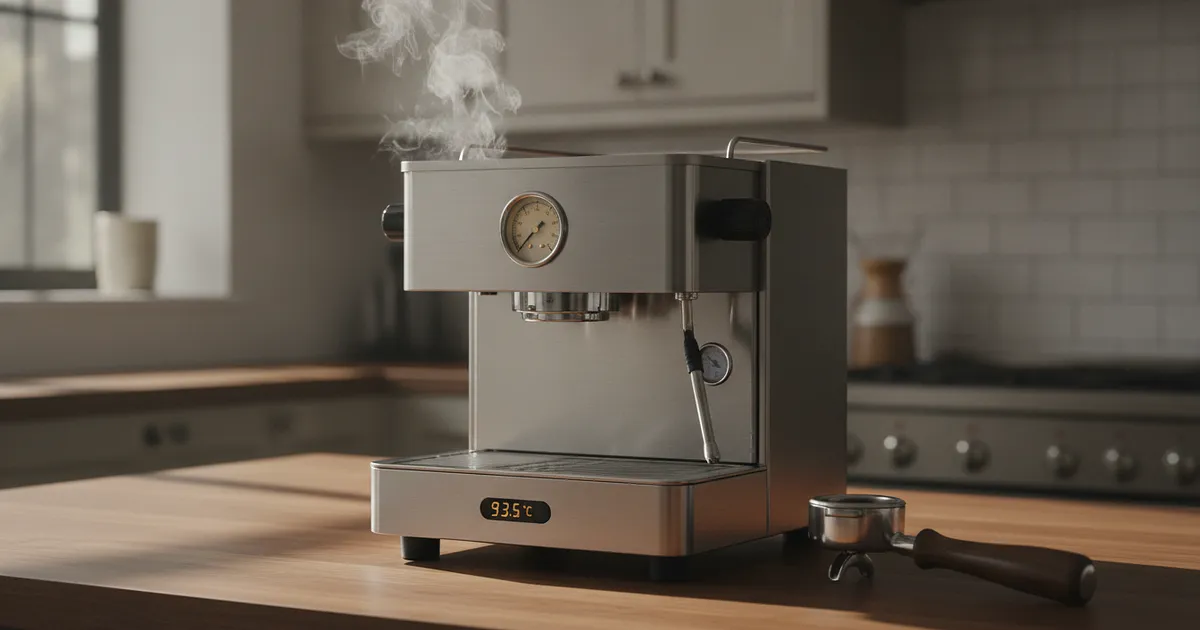
Two machines listed with the same pressure, the same portafilter and the same wattage can pull two very different shots. The variable that separates them almost never appears on the spec sheet: it's how the machine heats its water, and more specifically its ability to hold that water at the same brew temperature from one shot to the next.
That's what's called thermal stability. You can't see it, and no showroom lets you measure it — yet it explains why a great shot in the morning turns sour or scorched by the third one in a row. This article walks through the four architectures found in home machines — thermoblock, single boiler, heat exchanger and dual boiler — then explains what PID adds on top of them, and what it can't fix.
What "thermal stability" means, in practice
Brew water doesn't have one correct temperature — it has a correct window. The Espresso Italiano Certificato standard from the Istituto Espresso Italiano sets water temperature at the group head at 88 °C ± 2 °C (190 °F ± 4 °F), with pressure of 9 bar ± 1 bar and a shot time of 25 s ± 2.5 s (the standard's published parameters). Many baristas work a little higher, around 92–94 °C (198–201 °F), depending on the roast. The exact figure matters less than how narrow the window is: just a few degrees.
A "stable" machine is one that stays inside its window:
during the shot — temperature doesn't collapse between the first second and the twenty-fifth;
between two shots — the second espresso starts from the same setpoint as the first;
after steaming — the machine drops back to brew temperature instead of staying hot.
An unstable machine doesn't break down. It just produces shots that don't taste alike, even though the grind, the dose and the time haven't changed. That's why espresso dial-in settings that worked yesterday can taste wrong today: the dial-in didn't change, the temperature did.
Thermoblock: heating the water as it passes through
A thermoblock (or thermocoil) is a metal block with a channel running through it. Water doesn't sit inside it — it's heated as it flows, on demand. Sage's Thermojet and the heating blocks inside bean-to-cup machines both work on this principle.
What this architecture can do. Reach temperature very fast — a few dozen seconds by manufacturer claims, against several minutes for a boiler. Use very little power at idle, since there's no mass of water to keep hot. Fit into a tight kitchen. For one coffee in the morning and one in the afternoon, that's plenty — and it's how most households actually use a machine.
What it can't do. Take repetition. Because there's almost no thermal reserve, every pass of water cools the block down and the control loop has to catch up in real time. Across two or three shots back to back, then a steaming session, the setpoint and the temperature the grounds actually see start to diverge. The result is a shot that changes flavor over the course of a session, with nothing else having moved.
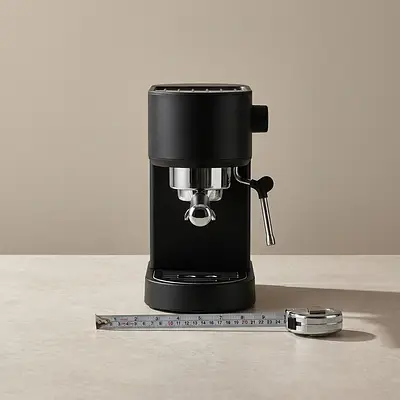
A common example of this family, in a compact portafilter machine:
De'Longhi Dedica Style EC685.M
On bean-to-cup machines, the thermoblock is almost always the rule. That fits their promise: one coffee at a time, no fiddling, ready instantly.
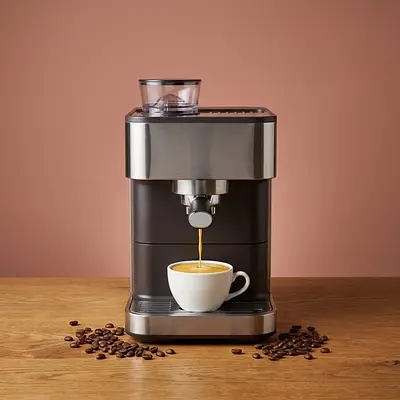
Two bean-to-cup machines — the category where the thermoblock is the rule:
De'Longhi Magnifica S ECAM11.112.B - Perfetto Machine à Café Automatique avec Mousseur à Lait Manuel
Philips Série 2200 EP2220/10 - Expresso Broyeur avec Mousseur à Lait, Écran Tactile
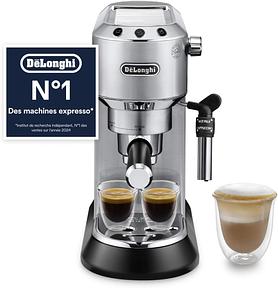
De'Longhi Dedica Style EC685.M
View at Amazon (as of Aug 11)Affiliate link. Buying through it earns us a commission; the price stays the same for you.
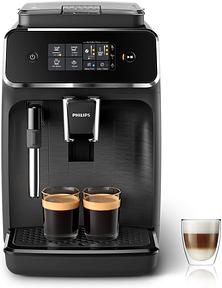
Not available in your region — closest match
Philips Série 2200 EP2220/10 - Expresso Broyeur avec Mousseur à Lait, Écran Tactile
View at Amazon (as of Aug 10)Affiliate link. Buying through it earns us a commission; the price stays the same for you.
Philips Série 2200 EP2220/10 - Expresso Broyeur avec Mousseur à Lait, Écran Tactile
View at Amazon (as of Aug 10)Affiliate link. Buying through it earns us a commission; the price stays the same for you.
Single boiler: a hot water reserve, and a trade-off
A single boiler holds a volume of water kept hot at all times. That mass of water is exactly what a thermoblock lacks: it absorbs the draw of a shot without collapsing, and the group head gets a steadier supply.
What this architecture can do. Hold a shot steady from first second to last. Take two closely spaced shots without drifting as much as a thermoblock would. And, because a boiler is a simple object, it's easy to repair and modify — part of why some models have lasted for decades.
What it can't do. Serve two temperatures at once. That's the founding constraint of this architecture: espresso wants water around 88–94 °C (190–201 °F), steam wants water above 100 °C (212 °F). One boiler can't be in two places. So you have to switch: pull the shot, then heat the boiler for steam, froth the milk, then wait for the machine to cool back down before the next espresso. That wait isn't a manufacturing flaw — it's the direct consequence of having one boiler.
For someone who drinks espresso only, this trade-off costs nothing: steam never gets used. For one cappuccino a day, it costs a minute of planning. For four cappuccinos back to back on a Sunday morning, it gets tedious.
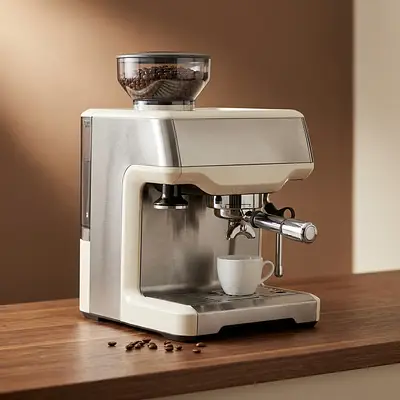
Two single-boiler machines — one thermostat-regulated, one PID-regulated. Lelit lists a 250 ml brass coffee boiler and a "PID boiler temperature controller" for the Anna:
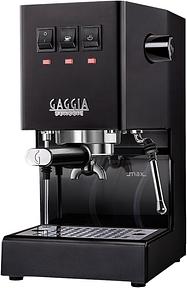
Affiliate link. Buying through it earns us a commission; the price stays the same for you.
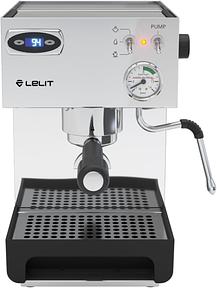
Affiliate link. Buying through it earns us a commission; the price stays the same for you.
Heat exchanger (HX): removing the wait, adding a step
The heat exchanger is an elegant answer to this problem. The machine holds only one boiler, kept at steam temperature. A tube runs through that boiler: fresh water from the tank flows through it at the moment of extraction and picks up heat on the way. Steam is therefore always available, and brew water is produced on the fly.
What this architecture can do. Pull a shot and steam milk with no transition. This is the historic architecture of café machines, and for good reason: a bar can't afford to wait between an espresso and a cappuccino. At home, it shines when several milk drinks come one after another.
What it can't do. Run without the operator. When the machine sits idle, the water trapped in the exchange tube keeps heating from contact with the steam boiler — it gets too hot to brew with. So you flush that volume out before extracting: the cooling flush, usually a few seconds of water run off with no portafilter in place, a step the owner has to learn and repeat (a detailed walkthrough of the process). How long it takes depends on the machine and how long it sat idle; you calibrate it by feel, not from a manual.
In other words: the heat exchanger relocates the constraint rather than removing it. A single boiler asks for patience, a heat exchanger asks for technique.
A heat-exchanger machine: Rocket lists a 1.80 L heat-exchange boiler for the Appartamento.
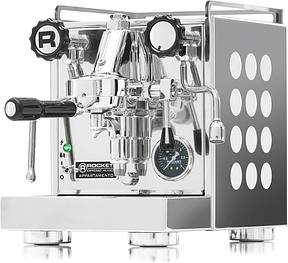
Affiliate link. Buying through it earns us a commission; the price stays the same for you.
Dual boiler: two circuits, no trade-off
A dual boiler does exactly what its name says: one boiler dedicated to extraction, regulated inside the coffee window, and a second dedicated to steam, regulated much higher. Both run in parallel.
Sage describes its Dual Boiler this way: the brew boiler is PID-controlled while a separate steam boiler supplies steam, which lets you pull a shot at the right temperature and froth milk at the same time (manufacturer product page).
What this architecture can do. Run back to back with no waiting and no flushing. Hold a brew setpoint steady session after session. Let you change brew temperature to match a roast without touching the steam setting.
What it can't do. Disappear into the background. Two boilers means more mass to bring up to temperature at startup, a bigger footprint, more upkeep, and higher idle power draw if the machine stays on. It's a tool sized for a use case most households never actually reach.
Lelit describes the Bianca as "two separate boilers, one for steam and hot water, the other for coffee", with an 800 ml coffee boiler and a 1.5 L steam boiler:
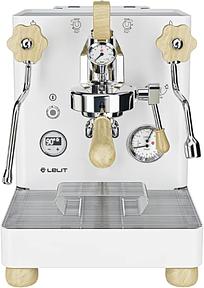
Lelit Bianca PL162T-4G40 (Blanc)
View at AmazonAffiliate link. Buying through it earns us a commission; the price stays the same for you.
PID is not an architecture
This is the most common misunderstanding in the category. A PID (proportional-integral-derivative) is a controller. It replaces the mechanical thermostat, which runs on/off and lets the temperature swing around the setpoint, with a control loop that anticipates and dampens those swings. It tightens the oscillation; it doesn't create a reserve of hot water and it doesn't add a circuit.
Concrete consequences:
a PID on a thermoblock makes the setpoint more accurate, but changes nothing about the lack of thermal mass: the limit on back-to-back recovery stays the thermoblock's own limit;
a PID on a single boiler is genuinely useful, because it stabilizes a mass of water that's already stable — but the espresso/steam trade-off remains untouched;
a PID on a heat exchanger regulates the steam boiler, and therefore indirectly the brew water; the cooling flush is still needed. Profitec, for instance, advertises its PRO 400 as a "heat exchanger system" with "3 PID controlled boiler temperatures selectable" (product page): the PID and the heat exchanger coexist, they don't replace each other;
a PID on a dual boiler is almost always present and does exactly what it's good at: holding a tight setpoint on a dedicated circuit.
"It has a PID" doesn't mean "it's stable." It means "its setpoint holds tighter than a thermostat's, within the limits of its architecture." The question to ask isn't is there a PID, it's a PID on what.
A PID also makes a machine more legible: showing the temperature means you can correct it. It's the same logic as with espresso pressure — a parameter you can see is a parameter you can adjust.
The table, without prices
| Architecture | Water heated | Simultaneous espresso + steam | Step to learn | Main constraint |
|---|---|---|---|---|
| Thermoblock | on demand, as it flows | no (sequential heating) | none | drifts under repetition, low thermal reserve |
| Single boiler | stored mass of water, one setpoint | no | none | wait between espresso and steam |
| Single boiler + PID | same, tighter setpoint | no | none | same wait, better consistency |
| Heat exchanger (HX) | on the fly, inside the steam boiler | yes | cooling flush | overheated water after idling |
| Dual boiler | two independent circuits | yes | none | mass, footprint, warm-up time |
No row in this table beats the others outright. Each is the right choice for one specific use, and a costly choice outside it.
So, what do you need?
The right question isn't "which architecture is best," it's "how many drinks, of what kind, and how often."
One or two coffees a day, rarely back to back. A thermoblock is enough, and being ready instantly is a real everyday advantage. A thermoblock bean-to-cup machine covers this need without the thermal question ever coming up.
Espresso only, never milk. The espresso/steam trade-off disappears: a single boiler, ideally with PID, is the most direct answer. You're paying for brew stability, not for steam capacity you'll never use.
One milk drink a day, alone or for two. A single boiler with PID stays comfortable; waiting through one switch a day is fine. If that wait bothers you, a heat exchanger removes it — as long as you're willing to do the cooling flush.
Several milk drinks back to back, regularly. This is the only scenario where a heat exchanger or a dual boiler stop being nice-to-haves and become genuine needs. The heat exchanger asks for a step; the dual boiler asks for none.
Varied roasts, frequent temperature changes. The dual boiler is the only architecture that lets you move the brew setpoint without touching steam.
Let's be honest: most households never hit the threshold that justifies the last two rows. Buying an architecture for a use case you don't have means buying a constraint — mass, warm-up time, upkeep — with no payoff.
What manufacturers don't publish
A test standard for these machines does exist: the Specialty Coffee Association publishes SCA-350, *Semi-Automatic and Automatic Espresso Machines: Specifications and Test Methods, and *SCA-352** for fully automatic machines (the SCA standards catalog). The measurement methods exist.
What doesn't exist is publishing those results model by model. A product page states an architecture, sometimes that a PID is present, and stops there: the Profitec PRO 400 page cited above advertises the heat exchanger and the PID, and no temperature figure at all. There's no published extraction standard deviation, no recovery curve, no measured time to return to the window after steaming.
The consequence for a buyer: a numeric comparison of stability between two models isn't possible from public data. Architecture remains the best indicator available, which is exactly why it's worth understanding before you weigh it against anything else. Be wary of any comparison that quotes stability to a tenth of a degree without naming its source — those numbers don't come from any spec sheet.
In summary
Thermal architecture answers two questions, and only two: does the temperature hold when shots come one after another, and can I pull a shot and steam milk at the same time? A thermoblock says no to both, but starts up in a few dozen seconds. A single boiler says yes to the first, no to the second. A heat exchanger says yes to both, for one extra step. A dual boiler says yes to both, for no extra step. PID improves setpoint accuracy wherever it's installed, and changes none of these answers.
All products from this post
The ones we named above are marked; the rest are alternatives in the same category.
Not available in your region — closest match
Philips Série 2200 EP2220/10 - Expresso Broyeur avec Mousseur à Lait, Écran Tactile
View at Amazon (as of Aug 10)
Affiliate notice: As an Amazon Associate, we earn from qualifying purchases. Product prices and availability are subject to change.
Frequently Asked Questions
Does a PID make a thermoblock machine stable?
No, not in the usual sense. A PID tightens the temperature setpoint and replaces a thermostat's rough on/off swing. But it adds no reserve of hot water: a thermoblock's ability to handle two or three closely spaced shots stays the same. A PID on a thermoblock improves setpoint accuracy, not back-to-back recovery.
What's the right brew temperature for espresso?
The Espresso Italiano Certificato standard from the Istituto Espresso Italiano sets water temperature at the group head at 88 °C ± 2 °C (190 °F ± 4 °F). Many baristas work higher, around 92–94 °C (198–201 °F), depending on roast: lighter roasts generally need more heat than dark ones. What matters is staying inside a narrow window, not hitting one exact number.
Why does a heat exchanger machine need a cooling flush?
Because water trapped in the exchange tube keeps heating from contact with the steam boiler while the machine sits idle. It gets too hot to brew with. A cooling flush means running a few seconds of water off with no portafilter in place before pulling a shot, to clear that overheated volume. How long it takes depends on the machine and how long it sat idle, and you calibrate it by feel.
Can you pull espresso and steam milk at once on a single boiler?
No. A single boiler can only hold one temperature, and espresso and steam each need a different one: around 88–94 °C (190–201 °F) for one, above 100 °C (212 °F) for the other. You have to switch modes and wait for it to reach temperature. Only a heat exchanger or a dual boiler let you do both at the same time.
Is a dual boiler necessary at home?
Rarely. It earns its keep once several milk drinks come one after another regularly, or once you change brew temperature often to match different roasts. For one or two coffees a day, it gives you capacity you won't use while adding more mass, a longer warm-up, and extra upkeep.
How can I tell if a machine is stable before buying it?
By its architecture, not its spec sheet. Manufacturers don't publish extraction standard deviation or a post-steam recovery curve, even though standardized test methods exist (SCA-350 and SCA-352). In practice: identify the heating type, check whether the PID regulates the coffee circuit or the steam circuit, and weigh that against how you'll actually use it.
Sources
- Istituto Espresso Italiano iei.coffee
- the standard's published parameters mokaffee.de
- Lelit lists lelit.com
- a detailed walkthrough of the process clivecoffee.com
- Rocket lists rocket-espresso.com
- manufacturer product page sageappliances.com
- Lelit describes the Bianca lelit.com
- product page profitec-espresso.com
- the SCA standards catalog sca.coffee