Coffee and deforestation: what the EUDR changes at the end of 2026
 4 min read
Updated 12/08/2026
The date that matters is 30 December 2026, not December 2024, not June 2025, not January 2026: those deadlines still sit on live roaster pages, and they're stale. Coffee and deforestation are governed by a single European text now, the EUDR, whose calendar has moved twice in three years, confirmed by the Council of the EU on 18 December 2025: large and medium companies, 30 December 2026; micro and small ones, 30 June 2027.
Coffee and deforestation: what the rule actually asks for
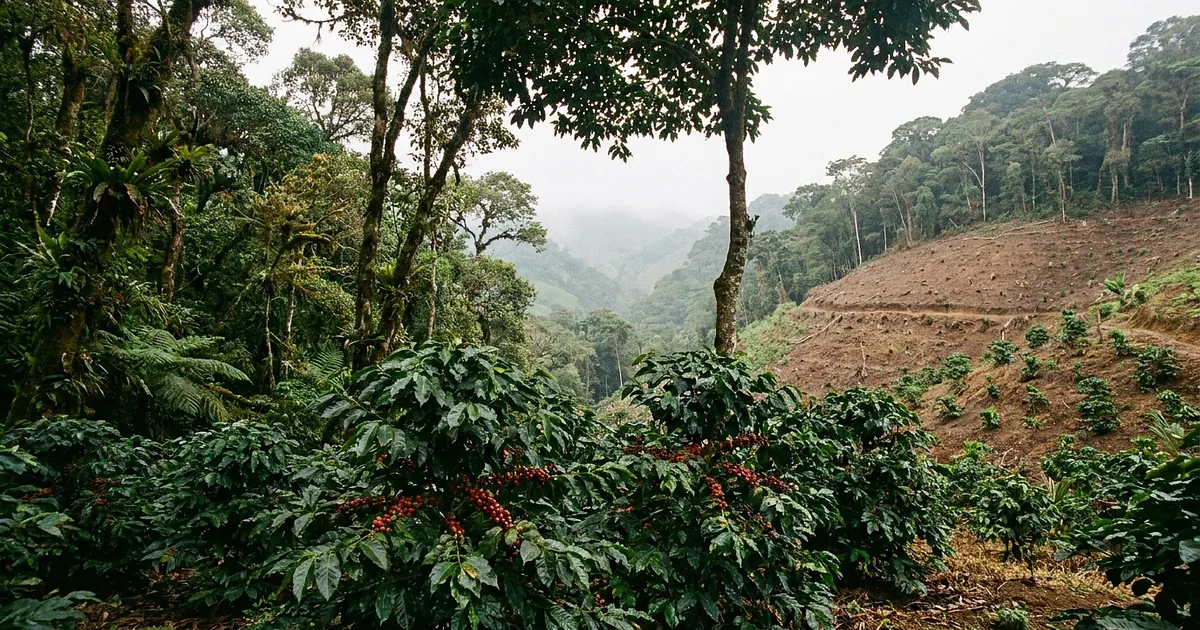
The EU deforestation regulation covers seven commodities: coffee, cocoa, palm oil, soy, cattle, rubber, timber. The principle fits in one sentence: anything placed on the EU market must be proven free of deforestation after 31 December 2020.
Proven. That's the expensive word.
The French government's imported-deforestation portal sets out the mechanism: a due-diligence statement goes into the EU's TRACES system before the goods reach the market, carrying the geolocation of the plots. For coffee that means mapping farms in Ethiopia, Colombia or Vietnam.
So why coffee? According to the World Resources Institute, the EU accounted for 16% of global deforestation linked to trade in 2017, or 203,000 hectares that year, well behind beef, cocoa and palm oil. Coffee just sits high enough on the list to be covered.
Who has to act, and it isn't you
As the French roaster Javry explains, this EU anti-deforestation law puts the due-diligence obligation on the importer, the one who first places the coffee on the EU market. Neither you nor a roaster buying green from an importer files anything; a roaster who imports directly does.
The trade isn't comfortable with the text either way. Sprudge reports the delay passed by 402 votes to 250, and that a group including Nestlé, Danone and Rainforest Alliance warned it would create market uncertainty. Others make the opposite complaint: the rule lands hardest on smallholders with no GPS and no mapping tools.
Both criticisms hold at the same time.
Will coffee cost more?
Careful here, because this is where the shortcuts pile up.
The price rise is real, and it started well before the regulation. Roaster Shouka Chamonix puts arabica at roughly $1.10/lb in 2020 and above $2.40/lb in 2024, with robusta going from around $1,300/tonne to more than $4,300/tonne, causes mostly climatic: droughts and frosts in Brazil, the world's largest arabica producer.
The EUDR could add a compliance cost on top, traceability, audits, buying compliant lots early. Nothing official puts a number on that share. It probably stays marginal next to the futures market, which moves the price far more, and anyone handing you a precise percentage made it up.
Coffee and deforestation: what you can do on the cup side
More regulatory deadlines and coffee news are worth tracking before the year is out: all our coffee news.
Until the EUDR reshapes the supply chain, the most direct move is still choosing sustainable coffee from a roaster who names the origin.
If the bag costs more, the saving isn't at the supermarket. It's at the grinder. Grind too coarse and the shot comes out under-extracted, sour and thin, and the usual reflex is to compensate by dosing heavier. Weigh the dose on a scale, write down the grind setting that works, keep it until the next bag. The specifics live in our tips and gear notes.
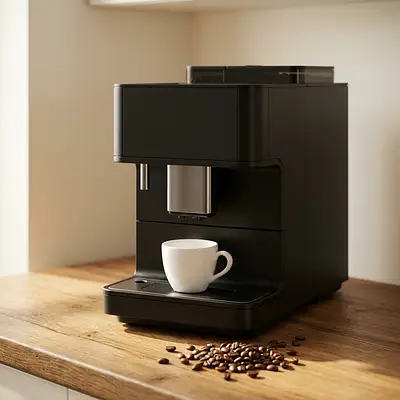
The 19 bar printed on the box changes none of that. Espresso extracts at around 9 bar at the puck, the number that decides the cup.
Frequently Asked Questions
What is the EUDR coffee regulation deadline?
30 December 2026 for large and medium companies, 30 June 2027 for micro and small ones, confirmed by the Council of the EU on 18 December 2025. Any page still showing an earlier date is out of date.
Do I have to declare anything as a consumer?
No, nothing. The statement goes into TRACES from the importer; buying a bag of beans triggers no obligation on your side.
Could my usual coffee vanish from the shelf?
Possible for some origins, though it isn't the likeliest outcome: the risk sits with small farms that can't map their plots in time, while large cooperatives have already rolled out GPS mapping.
How can I tell whether my coffee complies?
Look at what the roaster publishes about origin, the kind of thing we tell in our coffee origin stories. A bag that says nothing beyond "arabica blend" tells you nothing traceable.
Sources
- confirmed by the Council of the EU on 18 December 2025 consilium.europa.eu
- EU deforestation regulation green-forum.ec.europa.eu
- French government's imported-deforestation portal deforestationimportee.ecologie.gouv.fr
- World Resources Institute wri.org
- Javry javry.com
- Sprudge sprudge.com
- Shouka Chamonix shouka-chamonix.fr