Espresso Pre-Infusion: What It Does and When It Actually Changes the Cup
 16 min read
Pre-infusion is sold as a premium feature, and the honest answer is that it is conditional. Wetting the puck at low pressure before full pressure arrives changes a great deal on a light roast ground fine at a high dose, and almost nothing on a forgiving medium roast pulled at 18 g. No product page tells you that, because a conditional feature sells worse than a miracle one.
This article is not based on any in-house testing. We have neither measured nor tasted anything: what follows cross-references manufacturer documentation, a specialist retailer's comparison and published measurements from a named author, saying each time who says what and when.
What pre-infusion actually does
A tamped puck is a bed of dry particles. Send the full 9 bar of working pressure into it at once and the water does not spread politely — it takes the shortest way out. The bed is always slightly less dense somewhere: an under-tamped edge, a crack left by the tamper, a clump the WDT tool missed. That is where the first jet goes. This preferential path is called channeling, and once it opens it does not close: the coffee along the channel is over-extracted while the rest is barely touched.
Pre-infusion solves that with sequencing rather than force. A small amount of water goes in first, at low pressure. The coffee absorbs it, swells, rearranges itself, and the micro-voids fill in. Only then does pressure ramp up — and it now arrives on a saturated, uniform bed that resists evenly everywhere.
Hence the most useful way to put it: pre-infusion and channeling are the same conversation. Everything pre-infusion gives you in the cup travels through that one mechanism. If your puck does not channel, you get far less back.
Two orders of magnitude to anchor the gesture. MaxiCoffee's pre-infusion tutorial, published by Anne-Sophie on 28 July 2026, gives 2 to 8 seconds at 1 to 3 bar for espresso. Flair, a lever-machine manufacturer, writing on 25 September 2025, quotes the same 1 to 3 bar band before the ramp to 8–9 bar of full extraction. Two converging ranges, not a canonical value: treat them as a zone to experiment inside, and distrust any page that hands you "the" correct duration to a tenth of a second.
One detail that matters for the rest of this article: wetting the puck also makes it more permeable. A pre-infused puck lets water through more easily, so you can grind finer without strangling the flow. That is the real technical lever behind the feature — not extra aroma from nowhere, but extra room to move on the grind. If grind adjustment is still new to you, it is covered in our seven settings that decide an espresso.
When it really changes the cup, and when it barely does
This is the part product pages skip. Pre-infusion helps exactly where pucks are most fragile.
| Situation | Expected benefit from pre-infusion |
|---|---|
| Light roast, dense beans | High — Flair recommends 8 to 15 seconds at 1–2 bar (manufacturer source, 25/09/2025) |
| Medium roast | Moderate — Flair gives 5 to 10 seconds at 2–3 bar (manufacturer source, 25/09/2025) |
| Dark roast, porous beans | Low — Flair drops to 2 to 3 seconds at 2–3 bar (manufacturer source, 25/09/2025) |
| Very fine grind | High — this is where a channel opens most easily |
| High dose, well-filled basket | High — more bed to saturate before the pressure ramp |
| Modest dose, medium grind, forgiving coffee | Low — the puck barely channels, so there is little to fix |
Those durations come from a lever-machine manufacturer, not an independent laboratory. Read them as an interested starting point, not as a neutral measurement.
And the other half of the story has to be said too. Robert McKeon Aloe, who publishes extraction measurements on his own coffees, compared 10, 20 and 30-second pre-infusions on 14 September 2021. His finding: on TDS and extraction yield, the shortest pre-infusion wins, and taste improves only slightly as you stretch it — more sweetness, less body. Longer is not better. Pre-infusion exists to saturate the puck, not to steep the coffee.
The practical conclusion is unglamorous but solid. If your shots already run steadily on a medium grind with an everyday coffee, a machine with programmable pre-infusion will not transform your cup. If you are chasing light specialty roasts and grinding fine, it removes a genuine thorn.
The implementations are not equivalent
"Pre-infusion" appears on product pages describing very different mechanisms. Whole Latte Love, a specialist retailer, separates several of them in a comparison updated on 8 October 2025, with per-machine figures. These are the families that matter when buying.
| Implementation | Who decides the duration | What it is worth in practice |
|---|---|---|
| Manual (paddle, or E61 lever at half-lift) | You, live | Full control, a real learning curve |
| Programmable / pump-controlled | One setting, set once | Repeatable, blind to what the basket is doing |
| Spring lever | The spring's mechanics | Inherent pre-infusion, cannot be switched off |
| Line pressure (plumbed machine) | Your mains supply | Depends on a pressure you may not have |
| Pressure-limiting valve, flow control | Neither of them | Not pre-infusion — see below |
Manual: you drive the duration
The most honest form, because nothing is hidden. On a paddle machine, or on an E61 group with the lever lifted halfway, you open the water at low pressure and decide when the pressure ramps, watching the puck as you go. The trade-off is that a gesture you control is also one you can fumble, and two consecutive shots only match if your hand is steady.
It is also the only family where you can adapt the duration to today's coffee without reprogramming anything.
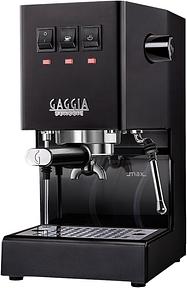
The Gaggia Classic E24 Evo Pro shows the distinction well. Its Amazon.fr listing claims no pre-infusion at all — the word is not there — and yet its brew switch lets you run the pump briefly and cut it before pulling the full shot. That is a well-known user technique, not a marketed feature, and it should be presented that way.
Affiliate link. Buying through it earns us a commission; the price stays the same for you.
Programmable: one duration, set once
The most common form on domestic pump machines. You set a duration and the machine applies it to every shot. The figures Whole Latte Love recorded (8 October 2025) show how wide the spread is between models: a Gaggia Classic GT offers presets from 2 seconds plus a 1-second soak up to 12 seconds plus 3 seconds, a Rancilio Silvia Pro X gives passive pre-infusion adjustable from 2 to 6 seconds, a Lelit Elizabeth runs from 1 to 20 seconds, and a Profitec Move accepts up to 60 seconds of active infusion followed by a 40-second soak.
Take the order of magnitude, not the model list: between "2 seconds" and "60 seconds", the same word describes two different features. Check the adjustable range in the manual before buying, not the presence of the word on the box.
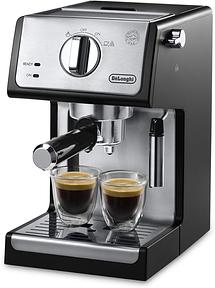
The label itself is confusing. The Amazon.fr listing for the Sage The Barista Express puts "Pré-Infusion 9 Bars" in its title, while its own description says the machine starts with a low-pressure pre-infusion followed by high-pressure extraction at 9 bar. So the 9 bar describes the extraction, not the pre-infusion. Even where the feature genuinely exists, the number printed next to it does not describe it.
Not available in your region — closest match
View at Amazon (as of Aug 14)Affiliate link. Buying through it earns us a commission; the price stays the same for you.
Spring lever: pre-infusion lives in the mechanism
On a lever machine, pre-infusion is not an option — it is a consequence of how the machine works. You pull the lever down, the chamber fills at low pressure, then the spring (or your arm) pushes water through the coffee along a pressure profile that naturally decays towards the end of the stroke. Nothing to program, nothing to enable.
It is the oldest implementation, which is why an Italian reader who met preinfusione on a lever machine finds the feature obvious while a bean-to-cup buyer meets it as a novelty. If the manual approach appeals, our beginner's guide to manual espresso machines covers the groundwork before you buy.
The Flair PRO 3 – Machine à expresso manuelle à levier avec manomètre is a common member of this family: lever, removable brew head and a pressure gauge, according to its Amazon.fr listing. The word "pre-infusion" does not appear on that listing, which makes sense — on a lever machine it is a gesture, not a box to tick. The gauge is what lets you watch the pressure build while you are the one building it.
Not available in your region — closest match
View at Amazon (as of Aug 14)Affiliate link. Buying through it earns us a commission; the price stays the same for you.
Line pressure: check before you count on it
On a plumbed machine you can open the group at mains pressure with the pump off. It is elegant and quiet, but Whole Latte Love notes that line-pressure pre-infusion is exclusive to rotary-pump E61 machines — so machines plumbed into the water supply, not those drawing from a tank.
The blind spot is that the useful duration depends on your own mains pressure, which varies from one building to another and which your water company does not advertise. A feature whose setting lives in your neighbourhood is not really a setting.
What pre-infusion is not
Two devices get confused with it, and all three are distinct things.
A pressure-limiting valve (OPV) caps the maximum pressure sent to the group: it is the reason a pump advertised at 15 or 19 bar still extracts at around 9 bar. It caps, it does not wet anything at low pressure at the start. That is the subject of our article on the real pressure of an espresso.
A flow control device modulates flow across the whole shot, including after the pressure ramp. It can be used to pre-infuse, among many other things, but it is not the same function: Whole Latte Love lists it separately, as an add-on fitted to an E61 group.
A machine that ticks "pressure-limiting valve" or "flow control" on its spec sheet has not ticked pre-infusion.
On a bean-to-cup machine, the word means something else
This is the nuance that prevents a disappointing purchase. Plenty of bean-to-cup machines advertise "pre-infusion" — MaxiCoffee names Saeco's Pre-Brewing System and Jura's I.P.B.A.S. among the automatic pre-brewing systems — and what they mean is a brief pause set by the manufacturer, over which the user generally has no control at all.
It is not a lie: the machine really does wet the grounds before it pushes. But it is not the same lever a portafilter user has. On an automatic you choose neither the duration, nor the pressure, nor the moment the pump resumes — and you choose neither the dose nor the tamp, which are the two variables pre-infusion exists to compensate for. The feature is working on a puck you did not prepare.
In German the setting is often labelled Vorbrühen on a Vollautomat, and it has exactly the same limitation: an automated pause, not a gesture you drive.
So if you are comparing two bean-to-cup machines and one advertises pre-infusion, count it as a small point in its favour. If you are comparing a bean-to-cup machine against a portafilter, pre-infusion is not what separates them — control over dose, grind and tamp is.
The Cecotec Machine à Café Superautomatique Compacte Cremmaet Cube Rouge is a useful case study. Its Amazon.fr listing carries both "Pré-Infusion" and "19 Bars" in the same title, and its description explains that the pre-infusion system wets the coffee before extraction. So the feature is real, and correctly described. What the listing does not say is how many seconds it lasts or how to change it. As for the 19 bar, that is the pump's peak, not the pressure at the coffee.
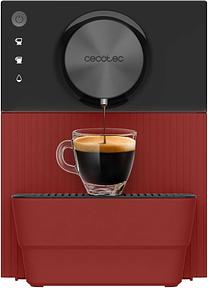
Cecotec Machine à Café Superautomatique Compacte Cremmaet Cube Rouge
View at AmazonAffiliate link. Buying through it earns us a commission; the price stays the same for you.
How to watch it and dial it in at home
Pre-infusion is one of the few features you can actually watch working. That beats guessing.
A bottomless portafilter, to see the puck
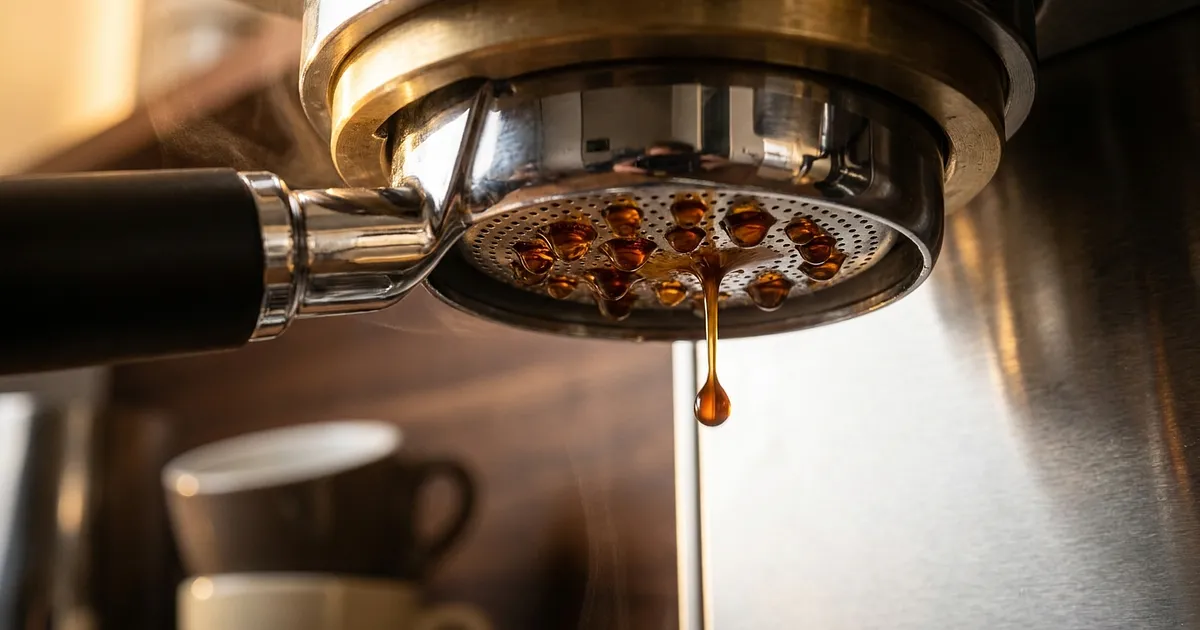
A bottomless portafilter removes the spouts from the picture: you look straight at the underside of the puck while the shot runs. A good pre-infusion reads instantly — the whole surface darkens and beads at roughly the same time, then the streams merge. Channeling reads just as clearly: one jet shoots off at an angle from a single point, often at the edge, while the rest of the disc is still dry.
It is the cheapest diagnostic tool in the whole kit, and the only one that tells you whether the problem is your prep or your machine. Check the diameter before ordering: 58 mm on most portafilters, but 54 mm on Sage and 57 mm on Gaggia, and a basket does not stretch a millimetre.
The most common size is 58 mm, like the Normcore Porte-filtre Nu Sans Fond 58 mm (panier 18 g inclus), whose listing claims compatibility with E61, Flair 58, ECM, Rocket and several others. Check your diameter before ordering: the Sage listing quoted earlier states a 54 mm portafilter, so this 58 mm one will not fit it.
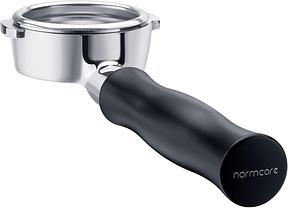
Normcore Porte-filtre Nu Sans Fond 58 mm (panier 18 g inclus)
View at AmazonAffiliate link. Buying through it earns us a commission; the price stays the same for you.
A scale with a timer, to hold the duration
A duration you do not measure is not a setting, it is an impression. An espresso scale with a built-in timer gives you the two numbers that matter — time since the water opened and weight in the cup — and lets you compare two attempts by something other than memory. What the scale contributes to a shot is covered in our article on the tamper, the WDT tool and the scale.
The TIMEMORE Black Mirror Basic 2 - Balance à café avec minuteur advertises an automatic timer and 0.1 g precision on its Amazon.fr listing, which is the level of detail that matters here, since you are comparing gaps of a few seconds. Its review count is modest next to longer-established accessories — worth knowing before you order.
Not available in your region — closest match
View at Amazon (as of Aug 14)Affiliate link. Buying through it earns us a commission; the price stays the same for you.
The protocol, in three shots
Change one variable at a time and keep everything else identical: same coffee, same dose, same grind, same tamp.
- Pull a shot with the shortest pre-infusion your machine offers, and note the total time and the weight in the cup.
- Repeat, adding a few seconds, inside the 2 to 8-second band MaxiCoffee gives (28/07/2026).
- Repeat a third time, longer again, then compare the three cups side by side.
If all three taste alike, you have your answer: on this coffee, at this grind, pre-infusion decides nothing and you can stop thinking about it. If the shortest one channels and the longest runs straight, you have just found a useful setting. That is also the moment puck prep matters most, because pre-infusion will not rescue a bad distribution.
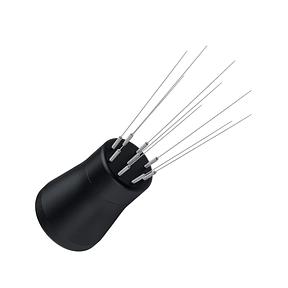
A WDT tool such as the HOTUT Outil de Distribution WDT, seven needles according to its listing, breaks up clumps in the dose before tamping. It is not pre-infusion. It is what gives pre-infusion something even to saturate, and without it the longest pre-infusion in the world is working on a bed that was already spoiled.
Not available in your region — closest match
Normcore WDT Outil de Distribution V2 (9 aiguilles)
View at Amazon (as of Aug 10)Affiliate link. Buying through it earns us a commission; the price stays the same for you.
Final word
Pre-infusion is a good feature that is badly sold. It does not make coffee better by magic: it makes a fragile puck more forgiving, and that is plenty when you are grinding fine on a light roast.
So two reflexes before paying for it. Check what the word actually covers on the machine you are looking at — an adjustable range in seconds, a fixed pause set by the manufacturer, or lever mechanics. And check whether your coffee needs it, which takes three espressos and a bottomless portafilter, not a new machine.
If your shots run straight today, keep the money for a better grinder. Grind still decides more than pre-infusion does.
All products from this post
The ones we named above are marked; the rest are alternatives in the same category.
Not available in your region — closest match
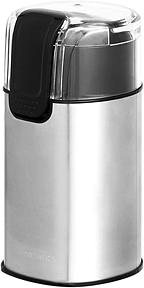
Amazon Basics Fast Electric Coffee Grinder for Home Use, Easy to Use Coffee Bean and Spice Grinder with Heavy-Duty Stainless Steel Grind Blades
View at Amazon (as of Aug 14)
Not available in your region — closest match
Normcore WDT Outil de Distribution V2 (9 aiguilles)
View at Amazon (as of Aug 10)Affiliate notice: As an Amazon Associate, we earn from qualifying purchases. Product prices and availability are subject to change.
Frequently Asked Questions
What is pre-infusion in espresso?
It is wetting the ground coffee at low pressure before the full pressure ramp of extraction. MaxiCoffee's tutorial of 28 July 2026 gives 2 to 8 seconds at 1 to 3 bar for espresso, against 8 to 9 bar for extraction itself. The aim is for the water to meet a fully saturated puck rather than a dry bed it would punch a channel through.
How long should pre-infusion last?
There is no canonical duration, and any page giving you one to a tenth of a second is inventing it. Published ranges run from 2 to 8 seconds at MaxiCoffee (28 July 2026), and Flair, a manufacturer, suggests 2 to 3 seconds on a dark roast and 8 to 15 seconds on a light one (25 September 2025). Treat them as a test zone and compare two or three cups.
Does pre-infusion improve the taste of coffee?
Indirectly, by reducing channeling. Measurements published by Robert McKeon Aloe on 14 September 2021 across 10, 20 and 30-second pre-infusions show the shortest wins on extraction yield, and that taste improves only slightly as the time is stretched. On a forgiving coffee at a medium grind, the difference is small.
Does a bean-to-cup machine do real pre-infusion?
It does wet the grounds before pushing, and systems such as Saeco's Pre-Brewing System or Jura's I.P.B.A.S. are named by MaxiCoffee among the automatic devices. But it is a brief pause decided by the manufacturer, with no duration or pressure setting, on a puck whose dose and tamp you did not choose.
Are pre-infusion and a pressure-limiting valve the same thing?
No, and confusing them leads to bad purchases. The pressure-limiting valve caps the pressure sent to the group, which is why a pump advertised at 19 bar extracts at around 9 bar. Pre-infusion wets the puck at low pressure before the ramp. A flow control device is a third thing again, modulating flow across the whole shot.
How do I know my pre-infusion is working?
Watch the puck through a bottomless portafilter. If the whole surface darkens and starts beading at roughly the same time before the streams merge, saturation is even. If one jet shoots off at an angle from a single point while the rest of the disc stays dry, you have channeling — and it is puck prep, not pre-infusion time, that needs fixing first.