Coffee degassing: how long to wait after the roast date
 16 min read
Coffee roasted yesterday will usually pull a worse espresso than coffee roasted ten days ago. That isn't a matter of taste. The bean is still giving off gas, and the gas gets into your cup ahead of the coffee.
When a shot misbehaves, the instinct is to go to the grinder. One step finer, one step coarser, and after three days of chasing the dial you start blaming the machine. Very fresh coffee behaves exactly like a grind problem, and no grind setting fixes it. It needs time instead.
What the bean keeps giving off for days
Roasting produces carbon dioxide inside the bean, and the bean holds onto it. Smrke and colleagues at the ZHAW Coffee Excellence Center built a gravimetric method to track that loss continuously (Journal of Agricultural and Food Chemistry, 2018). CO₂ accounts for roughly 1 to 2% of the bean's mass, and whole beans keep degassing for about a month.
On a 250 g bag that works out to somewhere between 2.5 and 5 g of gas looking for a way out. Not nothing.
Wang and Lim at the University of Guelph measured how much is left by roast degree (Food Research International, 2014): 6.29 to 6.70 mg of CO₂ per gram at a light roast, and 11.04 to 11.51 mg/g at a medium roast.
Here's the part most articles skip. Smrke and colleagues show that ground coffee sheds most of its CO₂ almost immediately once it's ground. A whole bean is a pressurised reservoir; grounds are not. Which is why pre-ground coffee never presents a degassing problem, and also why it has so little left to give.
Why espresso waits longer than filter
A V60 lets the gas walk away into the room. You can watch it happen: the bed blooms, foams, settles, and the brew carries on. Atmospheric pressure and nothing else.
A portafilter is the opposite. Scott Rao, consultant and author of The Coffee Roaster's Companion, sets out the mechanism in his note on resting beans: at 9 bars, CO₂ escaping the puck has nowhere to go. It creates back pressure inside the bed, it disturbs the flow, and it whips up a lot of crema that comes from gas rather than from extraction.
Thick crema is not the good news you think
This is probably the most common misreading in home espresso. Tall, foamy crema that collapses in fifteen seconds and leaves a pale cup underneath doesn't mean the coffee is good. Often it means the coffee is too young.
Add a flow that sprints, stalls, then sprints again, and you have the signature of a coffee still venting. Chase that at the grinder and you'll tighten the setting day after day while the coffee quietly stabilises on its own, leaving you badly out of adjustment by the following week.
How many days, exactly? The sources disagree
This is the honest part of the story: there is no official number. The Specialty Coffee Association covers freshness and degassing in its consumer-facing material but publishes no day-range for espresso. What circulates comes from two places, and they don't agree.
| Source | What it says |
|---|---|
| Barista Hustle | Rest at least 7 days before pulling espresso, "ideally longer". Dark roasts ready in 3 to 4 days, very light roasts closer to 7 to 10. |
| Café Kreyol post-roast rest study (Girard and Stazzone, 2022) | Across 21 coffees in blind cupping, 94.73% peaked after 72 hours; more than 73% peaked at 8 days or later; one coffee was still improving at 22 days. |
The Café Kreyol work is not peer reviewed, and a roaster ran it. It is documented, dated, signed, and run double-blind with at least three professionals including a licensed Q-grader, which beats the "14 days" everybody repeats without ever saying where it came from. It still isn't lab data, and I'd rather flag that than dress it up.
What they share matters more than where they part. Neither says "as fresh as possible". Both put the start of the window at days, not hours.
Light roast, dark roast, different clock
One number can't cover both, and this bit is measured rather than assumed. Wang and Lim report that degassing rate rises with roast degree. A darker bean is more porous and has lost more water, so its structure lets the gas out faster.
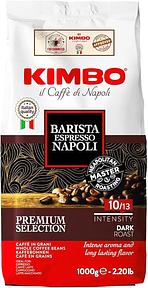
In practice that means a dark Neapolitan-style roast like [product:KIMBO_BEANS] has probably settled by the time you open the bag, while a light specialty roast can still be playing games with you on day ten. Barista Hustle puts it at 3 to 4 days on one side and 7 to 10 on the other. Those are a practitioner's rough figures, not measurements, so treat them as a starting point and adjust on your own coffee.
If you switch coffees and your recipe falls apart when you've changed nothing else, look at the roast level before you suspect your grinder.
The roast date versus the best-before
This is where the reader's actual problem lives, and it's a labelling problem rather than a coffee one.
Regulation (EU) No 1169/2011 on food information to consumers makes a date of minimum durability mandatory on every prepacked food, coffee included, at Article 9(1)(f). Article 24 and Annex X set out how that date has to be expressed.
Nothing in the regulation requires a roast date. Not for coffee, not for anything. It's entirely voluntary and left to whoever packs the bag.
So on a supermarket shelf you get "best before end" and a date twelve or eighteen months out. That date doesn't tell you when the coffee was roasted. It doesn't tell you whether it spent six months in a warehouse either. Two bags side by side carrying the same best-before can be three months apart on roast date, and the packaging won't say.
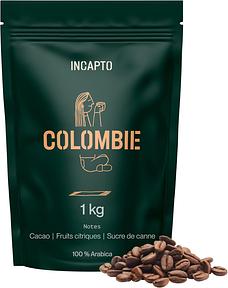
Which is exactly why printing a roast date has turned into a selling point among specialty roasters. It costs nothing to print, the law doesn't ask for it, so printing it is a signal that the seller is willing to be judged on how fast their stock moves. The same goes for a roasting frequency claimed on a product page, the way [product:ESPRESSO_BEANS] states that it roasts daily: that's the seller's own claim, not a printed date you can check with the bag in your hand.
I know of no published study comparing, country by country, how many bags carry a roast date, so I'm not going to invent a percentage. What the law says is the same across the EU: the best-before is mandatory, the roast date is not.
That little disc on the bag
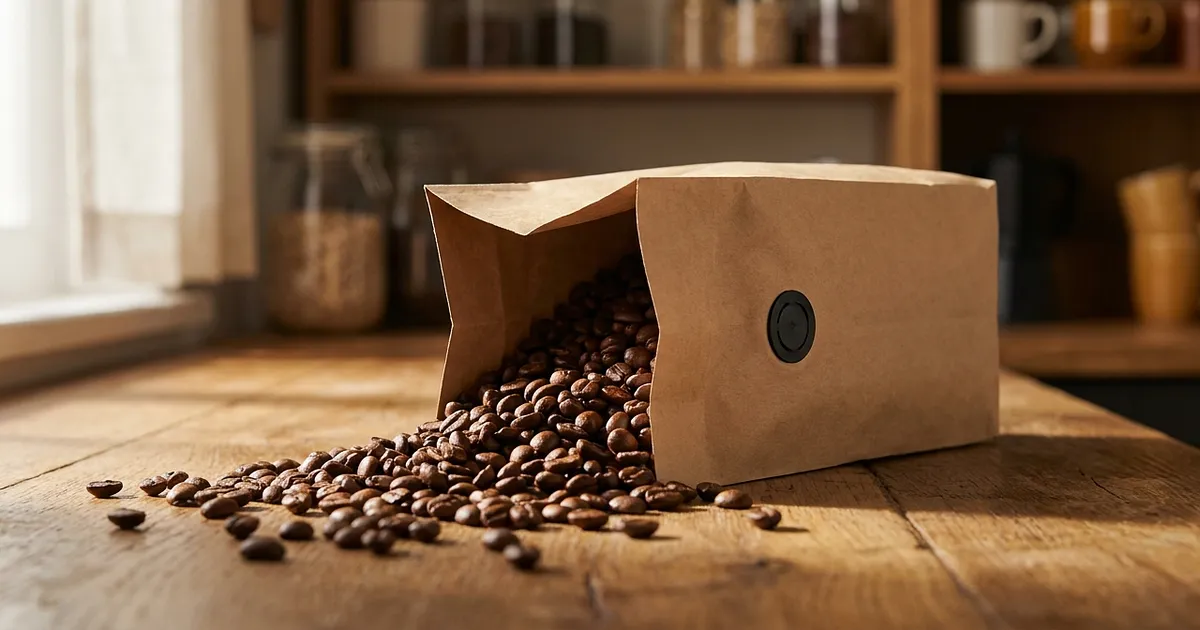
Turn a bag of specialty coffee over. There's a round disc, usually with a hole or two, welded onto the film. It isn't an air hole.
It's a one-way valve. A flexible washer deforms when internal pressure builds and lets CO₂ out; as soon as the pressure drops it reseals, and outside oxygen stays outside. It solves a packaging problem as old as roasted coffee itself: seal the bag and it inflates until it bursts, or vent it and the coffee oxidises.
The invention is credited to Luigi Goglio, at Goglio S.p.A. in Milan, in 1968. One caveat worth stating plainly: that date comes from company history repeated across the packaging trade press, not from a patent number I was able to check in a public database. I'm giving it for what it is.
The practical takeaway is simpler. The valve only works while the bag is sealed. Squeezing the bag to smell the coffee through the valve is harmless. Opening it is not. From that moment the valve does nothing at all, and a different gas takes over.
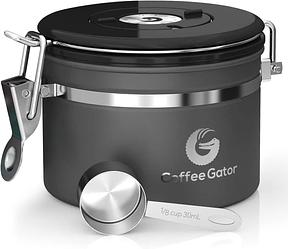
A few storage canisters borrow the idea and build a check valve into the lid, [product:VALVE_CANISTER] among them. That's genuinely useful if you're storing a coffee that's still young, since CO₂ keeps venting without pressure building inside the container. On a coffee that has already settled, though, the valve does nothing and only the seal matters.
Once the bag is open, oxygen is in charge
Degassing is a problem of youth. Oxidation is a problem of age, and it starts far earlier than most people assume.
The Specialty Coffee Association published a literature review on coffee staling (SCA, 2012) pulling together what was available. Two things stand out. Lipid oxidation into volatile compounds gets going within the first 24 hours after roasting and grinding. And in a sensory trial cited in that review, tasters clearly preferred coffee held under 0% oxygen over coffee held under 2% after just one week of storage, while trained assessors picked out rancidity in air-packed coffee after four months.
Those figures are reported second hand by the SCA, which is citing older literature. I'm attributing them to the review, not to primary papers I haven't read.
The container: opaque, sealed, and no headspace
The original bag folded over its clip or zip is not airtight, and its valve is now useless.
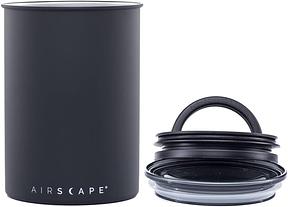
A gasketed jar already beats it. A container that pushes the air out from above the coffee beats a jar, because the leftover headspace is precisely what's left to oxidise. That's the idea behind plunger-lid canisters like [product:AIRSCAPE], where the lid travels down onto the beans as the stock runs out, until there's almost no air left above them.
Pulling a vacuum, or not
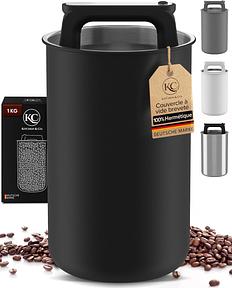
The next step removes the air rather than just compressing it. Some lids pull the vacuum by pressure with no separate pump, which is how [product:VACUUM_JAR] works. On a coffee you'll take three weeks to finish, you notice the difference toward the bottom of the container.
The trade-off is real and I'd rather say so: it's one more action every single time, and a vacuum lid you don't reseal properly is no better than an ordinary jar. If you know you won't do it every morning, stay with the plunger, which asks nothing of you.
Where to keep it, and how much to buy
A cupboard, away from light and away from the heat coming off your worktop. Not on top of the machine, where it's permanently warm. And not the fridge, which combines humidity with odours for the worst of both.
On quantity, one rule covers it: buy what you'll drink in two to three weeks. A kilo at three cups a day is two months of open bag, and no container rescues that.
Freezing: the genuinely contested one
I'm not going to hand you a verdict, because the evidence doesn't support one.
What's established is that freezing changes how the bean behaves in the grinder. Uman and co-authors, in Scientific Reports (2016), show that beans ground cold produce a narrower particle-size distribution and a smaller mean particle size, with the sharpest shift between room temperature and −19 °C. Bean origin made no difference to the distribution; temperature did. For espresso, a more uniform grind is a straightforward advantage.
On storage, the trade press reports, drawing on SCA-linked work, that holding coffee at −25 °C substantially slows degassing (Perfect Daily Grind, 2025). I couldn't trace that figure back to a primary SCA position document, so treat it as second hand.
Where practitioners do converge, without a controlled study behind it, is on conditions rather than on the principle itself:
portion into single doses before freezing, one dose per pouch or tube, so you only ever take out what you're about to use;
packaging that's actually airtight, or the beans pick up freezer moisture and smells;
never refreeze a dose you've taken out, since it's the condensation cycle that does the damage rather than the cold;
grind straight from the freezer rather than waiting for the beans to warm up, which the study above makes sensible.
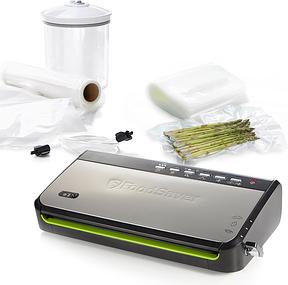
Portioning is the part that takes real effort, and it's also the part that decides the outcome. A vacuum sealer such as [product:VACUUM_SEALER] settles it in one sitting: seal the doses once, then only ever open one pouch at a time. On something as fragile as whole beans, a pulse function keeps the suction from crushing the edges of the bag.
The honest counterargument holds up: all of this assumes an organised routine that not many people keep going for three months. A well-stored open bag finished inside a fortnight beats a badly used freezer. If portioning sounds like a chore, buy smaller and buy more often, which solves the same problem with no equipment at all.
Spotting coffee that's too young
None of these signs proves much on its own. Together they describe a coffee that hasn't finished venting.
Crema is very tall, very foamy, and gone in fifteen to twenty seconds.
Flow is unstable: fast start, stall, then off again.
Two consecutive shots at the same setting don't give the same time.
The cup is sour and short even though the shot time looks about right.
You've tightened the grind several days running with nothing else changed.
The cheapest test is to do nothing for four days. Keep exactly the same setting, the same dose, the same ratio, then pull again. If the cup steadied itself, you had a freshness problem rather than a grind problem.
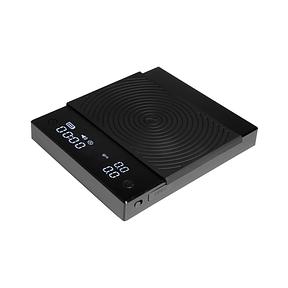
That test assumes one thing: that you're dosing to the gram. With a scoop, the dose varies enough to hide the effect completely and you'll never know what you're looking at. [product:SCALE_TIMER]
The opposite case exists too. A coffee with no aroma left, giving a flat, faintly cardboard cup under thin pale crema, isn't too young. It's gone. No setting rescues that one either.
Where to go next
How to pull a good espresso at home: the 7 settings that decide the shot, for locking down a stable recipe before you judge a coffee.
Why 9 bars? The ideal espresso pressure explained, which covers the back pressure discussed above.
Best electric burr coffee grinder: the honest guide, if you still suspect the grind.
Tamper, WDT and scale: what do they actually do?, for the dosing and distribution side.
Barista accessories: what to buy first when you're starting out, if you're starting from nothing.
All products from this post
The ones we named above are marked; the rest are alternatives in the same category.
Affiliate notice: As an Amazon Associate, we earn from qualifying purchases. Product prices and availability are subject to change.
Frequently Asked Questions
How long should I wait after the roast date before pulling espresso?
At least a week, and closer to two or three on a light roast. Barista Hustle recommends a minimum rest of 7 days. The Café Kreyol study (Girard and Stazzone, 2022) found more than 73% of tested coffees peaked at 8 days or later. There is no official standard for this delay, and the published sources give different windows.
Can coffee really be too fresh for espresso?
Yes, and it's the failure nobody expects. CO₂ still inside the bean creates back pressure in the puck at 9 bars: unstable flow, plenty of crema with nothing behind it, a sour cup. The symptom looks exactly like a grind fault, which pushes people to adjust the grinder while the coffee would have settled on its own within days.
Does the best-before date tell me anything about freshness?
No. Regulation (EU) No 1169/2011 requires a date of minimum durability on all prepacked coffee, but no roast date anywhere. A best-before twelve or eighteen months out says nothing about when the coffee was roasted or how long it sat in a warehouse. Only a printed roast date, which is always voluntary, gives you that.
What is the small round valve on the bag for?
It's a one-way valve. It lets the CO₂ from roasting escape while keeping outside oxygen from getting in, which avoids both the bag inflating and the coffee oxidising. Its invention is credited to Luigi Goglio in Milan in 1968, according to company history repeated in the packaging trade press. It only works while the bag is still sealed.
Should I keep coffee in the fridge?
No. Fridge humidity and fridge smells are both bad news for roasted beans, and the condensation cycle every time you take the container out makes it worse. An opaque airtight container in a cupboard, away from the heat of the machine, does considerably better. The freezer is a separate case, and only with portioning and no refreezing.
Do dark roasts degas faster than light roasts?
Yes. Wang and Lim (University of Guelph, 2014) measured a degassing rate that rises with roast degree: a darker, more porous bean releases its CO₂ faster. In practice a dark roast is often ready after a few days where a very light roast wants a week or more before it settles into a repeatable shot.
How long does coffee stay good once the bag is open?
Reckon on two to three weeks for well-stored whole beans, and considerably less for pre-ground. Once it's open, oxygen is what decides: the SCA literature review (2012) reports a clear sensory preference for coffee held without oxygen after only a week of storage. Buy the quantity you'll drink in that window rather than the big bag.
Does ground coffee need to rest as well?
No, and that's precisely its weakness. Work by Smrke and colleagues (ZHAW, 2018) shows ground coffee loses most of its CO₂ almost immediately after grinding. So it has nothing left to degas, but it also has little left to give: the surface exposed to oxygen is on a completely different scale from whole beans.
Sources
- Journal of Agricultural and Food Chemistry, 2018 pubs.acs.org
- Food Research International, 2014 sciencedirect.com
- his note on resting beans scottrao.com
- Barista Hustle community.baristahustle.com
- Café Kreyol post-roast rest study cafekreyol.com
- Article 9(1)(f) eur-lex.europa.eu
- SCA, 2012 sca.coffee
- *Scientific Reports* nature.com
- Perfect Daily Grind, 2025 perfectdailygrind.com